Princess Ali
"An Egyptian dance under Edison’s lights"
Keys: Space play/pause · ←/→ 10s · F fullscreen · M mute · </> speed
About this film
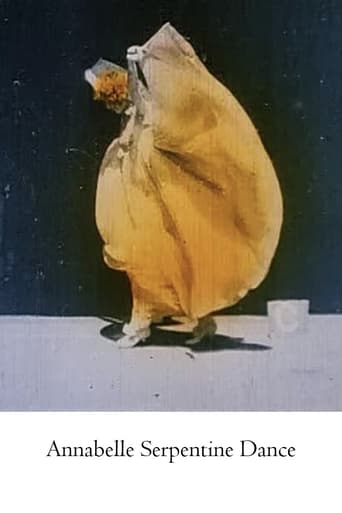
Princess Ali, of Barnum and Bailey's circus, performs an Egyptian dance in the Edison Company's studio. As she dances, some musicians perform in the background to provide accompaniment.
Cast & crew
More films like this
More from William Heise
View all →
More about this film
About the production
Release date1895
Box officeNot tracked in modern terms - early Edison films were sold as individual viewing machines rather than theatrical releases
ProductionEdison Manufacturing Company
Filmed inEdison's Black Maria Studio, West Orange, New Jersey
Filmed in Edison's revolutionary Black Maria studio, which featured a retractable roof to utilize natural sunlight for illumination. The studio was built on a circular turntable to follow the sun's path throughout the day. Princess Ali was brought in specifically for this production as part of Edison's efforts to create diverse content for his Kinetoscope viewing machines. The musicians visible in the background were likely part of her regular performance troupe from Barnum and Bailey's circus.
Themes
Cultural representationEarly cinema documentationPerformance artRacial identity in entertainmentOrientalism
Themes & topics
danceEgyptiancircus performermusic accompanimentBlack Maria studiosilent filmshort filmexperimental cinema
Historical background
Princess Ali appeared in 1895, when the nickelodeon era and the birth of narrative film shaped how movies were financed, distributed, and discussed. Audiences of the day encountered the work amid shifting tastes in acting, pacing, and spectacle. Its focus on princess ali, of barnum and bailey's circus, performs an egyptian dance in the edison company's studio mirrors themes circulating in popular culture of that moment.
Why this film matters
Princess Ali (1895) belongs to the wider archive of world cinema, documenting princess ali, of barnum and bailey's circus, performs. Archivists and historians value such titles for what they reveal about craft, genre, and audience expectations. Restorations and festival screenings keep the work visible to viewers far beyond its first run.
Making of
The filming of 'Princess Ali' took place during a period of intense experimentation at Edison's laboratory. William Heise, Edison's principal cameraman, was responsible for operating the cumbersome 35mm camera, which was hand-cranked and required careful attention to maintain consistent speed. The Black Maria studio, where filming occurred, was an innovative structure with tar paper walls and a roof that could be opened to admit sunlight, as electric lighting was not yet suitable for film production. Princess Ali and her musicians would have performed multiple takes to ensure Edison had usable footage, as the early film stock was unpredictable and often resulted in overexposed or underexposed images. The collaboration between Edison's technical team and performers from Barnum and Bailey's circus represented an early example of the entertainment industry's convergence with new technology.
What critics said
Press coverage from 1895 is fragmentary for many titles of this vintage; surviving notices for Princess Ali tend to stress novelty, star power, or topical appeal. Later writing places the picture within its national and generic context, weighing both period conventions and moments that still land for modern viewers. Streaming and disc releases have revived discussion among classic-film audiences.
Did you know?
- Princess Ali was one of the first African American women to appear in a motion picture, though she was often presented as Egyptian or Middle Eastern in circus promotions
- The film was part of Edison's strategy to create 'exotic' content that would appeal to American audiences' curiosity about foreign cultures
- The Black Maria studio where this was filmed was the world's first motion picture production studio, nicknamed 'The Doghouse' due to its appearance
- This film was created for viewing on Edison's Kinetoscope, an early motion picture device that allowed one person at a time to view films through a peephole
- Princess Ali was reportedly born Ali Shah in Philadelphia and worked as a dancer and contortionist before joining Barnum and Bailey
- The film represents one of the earliest examples of dance captured on motion picture film
- Edison's company produced hundreds of similar short films between 1893-1895, but few featured performers of color as prominently
- The musicians visible in the background were likely playing instruments typical of 'Turkish' or 'Egyptian' music of the period, though their exact instrumentation is unclear
- This film was included in Edison's catalog as 'Princess Ali, Egyptian Dance' and sold to Kinetoscope parlors for exhibition
- The preservation of this film provides rare documentation of 19th-century performance styles and circus entertainment
Visual style
The cinematography of 'Princess Ali' represents the state of the art in 1895 motion picture technology. William Heise employed a stationary camera positioned to capture Princess Ali's full body in motion, utilizing the natural sunlight that entered the Black Maria studio through its retractable roof. The film was shot on 35mm film using Edison's patented Kinetograph camera, which recorded images at approximately 16 frames per second. The composition is straightforward and functional, prioritizing clear documentation of the performance over artistic flourishes. The lighting, provided entirely by sunlight, creates high contrast and deep shadows that were characteristic of early Edison productions. Despite the technical limitations of the era, the camera successfully preserves the fluidity of Princess Ali's movements, demonstrating the remarkable capability of Edison's equipment to capture motion with reasonable clarity.
Innovations
'Princess Ali' represents several important technical achievements in early cinema history. The film demonstrates Edison's mastery of the Kinetograph camera system and his ability to capture human movement with reasonable clarity. The successful filming of dance movements showed that motion picture technology could preserve the fluidity and grace of performance art, not just static scenes. The production utilized Edison's innovative Black Maria studio, which was a technical marvel of its time with its unique lighting solutions and turntable design. The film also represents an early example of multi-person composition in cinema, showing how the frame could accommodate both a primary performer and supporting musicians. The preservation of this footage demonstrates the durability of Edison's 35mm film stock, which has survived for over 125 years.
Music
The original 1895 production was silent, as synchronized sound technology would not be developed for decades. However, the film features visible musicians in the background who would have provided live accompaniment during Princess Ali's performance. The musical elements would have consisted of instruments typical of 'Turkish' or 'Egyptian' styled performances popular in 19th-century American entertainment, possibly including drums, tambourines, and wind instruments. In modern screenings of the film, curators often add appropriate period music or authentic Middle Eastern rhythms to enhance the viewing experience. The presence of musicians in the frame demonstrates Edison's early understanding of the relationship between visual performance and musical accompaniment, even though the technology could not yet record sound.
Memorable scenes
- The full sequence of Princess Ali performing her Egyptian dance, captured in a single continuous take that showcases both her talent and the limitations of 1895 film technology
What audiences thought
Audience reception in 1895 would have been measured by the popularity of individual Kinetoscope machines in penny arcades and exhibition parlors. Edison's 'exotic' subjects, including performances like Princess Ali's dance, were generally popular among urban audiences seeking novel forms of entertainment. The film likely appealed to viewers' curiosity about foreign cultures and circus entertainment, which were major attractions of the period. Contemporary accounts suggest that films featuring dance and movement were particularly engaging for early cinema audiences, who were still amazed by the technology itself. Modern audiences viewing the film today often express fascination with its historical value and the glimpse it provides into 19th-century performance culture, while also acknowledging the problematic racial and cultural representations it contains.
Film connections
Influenced by
- Edison's earlier Kinetoscope subjects
- Barnum and Bailey's circus performances
- 19th-century Orientalist entertainment
- Music hall and vaudeville traditions
This film influenced
- Subsequent Edison dance films
- Early ethnographic cinema
- Circus and performance documentaries
Film restoration
The film survives and has been preserved by the Library of Congress and other film archives. It has been digitized and is available through various educational and archival resources. The preservation quality is remarkable for its age, though some degradation is visible as expected with nitrate film from this period.
Where to watch
- Library of Congress National Film Registry
- Museum of Modern Art Film Collection
- UCLA Film & Television Archive
- Various online educational platforms specializing in early cinema
- Kino Lorber's 'The Movies Begin' DVD collection