

Private Snafu vs. Malaria Mike
"Snafu learns hard way the consequences of not protecting himself from malaria…"
Keys: Space play/pause · ←/→ 10s · F fullscreen · M mute · </> speed
About this film
Snafu learns hard way the consequences of not protecting himself from malaria infection.
Cast & crew
More films like this
More Animation films
View all →



More from Chuck Jones
View all →
More about this film
About the production
Release dateMarch 25, 1944
ProductionWarner Bros. Cartoons, U.S. Army Signal Corps
Filmed inWarner Bros. Studios, Burbank, California
This was one of 26 Private Snafu cartoons produced between 1943-1945 as part of the U.S. Army's 'Private Snafu' series. The films were created specifically for military personnel and were not shown to the general public during the war. Production was handled by Warner Bros.' top animation talent under the direction of the U.S. Army Signal Corps, with Dr. Seuss (Theodor Geisel) contributing to many scripts in the series.
Themes
Disease preventionMilitary trainingPersonal responsibilityConsequences of negligencePublic health education
Themes & topics
malariamosquitoesmilitary trainingWorld War IIdisease preventiontropical medicineArmy educationpropagandahealth warning
Historical background
Released in 1944 during World War II and its aftermath, Private Snafu vs. Malaria Mike reached audiences when exhibitors were still defining programming conventions. The narrative hook—Snafu learns hard way the consequences of not protecting himself from malaria…—reflects what contemporary producers thought would draw viewers.
Why this film matters
Private Snafu vs. Malaria Mike remains discussed by archivists tracing how screen stories of its period represented work, desire, conflict, and social order. Its central situation—Snafu learns hard way the consequences of not protecting himself from malaria…—still prompts questions about genre conventions and audience expectations.
Making of
The Private Snafu series represented a unique collaboration between Hollywood's top animation talent and the U.S. military. Warner Bros. assigned their best directors, including Chuck Jones, Friz Freleng, and Bob Clampett, to work on these training films. The production team worked closely with Army medical and training officials to ensure accuracy while maintaining entertainment value. The animation quality was exceptionally high for training films, as Warner Bros. treated them with the same care as their commercial releases. Mel Blanc's voice work was particularly notable, as he had to create a distinct character voice that wouldn't be confused with his famous Looney Tunes characters. The scripts often contained risqué humor and mild profanity that would never have been allowed in commercial cartoons, since they were only intended for adult soldiers. The malaria episode was particularly important as the disease was causing more casualties than enemy action in some Pacific campaigns.
What critics said
Trade and newspaper notices for Private Snafu vs. Malaria Mike generally emphasized casting, spectacle, and program fit rather than extended aesthetic argument. Retrospective screenings and archival notes continue to shape how viewers evaluate Private Snafu vs. Malaria Mike today.
Did you know?
- The character of Private Snafu was created by Theodor 'Dr. Seuss' Geisel and Phil Eastman, with 'Snafu' being military slang for 'Situation Normal: All Fucked Up'
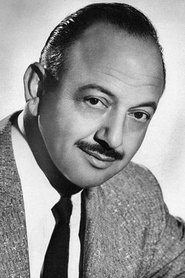
- Mel Blanc provided the voice for Private Snafu, using a voice similar to but distinct from his famous Bugs Bunny characterization
- These cartoons were allowed to use more adult humor and language than typical Warner Bros. cartoons since they were only shown to soldiers
- The malaria mosquito character 'Malaria Mike' was designed to be menacing yet comical, embodying the threat of disease in a personified form
- The series was so effective that the Army requested more films beyond the originally planned 12
- Animation director Chuck Jones later said that working on the Snafu series was some of his most meaningful work during the war
- The cartoons were classified as military training films and were not released commercially until decades after the war
- Many of the techniques and gags developed for the Snafu series later appeared in post-war Warner Bros. cartoons
- The U.S. military considered malaria as serious a threat as enemy combat in the Pacific theater, affecting more soldiers than combat in some campaigns
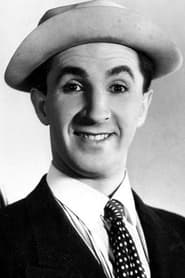
- Billy Bletcher, who voiced Malaria Mike, was famous for voicing numerous Disney villains including the Big Bad Wolf and Peg-Leg Pete
Visual style
The animation style represents Chuck Jones at his peak, utilizing the limited animation techniques that would become his trademark while maintaining fluid, expressive movement. The character designs are exaggerated but believable, with Private Snafu embodying the everyman soldier archetype. The mosquito characters, particularly Malaria Mike, are designed to be simultaneously comical and menacing, with sharp angles and exaggerated features. The color palette uses tropical greens and yellows to establish the Pacific setting, with dramatic reds for fever sequences. Jones employs dynamic camera angles and perspective shots unusual for short cartoons of the era. The fever dream sequence uses surreal, abstract animation to represent Snafu's malaria-induced hallucinations, techniques that would later influence psychedelic animation of the 1960s.
Innovations
The Private Snafu series pushed technical boundaries for wartime animation, utilizing techniques that would become standard in post-war production. The series was among the first to use detailed anatomical animation for educational purposes, particularly in showing how malaria affects the human body. The fever sequence used experimental color techniques and abstract animation to represent physiological states. The production team developed new methods for synchronizing complex medical information with entertainment content. The series also pioneered the use of adult humor in animation, testing boundaries of what was acceptable in the medium. The technical quality of these training films was so high that they influenced the standards for post-war educational animation. The series demonstrated that limited animation techniques could be used effectively without sacrificing quality or impact.
Music
The musical score was composed by Carl Stalling, Warner Bros.' musical director, who adapted his usual Looney Tunes style to the more serious subject matter. Stalling used jazz and swing elements popular with soldiers of the era, while incorporating military musical motifs and tropical percussion to establish the setting. The sound effects, created by Treg Brown, were particularly effective in making the mosquitoes sound genuinely threatening. Mel Blanc's vocal performance as Snafu captures the character's naive bravado and eventual suffering, while Billy Bletcher's Malaria Mike has a menacing, guttural quality. The audio balance was carefully designed to ensure the educational messages would be clear even in noisy barracks viewing conditions. The soundtrack includes a recurring musical theme for the malaria threat that becomes more ominous as the cartoon progresses.
Famous quotes
Malaria Mike: 'I'm gonna get that soldier if it's the last thing I do!'
Private Snafu: 'Malaria? That's for the other guys, not me!'
Narrator: 'A single mosquito bite can mean the difference between fighting fit and flat on your back.'
Private Snafu: 'Who needs mosquito nets when you've got guts?'
Malaria Mike: 'This soldier's gonna learn that malaria is no joke!'
Memorable scenes
- The fever dream sequence where Snafu hallucinates dancing mosquitoes and melting landscapes, using surreal abstract animation to represent the effects of malaria on the human mind
- The opening scene where Malaria Mike rallies his mosquito troops with a militaristic speech about their mission to infect soldiers
- The transformation sequence showing how malaria affects the bloodstream, using innovative animation to visualize microscopic processes
- The final scene where a recovered Snafu diligently sets up his mosquito netting, demonstrating the lesson learned
What audiences thought
The intended audience of soldiers reportedly found the Private Snafu cartoons highly entertaining and effective. Unlike typical training films, soldiers actually looked forward to seeing new Snafu episodes. The humor and adult content made them feel that the military respected their intelligence rather than talking down to them. Many veterans later recalled specific Snafu cartoons decades after the war, demonstrating their lasting impact. When the films were eventually released to the public decades later, animation enthusiasts and historians were thrilled to see this 'lost' work of Warner Bros.' golden age. Modern audiences viewing the cartoons are often struck by their sophistication and the freedom they had compared to commercial cartoons of the same period. The series has developed a cult following among animation historians and World War II buffs.
Film connections
Influenced by
- Disney educational films
- Army training manuals
- Dr. Seuss's political cartoons
- Warner Bros. Looney Tunes style
- Military propaganda posters
This film influenced
- Post-war public health announcements
- Cold War training films
- Modern medical animations
- Adult-oriented animation series
- Military training videos
Film restoration
The film is preserved in the National Archives and Records Administration as part of the U.S. Army Signal Corps collection. It has been digitally restored and is available through various military history archives and animation preservation societies. The original 35mm nitrate prints were transferred to safety film in the 1970s. The cartoon entered the public domain and is widely available through various educational and historical film collections. Warner Bros. has included it in several DVD collections of wartime animation.
Where to watch
- National Archives website
- U.S. Army Heritage and Education Center
- Internet Archive
- YouTube (various public domain uploads)
- Warner Bros. WWII animation collections
- Military history streaming services
- Educational film databases