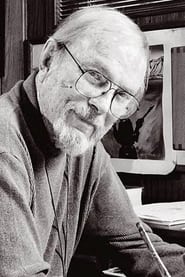
Chuck Jones
Director
Born: September 21, 1912 in Spokane, Washington, USA Died: February 22, 2002 Active: 1933-2002 Birth Name: Charles Martin Jones
Films
14 films
Adventures of the Road-Runner
1962
Fox Pop
1942
Going Home
1944
The Dover Boys at Pimento University or The Rivals of Roquefort Hall
1942
Prest-O Change-O
1939
A Lecture on Camouflage
1944
Private Snafu vs. Malaria Mike
1944
In the Aleutians
1945
Coming!! Snafu
1943
Spies
1943
Gas
1944
Outpost
1944
No Buddy Atoll
1945About Chuck Jones
Charles Martin 'Chuck' Jones was animation directors in cinema history, whose over seven decades and revolutionized American animation. Beginning as a cel washer at the Ub Iwerks Studio in 1931, Jones joined Leon Schlesinger Productions (later Warner Bros. Cartoons) in 1933, where he would spend nearly three decades creating some of the most beloved animated shorts ever made. During his Warner Bros. Tenure, he created characters including Marvin the Martian, Pepe Le Pew, Wile E. Coyote and the Road Runner, while perfecting the personalities of established stars like Bugs Bunny and Daffy Duck. Jones's work during World War II included directing the acclaimed 'Private Snafu' series for military training films, demonstrating his ability to blend entertainment with educational content. After leaving Warner Bros. In 1962, he founded his own studio, Sib Tower 12 Productions, which produced new Tom and Jerry cartoons for MGM and later became Chuck Jones Enterprises. His later career included directing the animated segment of 'The Phantom Tollbooth' (1970) and the television special 'How the Grinch Stole Christmas' (1966), which became a holiday classic. Jones continued working well into his 80s, receiving numerous honors and cementing his legacy as one of animation's greatest pioneers and artists.
The Craft
Behind the Camera
Chuck Jones's directing style was characterized by meticulous attention to timing, sophisticated visual gags, and character-driven comedy. He believed in the 'discipline of the delightful,' combining precise technical execution with creative spontaneity. Jones pioneered techniques like extreme close-ups, dynamic camera angles, and psychological depth in cartoon characters, elevating animation from simple entertainment to art form. His approach emphasized the importance of character motivation and personality, creating memorable characters with distinct personalities and motivations. Jones was known for his ability to build comedy through character flaws and obsessions, particularly evident in the eternal chase between Wile E. Coyote and the Road Runner.
Milestones
- Created Wile E. Coyote and the Road Runner characters (1949)
- Directed 'Duck Amuck' (1953), considered one of the greatest animated shorts ever made
- Directed 'What's Opera, Doc?' (1957), included in the National Film Registry
- Won Academy Award for 'The Dot and the Line' (1965)
- Directed 'How the Grinch Stole Christmas' (1966) television special
- Received Honorary Academy Award in 1996 for lifetime achievement
Best Known For
Must-See Films
Accolades
Won
- Academy Award for Best Animated Short Film - 'The Dot and the Line' (1965)
- Honorary Academy Award for lifetime achievement (1996)
- Winsor McCay Award (1974)
- Golden Eagle Award (1976)
- Annie Award for Lifetime Achievement (1996)
- National Medal of Arts (1996)
Nominated
- Academy Award nomination for 'For Scent-imental Reasons' (1949)
- Academy Award nomination for 'So Much for So Little' (1949)
- Academy Award nomination for 'High Note' (1960)
- Academy Award nomination for 'Beep Prepared' (1961)
- Academy Award nomination for 'Nelly's Folly' (1961)
Special Recognition
- Hollywood Walk of Fame star (1992)
- Disney Legend Award (1992)
- Inducted into Animation Hall of Fame
- National Film Registry selections for multiple films
- AFI Life Achievement Award nomination
Working Relationships
Worked Often With
Studios
Why They Matter
Impact on Culture
Chuck Jones fundamentally transformed animation from simple entertainment into a sophisticated art form, elevating the medium with his innovative techniques and storytelling depth. His work introduced psychological complexity to cartoon characters, creating personalities that audiences could emotionally connect with beyond mere slapstick comedy. Jones's influence extended far beyond animation, impacting live-action comedy, advertising, and popular culture at large. His characters and gags have become embedded in global popular consciousness, with references appearing in everything from academic papers to modern films. The Warner Bros. Cartoons he directed became cultural touchstones that defined American humor for generations, while his later work like 'The Grinch' became holiday traditions. Jones's emphasis on character-driven comedy and visual storytelling influenced countless animators, directors, and artists across multiple media.
Lasting Legacy
Chuck Jones's legacy as one of animation's greatest pioneers is cemented by his unparalleled contributions to the art form and his lasting influence on generations of artists and filmmakers. His techniques and principles of animation continue to be taught in film schools worldwide, while his films remain beloved classics that entertain new audiences decades after their creation. Jones's work helped establish animation as a legitimate art form worthy of serious critical consideration, leading to its inclusion in museums, academic study, and prestigious film institutions. The characters he created have become permanent fixtures in popular culture, appearing in countless adaptations, merchandise, and references across media. His studio, Chuck Jones Enterprises, continues to preserve and promote his artistic vision, ensuring that his contributions to animation and cinema remain accessible to future generations.
Who They Inspired
Chuck Jones's influence permeates modern animation and comedy, with directors like Pixar's John Lasseter and Brad Bird citing him as a major inspiration. His principles of character animation and timing have become fundamental teachings in animation education worldwide. Jones's work influenced not just animators but also live-action comedy directors, including Steven Spielberg and George Lucas, who incorporated his visual gag techniques into their films. His approach to character development influenced creators across media, from comic book artists to video game designers. The psychological depth he brought to cartoon characters paved the way for more sophisticated animated storytelling in both television and feature films. Jones's influence extends to advertising, where his timing and visual humor principles have been adopted by commercial directors for decades.
Off Screen
Chuck Jones was married twice and had three children. His first marriage to Dorothy Webster ended in divorce, and he later married Marian Dern, who became his business partner and collaborator. Jones was known for his wit, intellectual curiosity, and passion for both art and classical music. He was an avid reader and maintained extensive libraries throughout his life. Jones suffered from heart problems in his later years but continued working until shortly before his death at age 89.
Education
Attended Chouinard Art Institute (now California Institute of the Arts) in Los Angeles, studied art and animation. Also attended the University of Washington briefly before moving to California to pursue his career in animation.
Family
- Dorothy Webster (1935-1978, divorced)
- Marian Dern (1981-2002, until his death)
Did You Know?
- Jones created the 'Rules of the Road Runner' cartoons, which included 9 specific rules that the characters had to follow
- He originally wanted to be a cartoonist for newspapers but found his calling in animation
- His famous 'Duck Amuck' film was created when he realized he could break the fourth wall by having the animator interact with the character
- Jones served in the U.S. Army Signal Corps during World War II, where he worked on training films
- He was a distant cousin of the famous Western outlaw Frank James
- Jones's unit at Warner Bros. Was nicknamed 'Termite Terrace' due to its dilapidated condition
- He once estimated that he drew over 30,000 drawings for 'What's Opera, Doc?'
- Jones — classically trained musician and could play multiple instruments
- He was colorblind but still created some of the most visually vibrant cartoons ever made
- His favorite character that he created was the Coyote, whom he considered the ultimate tragic figure
In Their Own Words
The whole essence of good drawing—and of good thinking, perhaps—is to work a subject down to the simplest form possible and still have it believable.
Animation means to give life to, not to draw moving things. We can give life to anything we want to.
I think all of us, in the beginning of our careers, have to learn the discipline of the delightful.
You have to have an idea before you can have a story, and you have to have a story before you can have a film.
The Coyote is a living, breathing allegory of Want. He is always wanting. And the Road Runner is the embodiment of pure speed.
We must all learn to write our own scripts, to be the directors of our own movies.
An animator is an actor with a pencil.
Frequently Asked Questions
Who was Chuck Jones?
Legendary American animation on YTB.my. Cartoons, creating iconic characters like Wile E. Coyote and the Road Runner. He directed some of the most acclaimed animated shorts in cinema history, including 'Duck Amuck' and 'What's Opera, Doc?' and later directed the classic television special 'How the Grinch Stole Christmas.'
What films is Chuck Jones best known for?
Titles linked here include Duck Amuck (1953), What's Opera, Doc? (1957).
When was Chuck Jones born and when did he die?
Born September 21, 1912; died February 22, 2002.
What awards did Chuck Jones win?
Jones won an Academy Award for Best Animated Short Film for 'The Dot and the Line' in 1965 and received an Honorary Academy Award for lifetime achievement in 1996. He also won multiple Annie Awards, the Winsor McCay Award, the National Medal of Arts, and was inducted into the Animation Hall of Fame. Many of his films have been preserved in the National Film Registry.
What was Chuck Jones's directing style?
Jones's directing style was characterized by meticulous timing, sophisticated visual humor, and psychological depth in character development. He pioneered techniques like extreme close-ups and dynamic camera angles in animation, and believed in creating comedy through character flaws and obsessions. His approach elevated animation from simple entertainment to a respected art form with emotional and intellectual depth.
What characters did Chuck Jones create?
Jones created several iconic Looney Tunes characters including Marvin the Martian, Pepe Le Pew, Wile E. Coyote and the Road Runner, and Michigan J. Frog. He also significantly developed the personalities of established characters like Bugs Bunny, Daffy Duck, and Porky Pig, giving them the distinct traits that made them famous.
How did Chuck Jones influence modern animation?
Jones's influence on modern animation is immeasurable, with his principles of character animation and timing still taught in film schools worldwide. Directors at Pixar and other major studios cite him as inspiration, and his techniques for visual storytelling and character development have influenced everything from feature films to advertising. His work helped establish animation as a legitimate art form worthy of critical and academic recognition.