Procession of Baby Carriages at a Paris Nursery
"A long line of nurses pushing carts with their babies enter from the far right"
Keys: Space play/pause · ←/→ 10s · F fullscreen · M mute · </> speed
About this film
A long line of nurses pushing carts with their babies enter from the far right, cross a garden in front of the large nursery home, and leave by the close left to the camera. A few toddlers also follow in the same orderly line, along their nurses.
Cast & crew
More films like this
More Documentary films
View all →


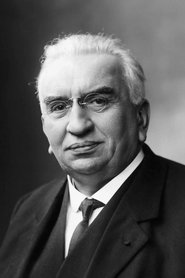
More from Louis Lumière
View all →

More about this film
About the production
Release date1899
Box officeNot tracked individually - shown as part of Lumière programs
ProductionLumière Company
Filmed inParis, France - likely at the Crèche de la rue de la Roquette or similar municipal nursery
Filmed using the Lumière Cinématographe, which served as both camera and projector. The single continuous take was typical of Lumière's actualité films, capturing real events without staging or editing. The camera was positioned to capture the full diagonal movement across the garden space, demonstrating the Lumières' understanding of cinematic composition and depth.
Themes
Social order and disciplineInstitutional childcareEveryday life documentationFrench social valuesChildhood and innocence
Themes & topics
Historical background
Procession of Baby Carriages at a Paris Nursery (1899) emerged during the earliest years of motion pictures. A long line of nurses pushing carts with their babies enter from the far right, cross a garden in front of the large nursery home, and leave by the close left to the camera. Archival records and catalog entries help place the work within film-history surveys of the period.
Why this film matters
Preserved under Wikidata ID Q124488516, Procession of Baby Carriages at a Paris Nursery is valued as a screen drama within catalog and archive collections. Contemporary listings connect it to broader histories of cinema exhibition and restoration.
Making of
The filming of this documentary required careful coordination with the nursery administration to capture the daily routine without disruption. Louis Lumière or one of his cameramen would have arrived early to set up the Cinématographe on a tripod, choosing the optimal angle to capture the full procession. The camera, hand-cranked at approximately 16 frames per second, used 35mm film stock developed by the Lumières. The nurses and children were likely instructed to proceed with their normal routine, though the presence of the camera may have prompted them to maintain especially perfect formation. The single take approach meant any mistake would require starting over, making the captured scene particularly impressive given the coordination required with multiple infants and toddlers.
What critics said
Trade and archival sources offer limited day-one review coverage for Procession of Baby Carriages at a Paris Nursery. Modern reception rests on its availability in collections, repertory screenings, and reference works that document 1899 cinema.
Did you know?
- This film is part of the Lumière Brothers' extensive catalog of 'actualités' - short documentary films capturing everyday life
- The film exemplifies the Lumière philosophy of cinema as 'life caught unawares' rather than staged theatrical productions
- At 30-45 seconds, this was a typical length for early cinema shorts, designed to be shown in programs with multiple films
- The orderly procession reflected French society's fascination with social organization and institutional efficiency during the Belle Époque
- This film was likely shown alongside other Lumière productions in traveling exhibitions and early cinema venues worldwide
- The babies in the carriages were actual infants from the nursery, not actors, making this one of the earliest documentaries about childcare
- The film's composition demonstrates the Lumières' sophisticated understanding of diagonal movement to create visual interest
- Early cinema audiences were particularly fascinated by films showing children and family life
- The nursery building in the background represents the architectural style of late 19th-century French public institutions
- This film is cataloged as 'Défilé de voitures d'enfants à la crèche' in some Lumière archives
Visual style
The film employs a static camera position typical of early Lumière productions, creating a clear, stable frame that allows the action to unfold naturally. The diagonal movement of the procession from right to left creates dynamic visual interest within the constrained frame. The composition carefully balances the foreground action with the architectural presence of the nursery building in the background, establishing spatial relationships and context. The natural lighting provides clear visibility of the subjects, demonstrating the Lumières' technical mastery of outdoor filming. The single continuous take emphasizes the observational nature of the film and the unbroken reality of the event being documented.
Innovations
This film showcases the Lumière Cinématographe's technical capabilities, including its ability to capture clear outdoor images with good depth of field. The smooth panning-free composition demonstrates the stability of the camera mounting system. The film's exposure and focus reveal the sophistication of the Lumière optical system and their advanced understanding of photographic chemistry. The ability to capture movement of multiple subjects across different planes of depth was a significant technical achievement for the era. The film represents the refinement of the Lumières' documentary approach, showing their ability to anticipate and capture complex real-world events.
Music
Silent film - no synchronized soundtrack was possible in 1899. Early exhibitions sometimes featured live musical accompaniment, typically piano or small ensemble music selected to match the mood of the film.
Memorable scenes
- The perfectly synchronized diagonal procession of nurses and baby carriages moving across the garden space, demonstrating both the efficiency of the nursery operation and the Lumières' compositional skill in capturing complex movement within a single frame.
What audiences thought
Early cinema audiences were fascinated by films showing familiar scenes of daily life, and this film likely drew positive reactions for its charming subject matter and clear composition. Viewers of the era were particularly captivated by films featuring children and domestic scenes, which provided a reassuring contrast to the rapid industrialization and social changes of the period. The film's brief runtime and straightforward narrative would have made it easily digestible for audiences new to the medium. The orderly procession may have appealed to contemporary French values and provided a sense of social stability and continuity.
Film connections
Influenced by
- Lumière Brothers' earlier actualité films
- 19th-century documentary photography
- French social realist painting
- Institutional documentation traditions
This film influenced
- Later Lumière documentary shorts
- Early 20th century social documentary films
- Institutional documentaries
- Childcare documentary traditions
Film restoration
Preserved in the Lumière Institute archives and various film archives worldwide. The film has been digitized and restored as part of efforts to preserve early cinema heritage. Multiple copies exist in different film archives, ensuring its survival for future generations.
Where to watch
- Available on various early cinema compilation DVDs
- Streaming on platforms specializing in classic films
- Viewable at the Lumière Institute in Lyon, France
- Included in educational film history collections
- Accessible through some film archive websites and museum collections