Rautakylän vanha parooni
"An old baron's secret family at Rautakylä manor"
Keys: Space play/pause · ←/→ 10s · F fullscreen · M mute · </> speed
About this film
The Drakenhjelm family has lived in the Rautakylä manor for over 150 years. The current master of the house, elderly baron Magnus, has been living for a long time in an unregistered relationship with his housekeeper Lisette, with whom he also has a son, Sebastian. After the baron.
Cast & crew
More films like this
More Drama films
View all →







More about this film
About the production
Release dateApril 1, 1923
ProductionSuomi-Filmi
Filmed inHerttoniemi Manor, Helsinki, Finland, Suomi-Filmi Vironkatu Studio, Helsinki, Finland
Directed by Karl Fager (often credited as Carl Fager), the film was a major undertaking for the young Finnish film industry. It was produced by Erkki Karu, the founder of Suomi-Filmi and a titan of early Finnish cinema. The production utilized the historic Herttoniemi Manor to provide an authentic, atmospheric setting for the gothic narrative. While the physical film footage has been preserved by the National Audiovisual Institute (KAVI), the original intertitles and screenplay were lost over time, requiring modern historians to reconstruct the narrative flow from the source novella and surviving visual cues.
Themes
Inheritance and GreedThe Sins of the FatherClass ConflictSupernatural JusticeThe Decay of Aristocracy
Themes & topics
ghostmanor houseinheritance19th centuryhousekeeperdeathbedstormFinnish historysecret songothic horror
Historical background
Silent-era audiences encountered Rautakylän vanha parooni around 1923, as studios refined cross-cutting and star-driven storytelling.
Why this film matters
Rautakylän vanha parooni shows how silent filmmakers conveyed plot through gesture, title cards, and editing.
Making of
The production was a showcase for Karl Fager's dual talents as a director and a production designer; he was instrumental in creating the film's eerie atmosphere through elaborate set dressings and the use of the naturally gothic Herttoniemi Manor. The casting of Adolf Lindfors was considered a major coup, bringing high-culture prestige to a genre (horror) that was often dismissed as low-brow entertainment. During filming, the crew had to manage the challenges of shooting in a historic manor with limited heating and lighting infrastructure, which inadvertently contributed to the stark, shadowy aesthetic of the final product. The supernatural effects, including the appearance of ghosts, were achieved through traditional in-camera double exposure techniques common in the silent era.
What critics said
Press notices for Rautakylän vanha parooni (1923) are sparse in digitized sources; interest today rests on preserved prints and comparison with related titles.
Did you know?
- It is widely recognized as the first Finnish horror film ever produced.
- The film is based on the 1849 novella 'Gamla baron på Rautakylä' and the 1851 play 'Efter femtio år' (50 Years Later) by the celebrated Finnish-Swedish author Zachris Topelius.
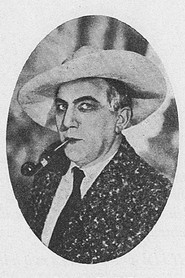
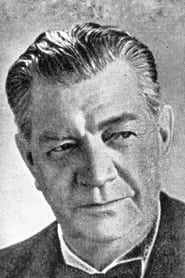
- Adolf Lindfors, who plays the elderly Baron Magnus, was a renowned stage actor and the director of the Finnish National Theatre.
- The film features a 'film-within-a-film' structure or flashback sequences depicting the era of King Gustav III of Sweden.
- Due to the loss of the original intertitles, the version often screened today features reconstructed titles based on Topelius's original texts.
- The actor Felix Borg plays the younger version of Baron Magnus in the historical flashback sequences.
- The film was a significant commercial success in Finland upon its release, proving that domestic audiences had an appetite for genre fiction.
- It was filmed during the winter and spring of 1922-1923, utilizing both natural light and early studio lighting techniques.
Visual style
The cinematography is characterized by its use of deep shadows and the atmospheric exploitation of the Herttoniemi Manor's architecture. It employs standard silent-era techniques such as iris shots to focus attention and double exposures to create ghostly apparitions. The lighting, though limited by the technology of the time, effectively contrasts the 'modern' 19th-century setting of the frame story with the more opulent, brightly lit flashbacks to the 18th-century Swedish court.
Innovations
The film is notable for its early use of double exposure to create 'transparent' ghosts, a technique that was cutting-edge for the fledgling Finnish film industry in 1923. It also successfully integrated location shooting with studio sets, creating a seamless sense of place that was more advanced than many contemporary Finnish productions.
Music
As a silent film, it originally had no synchronized soundtrack. Screenings in 1923 would have been accompanied by live piano or a small salon orchestra, likely playing a mix of classical pieces and dramatic improvisations suited to the horror genre. Modern restorations have been screened with new scores composed to emphasize the gothic and supernatural elements.
Famous quotes
Since the original intertitles are lost, specific quotes are reconstructed from the Topelius novella, such as: 'The shadows of the past never truly leave the halls of Rautakylä.'
Magnus to Lisette: 'You seek a crown that was never meant for your head.'
Memorable scenes
- The arrival of the travelers during the thunderstorm, which shifts the tone from a domestic drama to a gothic horror.
- The deathbed scene where Baron Magnus is pressured to sign the marriage papers while spectral figures appear to watch from the corners of the room.
- The flashback sequence to the court of King Gustav III, providing a stark, elegant contrast to the decaying state of the manor in the film's 'present' day.
What audiences thought
The film was a notable box office hit in 1923, particularly in Helsinki where it premiered at the prestigious Kino-Palatsi. Audiences were reportedly enthralled by the ghost sequences and the dramatic tension of the inheritance plot. Its success helped solidify Suomi-Filmi's dominance in the domestic market during the 1920s.
Film connections
Influenced by
- The works of Zachris Topelius
- German Expressionism (e.g., The Cabinet of Dr. Caligari)
- Swedish silent cinema (Victor Sjöström and Mauritz Stiller)
This film influenced
- Noidan kirot (1927)
- Valkoinen peura (1952)
- Modern Finnish horror cinema
Film restoration
The film is preserved. The visual footage exists and has been digitally restored by the National Audiovisual Institute (KAVI) in Finland. However, the original intertitles and the script are lost; the versions available today use reconstructed text based on the original literary source.
Where to watch
- Elonet (National Audiovisual Institute of Finland's streaming service)
- Special screenings at the Orion Cinema in Helsinki
- KAVI Archives