
Report from the Aleutians
"A documentary propaganda film produced by the U.S"
Keys: Space play/pause · ←/→ 10s · F fullscreen · M mute · </> speed
About this film
A documentary propaganda film produced by the U.S. Army Signal Corps about the Aleutian Islands Campaign during World War II. The film opens with a map showing the strategic importance of the island, and the thrust of the 1942 Japanese offensive into Midway and Dutch Harbor. Nominated for the Academy Award for Best Documentary Feature.
Cast & crew
More films like this

More Documentary films
View all →
More from John Huston
View all →
More about this film
About the production
Release date1943
BudgetFunded entirely by the U.S. Army Signal Corps as part of the war effort - exact budget figures were classified military information
Box officeNot commercially released - distributed through military channels and selected theaters for public viewing as part of the war information campaign
ProductionU.S. Army Signal Corps, War Department, Office of War Information
Filmed inAdak Island, Aleutian Islands, Alaska, Dutch Harbor, Alaska, Attu Island, Alaska, U.S. Army bases in the Aleutian chain
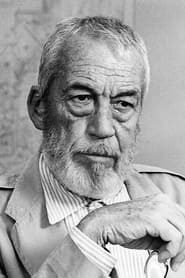
John Huston was commissioned as a captain in the U.S. Army Signal Corps to direct this film, making it one of the first times a major Hollywood director served as a wartime documentarian. The production faced extreme challenges including constant fog, freezing temperatures, and the constant threat of Japanese attack. Huston and his small crew lived alongside the soldiers for months, filming with handheld cameras to capture authentic footage. The military initially censored portions showing the harsh realities and boredom of military life, but Huston fought to maintain the film's authenticity. The crew had to develop special techniques for filming in extreme weather, including waterproof camera housings and modified equipment that could operate in sub-zero temperatures.
Themes
War and its psychological impactThe isolation and loneliness of military serviceThe contrast between military strategy and individual experienceThe human cost of warfarePatriotism and duty
Themes & topics
World War IIAleutian Islands CampaignMilitary documentaryU.S. ArmyCombat footageWar propagandaIsland warfareExtreme weatherJapanese occupationMilitary strategySoldier's lifeRemote warfarePacific theaterWar photographyMilitary training
Historical background
Report from the Aleutians (1943) emerged during World War II and immediate postwar filmmaking, when exhibition habits and national film industries were still taking shape.
Why this film matters
Report from the Aleutians remains accessible through digital archives, giving modern viewers a direct link to 1943 screen culture.
Making of
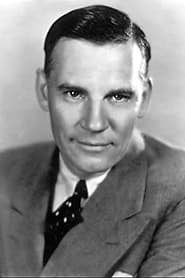
John Huston was commissioned as a captain in the U.S. Army Signal Corps specifically to make this documentary, bringing his Hollywood expertise to military filmmaking. He assembled a small crew of experienced cinematographers and spent several months embedded with troops in the Aleutians, living under the same harsh conditions as the soldiers. The production faced constant challenges from the extreme weather, with equipment frequently freezing and film becoming brittle in the cold. Huston's approach was revolutionary for military documentaries - he insisted on showing the mundane reality of military life alongside combat footage, including scenes of soldiers reading letters, playing cards, and dealing with boredom. This authenticity led to conflicts with military censors who wanted a purely heroic portrayal. Huston had to negotiate extensively with Army officials to preserve his vision, arguing that showing the truth would be more powerful than propaganda. The film's combat sequences were particularly dangerous to capture, as the crew often found themselves under fire while filming the Battle of Attu. Walter Huston's narration was recorded in Hollywood after John returned from the Aleutians, with the elder Huston delivering the script with the gravitas that made him one of America's most respected actors.
What critics said
Trade and revival screenings have kept Report from the Aleutians (1943) on the map for collectors and scholars rather than mass first-run promotion.
Did you know?
- John Huston's father, Walter Huston, provided the narration for the film, making this a rare father-son collaboration in documentary filmmaking
- The film was one of three documentaries Huston made for the Army Signal Corps during WWII, followed by 'The Battle of San Pietro' and 'Let There Be Light'
- Huston was reportedly nearly court-martialed for including footage of soldiers experiencing boredom and depression, which military officials considered detrimental to morale
- The original cut was 70 minutes long but was trimmed to 47 minutes after military officials objected to scenes showing the psychological toll of war
- Huston filmed actual combat operations during the Battle of Attu, making him one of the first directors to capture real-time warfare
- The film's cinematographer, Stanley Cortez, later went on to shoot 'The Magnificent Ambersons' for Orson Welles
- Despite being a government-produced film, it was distributed commercially by Warner Bros. to reach civilian audiences
- The Japanese-held islands of Attu and Kiska were the only U.S. territories occupied by enemy forces during WWII
- Huston used his own money to purchase additional film stock when military supplies ran low during crucial combat sequences
- The film's success led to the Army creating a dedicated documentary unit with Hollywood professionals
Awards & recognition
- National Board of Review Award for Best Documentary Film (1943)
Visual style
The cinematography in Report from the Aleutians was groundbreaking for its technical innovation and artistic achievement in extreme conditions. Stanley Cortez and his camera crew developed specialized equipment to film in sub-zero temperatures, including modified cameras with lubricants that wouldn't freeze and protective housing that allowed filming in blizzard conditions. The visual style combines sweeping landscape shots that emphasize the isolation and harshness of the Aleutian terrain with intimate handheld footage of soldiers' daily lives. Huston and his team used natural lighting extensively, creating a gritty, realistic look that differed dramatically from the polished aesthetic of Hollywood war films. The combat sequences were particularly remarkable for their immediacy and danger, with the camera operators often filming under fire. The film employs innovative camera movements, including tracking shots that follow soldiers through mud and snow, creating a sense of physical presence that was revolutionary for documentary filmmaking. The black and white photography emphasizes the bleakness of the environment while finding beauty in the stark landscapes. The cinematography successfully balances the epic scale of military operations with intimate human moments, creating a visual narrative that serves both informational and emotional purposes.
Innovations
Report from the Aleutians achieved several technical breakthroughs that advanced documentary filmmaking. The production team developed specialized camera equipment capable of operating in extreme cold, including heated camera housings and modified lubrication systems that prevented freezing. They pioneered techniques for filming in low-light conditions typical of the Aleutian weather, using faster film stocks and innovative lighting solutions. The documentary was among the first to use synchronous sound recording in combat situations, capturing authentic audio during military operations. The film's editing techniques, particularly the intercutting between strategic maps and human stories, created a new template for military documentaries that balanced information and emotion. The aerial photography sequences were technically remarkable for the time, using cameras mounted on military aircraft to capture footage of the remote island terrain. The production also developed new methods for transporting and processing film in remote locations without access to traditional laboratory facilities. These technical innovations not only made the film possible but also established new standards for documentary filmmaking in challenging environments. The film's success demonstrated that professional cinema techniques could be adapted to field conditions, influencing future military and documentary productions.
Music
The musical score for Report from the Aleutians was composed by Dimitri Tiomkin, one of Hollywood's most prominent composers, who contributed his services to the war effort. The score combines military marches with more melancholic themes that reflect the isolation and hardship of the Aleutian posting. Tiomkin incorporated elements of American folk music and military bugle calls to create an authentic military atmosphere while maintaining emotional depth. The sound design was particularly innovative for its time, featuring location audio recorded during actual military operations, including the sounds of artillery, aircraft, and soldiers' conversations. Walter Huston's narration provides the documentary's primary narrative thread, delivered with the authoritative yet empathetic tone that made him one of America's most respected actors. The film's audio mix balances narration, music, and natural sound effects to create an immersive experience that puts viewers on the remote islands with the soldiers. The soundtrack enhances the documentary's emotional impact without overwhelming the authenticity of the footage, a delicate balance that Huston maintained throughout. The musical themes Tiomkin developed would later influence his scores for other war films and westerns, demonstrating the lasting impact of this documentary work on his career.
Famous quotes
Here in the Aleutians, we fight not only the Japanese but the weather itself - and sometimes the weather is the tougher enemy.
These islands are America's northern frontier, and these men are its guardians.
In this war of machines and strategies, we must never forget that it is men who must endure.
The fog comes down like a blanket, hiding everything - friend and foe alike.
Every letter from home is a lifeline, a connection to the world we're fighting to protect.
In the Aleutians, boredom is as dangerous as bullets.
Memorable scenes
- The opening sequence with the animated map showing the strategic importance of the Aleutian Islands and Japan's offensive into American territory, effectively establishing the geopolitical context for viewers unfamiliar with this theater of war.
- The haunting footage of soldiers moving through thick fog, where visibility is limited to a few feet, creating a sense of isolation and vulnerability that captures the unique challenges of Aleutian warfare.
- The intimate scenes of soldiers reading letters from home, their faces illuminated by flashlights in dark barracks, providing a humanizing counterpoint to the military action sequences.
- The combat footage from the Battle of Attu, showing real soldiers under fire as they advance across barren, wind-swept terrain - some of the most authentic combat documentation of WWII.
- The closing sequence showing American flags being raised on recaptured territory, juxtaposed with weary faces of soldiers who understand the cost of victory.
What audiences thought
Report from the Aleutians was received positively by both military and civilian audiences when released in 1943. Soldiers who had served in the Aleutians praised its accuracy, with many writing letters to Huston thanking him for showing the reality of their experiences. Civilian audiences, who had little knowledge of the Aleutian Campaign, were shocked by the harsh conditions depicted but also moved by the human stories of individual soldiers. The film proved particularly effective in boosting recruitment for service in difficult conditions, as it presented military service realistically but heroically. Audience feedback collected by the War Department showed that viewers appreciated the film's honesty, with many commenting that it made them feel more connected to the distant war effort. The film's theatrical run in major cities was successful for a documentary, with many theaters reporting sell-out crowds. In military screenings, the film was used as a training tool to prepare soldiers for deployment to harsh environments. Veterans of the Aleutian Campaign have consistently cited the film as the most accurate representation of their experience, and it has become an important historical document for their families and researchers studying this often-overlooked theater of WWII.
Film connections
Influenced by
- The Battle of Midway (1942 documentary)
- Why We Fight series (Frank Capra)
- German newsreel style documentaries
- British wartime documentaries
- Robert Flaherty's ethnographic documentaries
- Dziga Vertov's documentary techniques
- Hollywood narrative film techniques
- Military training films
- Newsreel journalism
This film influenced
- The Battle of San Pietro (1945)
- Let There Be Light (1946)
- The True Glory (1945)
- Night and Fog (1955)
- Hearts and Minds (1974)
- The Anderson Platoon (1966)
- Dear America: Letters Home from Vietnam (1987)
- Restrepo (2010)
- Korengal (2014)
- Armstrong (2019)
Film restoration
Report from the Aleutians has been preserved by the National Archives and Records Administration (NARA) as part of their collection of U.S. government films. The original 35mm nitrate negatives were transferred to safety stock in the 1950s. In 2005, the film underwent a comprehensive digital restoration by the Academy Film Archive, with funding from the National Film Preservation Foundation. The restored version was screened at the 2006 Telluride Film Festival as part of a tribute to John Huston's documentary work. The film is also preserved in the Library of Congress's motion picture collection and was selected for inclusion in the National Film Registry in 2001 for its cultural, historical, and aesthetic significance. The restored version is available in both 35mm and digital formats, ensuring continued access for researchers and the public. Some original outtakes and unused footage were discovered in the National Archives in 2010 and have been made available to scholars studying Huston's work and WWII documentation.
Where to watch
- The Criterion Channel (streaming)
- Kanopy (through participating libraries and universities)
- The National Archives website (free streaming)
- Amazon Prime Video (for purchase or rental)
- YouTube (official upload by the National Archives)
- The Library of Congress's National Screening Room (free streaming)
- Various public domain DVD collections
- Museum of Modern Art's film collection (special screenings)
- Warner Bros. Archive Collection (DVD)
- Classic film streaming services specializing in war documentaries