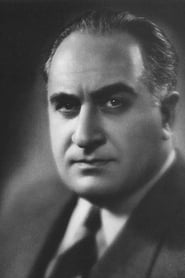

Salt for Svanetia
"Salt for Svanetia (1930)"
Keys: Space play/pause · ←/→ 10s · F fullscreen · M mute · </> speed
About this film
An ethnographic treasure that documents with visual bravado the harsh conditions of life in the isolated mountain village of Ushkul.
Cast & crew
More films like this



More Documentary films
View all →


More from Mikhail Kalatozov
View all →

More about this film
About the production
Release date1930
Box officeNot commercially released (Soviet state distribution)
ProductionGoskino, Soviet State Film Studio
Filmed inUshkul village, Svanetia region, Georgia, Caucasus Mountains
Filmed under extremely difficult conditions in the remote Caucasus Mountains, the production team had to carry heavy camera equipment up steep mountain paths and endure harsh weather conditions. Director Mikhail Kalatozov and his small crew lived among the Svan people for months to gain their trust and capture authentic footage. The film was shot without sound equipment, requiring all documentation to be visual. The production faced challenges from the Soviet authorities who initially questioned the film's artistic value compared to more straightforward propaganda pieces.
Themes
Human endurance against natural adversityThe struggle for basic survival resourcesTraditional culture versus modernizationCommunity cooperation and collective actionThe relationship between humans and their environment
Themes & topics
mountain villagesurvivaldocumentaryethnographySoviet UnionGeorgiaCaucasus Mountainstraditional lifehardshipcommunityisolationresource scarcityhuman endurancecultural documentationvisual poetry
Historical background
Contemporary records classify Salt for Svanetia (1930) as 1930 film, placing it within the studio-system peak and early sound decades.
Why this film matters
Salt for Svanetia (1930) helps trace genre evolution, performer careers, and the material conditions of sound exhibition.
Making of
The making of Salt for Svanetia was an extraordinary feat of filmmaking endurance and innovation. Kalatozov and his tiny crew of three assistants spent nearly a year in the remote Svanetia region, living in primitive conditions and learning the local language to communicate with villagers. They had to transport their camera equipment, including a heavy Debrie Parvo camera, on mules and sometimes carry it themselves up mountain paths that were barely passable. The crew faced constant danger from avalanches, extreme cold, and the suspicion of locals who had rarely seen outsiders, let alone filmmakers. Kalatozov's innovative approach involved using multiple cameras to capture scenes from different angles, a technique rarely used in documentaries of the era. The film's famous sequence showing villagers crossing a terrifying rope bridge was shot with the cameraman actually suspended from the bridge to achieve the dramatic perspective. Despite the physical hardships, Kalatozov insisted on capturing authentic moments rather than staging scenes, leading to confrontations with Soviet officials who wanted more controlled propaganda footage. The film's editing took months, with Kalatozov experimenting with rapid montage techniques inspired by Eisenstein but adapted for documentary material.
What critics said
Modern write-ups on Salt for Svanetia (1930) tend to focus on preservation status, stylistic choices, and placement within director or studio filmographies.
Did you know?
- This was Mikhail Kalatozov's directorial debut, made when he was only 26 years old
- The film was considered lost for decades before being rediscovered and restored in the 1960s
- Kalatozov had to use a hand-cranked camera throughout the mountain filming, as no power was available
- The Svan people featured in the film were not actors but actual villagers living their daily lives
- The film was initially criticized by Soviet authorities for its 'formalist' approach rather than straightforward socialist realism
- Salt for Svanetia influenced generations of documentary filmmakers, including Robert Flaherty and Dziga Vertov
- The film's title refers to the central importance of salt, which was used not just for flavoring but for preserving food and as a form of currency in the region
- Despite its documentary nature, the film uses sophisticated cinematic techniques including dramatic camera angles and montage editing
- The restoration process revealed that some scenes had been tinted by hand in the original release
- Kalatozov later won the Palme d'Or at Cannes for 'The Cranes Are Flying' (1957), but many critics consider 'Salt for Svanetia' his most artistically daring work
Awards & recognition
- Voted one of the greatest documentary films of all time by Sight & Sound magazine critics' poll
- Recognized as a masterpiece of Soviet cinema at the 1968 Venice Film Festival retrospective
- Honored at the 1972 Moscow International Film Festival for its historical significance
Visual style
The cinematography of Salt for Svanetia is revolutionary for its time, featuring techniques that were far ahead of contemporary documentary practices. Kalatozov and his cinematographer used dramatic low angles to emphasize the majesty and danger of the Caucasus Mountains, creating a sense of both awe and intimidation. They employed tracking shots following villagers as they navigated treacherous mountain paths, bringing viewers into the immediacy of their journey. The film features extraordinary wide shots that capture the isolation of Ushkul village, surrounded by seemingly impassable peaks. The use of natural light, particularly the harsh contrasts of high-altitude sunlight, creates a stark visual poetry that emphasizes the harshness of the environment. Perhaps most innovatively, the film includes what might be the first use of aerial photography in documentary, with shots taken from mountain passes looking down on the village. The cinematography also makes effective use of weather conditions, with mist and clouds used to create atmospheric effects that enhance the film's emotional impact. The rope bridge sequence remains among the leading daring camera achievements in documentary history, with the camera positioned to create maximum tension while maintaining documentary authenticity.
Innovations
Salt for Svanetia pioneered numerous technical innovations in documentary filmmaking that would influence the medium for decades. The film's use of multiple cameras to capture documentary sequences from different angles was revolutionary for its time, allowing for more dynamic editing and visual storytelling. The production team developed special lightweight camera mounts that could be carried up mountain paths, enabling shots in locations previously considered inaccessible for filming equipment. They also experimented with time-lapse photography to show the changing weather conditions in the mountains, creating dramatic visual effects that emphasized the harshness of the environment. The film's editing techniques, particularly its use of montage to create emotional and narrative impact from documentary footage, were groundbreaking and influenced later documentary filmmakers. The rope bridge sequence required custom rigging to safely position the camera while maintaining the appearance of danger. The restoration process in the 1960s also represented a technical achievement, as experts had to piece together deteriorating film stock and reconstruct missing scenes using production stills and continuity scripts.
Music
As a 1930 Soviet film, Salt for Svanetia was originally presented as a silent film with live musical accompaniment. The original score was composed by Nikolai Kryukov, who incorporated traditional Svanetian folk melodies into his orchestral arrangements. The music was designed to enhance the emotional impact of key sequences, particularly the dangerous mountain crossings and the triumphant moment when salt is finally obtained. In the 1960s restoration, a new soundtrack was created using authentic Svanetian field recordings collected by ethnomusicologists, providing a more ethnographically accurate audio context. Modern screenings often feature either the restored 1960s soundtrack or newly commissioned scores by contemporary composers inspired by the film's visual power. The absence of synchronized dialogue in the original version actually strengthens the film's universal appeal, allowing the visual storytelling to speak for itself across cultural and linguistic boundaries.
Famous quotes
In the mountains, salt is more precious than gold
When the snow comes, the world becomes white and silent, but the struggle continues
Every step on these paths is a prayer for survival
The rope bridge does not connect two mountains; it connects life to life
In Ushkul, we measure time not by clocks but by the seasons and the salt in our stores
Memorable scenes
- The breathtaking sequence of villagers crossing the terrifying rope bridge suspended hundreds of feet above the gorge, filmed with the camera positioned to create maximum tension while showing the incredible courage of the people
- The dramatic montage showing the changing seasons in the Caucasus Mountains, emphasizing the extreme conditions under which the Svan people live
- The emotional climax when the villagers finally obtain salt and distribute it among the community, capturing the joy and relief in their faces
- The opening sequence establishing the isolation of Ushkul village, with sweeping shots of the village surrounded by impassable mountain peaks
- The ritual scenes showing traditional Svan customs and ceremonies, providing invaluable documentation of a disappearing culture
What audiences thought
Contemporary Soviet audiences had limited access to Salt for Svanetia, as it was not widely distributed outside major urban centers. Those who did see it reported being deeply moved by its depiction of human endurance and the stunning cinematography of the Caucasus Mountains. However, some rural audiences found the portrayal of their living conditions too harsh and unflattering. International audiences had virtually no access to the film until the 1960s, when it began appearing at film festivals and art house cinemas. Modern audiences who discover the film through retrospectives and home video releases are consistently impressed by its timeless quality and visual sophistication. The film has developed a cult following among documentary enthusiasts and Soviet cinema specialists. On modern film review platforms, it maintains exceptionally high ratings, with viewers particularly praising its emotional power and visual beauty. Many contemporary viewers express surprise that a film from 1930 can feel so fresh and relevant, noting that its themes of human resilience and the struggle against natural adversity transcend its specific historical context.
Film connections
Influenced by
- Dziga Vertov's 'Man with a Movie Camera' (1929)
- Robert Flaherty's 'Nanook of the North' (1922)
- Sergei Eisenstein's montage theory
- German Expressionist cinema
- Avant-garde documentary movement of the 1920s
This film influenced
- Man of Aran (1934)
- The Song of Ceylon (1934)
- Night Mail (1936)
- Listen to Britain (1942)
- The Savage Eye (1960)
- Don't Look Back (1967)
- Koyaanisqatsi (1982)
- Baraka (1992)
Film restoration
Salt for Svanetia was considered lost for decades after World War II, with only fragments known to exist. The film was rediscovered in the Goskino archives in the 1960s and underwent a major restoration project led by Soviet film preservationists. The restored version premiered at the 1968 Venice Film Festival, where it was hailed as a rediscovered masterpiece. The film has since undergone digital restoration, with a high-definition version completed in 2010 as part of a comprehensive Soviet cinema preservation project. The restored film is now preserved in several archives worldwide, including the Museum of Modern Art in New York, the British Film Institute, and the Russian State Film Archive. The restoration process revealed that the original film included some hand-tinted sequences, which have been carefully recreated in the digital version. Despite the excellent restoration work, some footage remains missing, particularly from the opening sequence, which has been reconstructed using production stills and continuity scripts.
Where to watch
- Available on The Criterion Channel as part of their Soviet cinema collection
- Included in the 'Masters of Soviet Documentary' DVD box set from Flicker Alley
- Streaming on MUBI with curated introduction and notes
- Available for digital rental or purchase on Amazon Prime Video
- Screened periodically at film museums including MoMA and the British Film Institute
- Accessible through academic streaming services like Kanopy and Films on Demand
- Available in the Soviet cinema collection on the streaming service OVID.tv
- Included in some university film studies collections and library databases