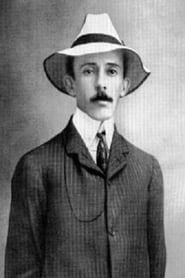
Santos Dumont Explaining His Air Ship to the Hon. C.S. Rolls
"Santos Dumont meets Charles Rolls"
Keys: Space play/pause · ←/→ 10s · F fullscreen · M mute · </> speed
About this film
Brazilian aviator Santos Dumont explains his airship plans to Charles Rolls in a 1901 documentary record. A meeting of early flight pioneers on film.
Cast & crew
More films like this
More Documentary films
View all →
More about this film
About the production
Release dateOctober 1901
ProductionBritish Mutoscope and Biograph Company
Filmed inLondon, England
the release was produced during the early days of cinema when documentary shorts were gaining popularity. The British Mutoscope and Biograph Company was known for capturing actuality films featuring notable figures and events. The filming likely took place in a single session with basic camera equipment of the era, using natural lighting typical of early documentary filmmaking. The interaction appears spontaneous and unscripted, capturing genuine enthusiasm between the two aviation pioneers.
Themes
International CollaborationTechnological InnovationAviation PioneersScientific DiscoveryCross-cultural Exchange
Themes & topics
Historical background
Released in 1901, Santos Dumont Explaining His Air Ship to the Hon. C.S. Rolls belongs to cinema's first decade and reflects production norms of its release season.
Why this film matters
Santos Dumont Explaining His Air Ship to the Hon. C.S. Rolls contributes to understanding regional output and audience tastes around 1901.
Making of
The filming of this documentary short occurred during a period when the British Mutoscope and Biograph Company was actively producing actuality films featuring prominent figures. The company's cameramen would have used their distinctive 68mm camera system, which produced unusually high-quality images for the time. The interaction between Santos Dumont and Rolls appears completely unscripted, with Santos Dumont genuinely excited to share his airship designs. Rolls, already known for his interest in all things mechanical and innovative, responds with authentic curiosity. The filmmakers likely positioned the camera to capture both men and the technical drawings Santos Dumont was showing, creating a composition that balanced the human interaction with the technical elements. The entire sequence was probably filmed in one continuous take, typical of documentary filmmaking of this era.
What critics said
Review records for Santos Dumont Explaining His Air Ship to the Hon. C.S. Rolls are typical of 1901: brief for shorts, more sustained for features.
Did you know?
- the release captures a meeting two years before Charles Rolls would co-found Rolls-Royce Motor Cars with Henry Royce in 1904
- Alberto Santos Dumont would go on to win the Deutsch de la Meurthe prize in 1901 for his first airship flight around the Eiffel Tower
- The film was made just two years before the Wright brothers' first powered flight in 1903
- Both men would die in aviation-related accidents: Rolls in 1910 and Santos Dumont in 1932
- The British Mutoscope and Biograph Company used 68mm film for their productions, larger than the standard 35mm
- the release represents one of the earliest documented meetings between aviation pioneers on camera
- Charles Rolls was an early balloon enthusiast before transitioning to powered flight
- The film was likely shot in London, where both men happened to be present at the same time
- Santos Dumont was already famous in Europe for his lighter-than-air flights when the release was made
- The meeting demonstrates the international nature of early aviation development
Visual style
The cinematography reflects the technical limitations and practices of 1901 documentary filmmaking. The British Mutoscope and Biograph Company used their distinctive large-format 68mm film, which produced unusually sharp and detailed images for the era. The camera would have been stationary, capturing the scene from a single angle typical of early actuality films. Natural lighting was used, with the subjects positioned to maximize visibility. The composition focuses on both men and the technical drawings Santos Dumont presents, creating a balanced frame that captures both the human interaction and the technical elements. The film speed and exposure would have been manually controlled, resulting in the characteristic motion and visual quality of early cinema.
Innovations
The film's primary technical achievement lies in its use of the British Mutoscope and Biograph Company's 68mm film format, which produced exceptionally high-quality images for the time. This large format allowed for greater detail and clarity, making it possible to see the technical drawings and expressions of the subjects more clearly than with standard formats. The film also represents an early example of documentary filmmaking capturing unscripted interaction between notable figures, showcasing the potential of cinema as a medium for recording significant historical moments. The preservation of this meeting provides valuable documentation of early aviation history that would otherwise have been lost.
Music
the release was produced during the silent era, so it had no synchronized soundtrack. When originally shown, it would have been accompanied by live music, typically a piano or small orchestra, selected by the theater's musical director. The music would have been chosen to match the intellectual and innovative nature of the content, likely featuring light, optimistic compositions. Modern screenings may be accompanied by period-appropriate music or newly composed scores that reflect the film's historical significance and the excitement of early aviation.
Famous quotes
No recorded dialogue exists from this silent film, but the visual interaction between Santos Dumont and Rolls conveys their mutual enthusiasm for aviation innovation
Memorable scenes
- The key scene shows Santos Dumont animatedly pointing to and explaining his airship designs on paper, while Rolls leans in with intense interest, occasionally nodding and asking questions. The genuine excitement and intellectual curiosity between the two pioneers creates a compelling human moment that transcends the technical limitations of early filmmaking.
What audiences thought
Early 1900s audiences were typically captivated by actuality films showing real people and events, especially those featuring famous or notable figures. the release would have appealed to viewers interested in technological innovation and aviation, which were topics of great public fascination at the time. The opportunity to see Santos Dumont, already famous for his balloon flights, and Rolls, a well-known automobile enthusiast, would have been a significant draw. Modern audiences viewing the release through historical archives and film societies appreciate it as a window into the early days of aviation and the collaborative nature of technological innovation.
Film connections
Influenced by
- Early actuality films by the Lumière brothers
- British Mutoscope and Biograph Company's documentary style
This film influenced
- Later aviation documentaries
- Biographical shorts about aviation pioneers
Film restoration
the release is considered extremely rare, with only a few copies known to exist in film archives. The British Film Institute holds a copy in their collection, and it has been preserved as part of their early cinema heritage. The film has undergone restoration to preserve what remains of the original 68mm footage, though some deterioration is evident due to its age and the nitrate film stock originally used.
Where to watch
- British Film Institute Archive
- Early cinema film festivals
- Specialized aviation history collections
- Academic film archives
- Museum of Modern Art Film Collection