
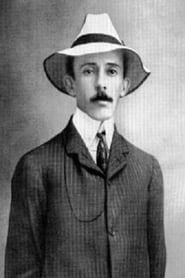
Alberto Santos Dumont
Actor
Born: July 20, 1873 in Palmira, Minas Gerais, Brazil Died: July 23, 1932 Active: 1898-1932 Birth Name: Alberto Santos-Dumont
Films
1 film
About Alberto Santos Dumont
Alberto Santos-Dumont — Brazilian aviation pioneer and inventor who made contributions to early flight technology. Born into a wealthy coffee-growing family, he moved to Paris in 1891 to study engineering and soon became fascinated with ballooning and aviation. Between 1898 and 1909, he designed, built, and flew numerous lighter-than-air and heavier-than-air aircraft, becoming an international celebrity in the process. His most famous achievements include the first powered flight of a non-rigid airship in 1898, winning the Deutsch de la Meurthe prize for circling the Eiffel Tower in 1901, and making what many consider the first powered heavier-than-air flight in Europe with his 14-bis aircraft in 1906. His appearance in the 1901 documentary film was part of his efforts to demonstrate and explain his inventions to the public and fellow enthusiasts. Santos-Dumont's later years were marked by declining health and disillusionment with the military applications of aviation, leading to his tragic suicide in 1932.
The Craft
Milestones
- First successful powered flight of a non-rigid airship (1898)
- Won Deutsch de la Meurthe prize for circling Eiffel Tower (1901)
- First verified heavier-than-air flight in Europe with 14-bis (1906)
- Invented the first wristwatch for aviators with Cartier (1904)
- Published autobiography 'My Airships' (1904)
Best Known For
Iconic Roles
Must-See Films
Accolades
Won
- Deutsch de la Meurthe Prize (1901)
- Gold Medal of the Aeronautical Club of France (1902)
- Prix Moïse de Léonard de Vinci (1905)
Special Recognition
- Statue at Saint-Cloud, Paris
- Santos Dumont Airport in Rio de Janeiro named after him
- Brazilian Air Force Academy bears his name
- Cartier Santos watch named in his honor
- Numerous streets and monuments worldwide
Working Relationships
Worked Often With
Why They Matter
Impact on Culture
Santos-Dumont revolutionized public perception of aviation through his spectacular demonstrations and charismatic personality. His flights over Paris made him an international celebrity and helped popularize the idea that flight was possible and safe for humans. He was instrumental in transitioning aviation from a dangerous curiosity to a practical technology, and his systematic approach to aircraft design influenced generations of engineers. His collaboration with Cartier to create the first practical wristwatch for pilots changed watchmaking forever, making wristwatches acceptable for men.
Lasting Legacy
Santos-Dumont is celebrated as the 'Father of Aviation' in Brazil and remains a national hero there. While the Wright Brothers are credited with the first powered flight in America, Santos-Dumont's 1906 flight in Europe was the first publicly witnessed, verified, and documented heavier-than-air flight, making him a pivotal figure in aviation history. His innovations in airship design laid the groundwork for modern blimps and dirigibles. The Santos-Dumont watch created by Cartier remains.
Who They Inspired
His systematic approach to aircraft design and his emphasis on safety influenced early aviation pioneers worldwide. His public demonstrations helped inspire a generation of European aviators, including Louis Blériot and the Voisin brothers. His work on dirigibles influenced military and commercial airship development for decades. His insistence on making aviation accessible and safe rather than purely military helped shape the civilian aviation industry.
Off Screen
Santos-Dumont never married and had no children, dedicating his life entirely to aviation and invention. He was known for his eccentric lifestyle, including keeping his airships tethered outside his Paris apartment and often dining at Maxim's while wearing his aviation gear. He suffered from multiple sclerosis in his later years and became deeply depressed about the use of aircraft in warfare, particularly during World War I. His final years were marked by increasing isolation and health problems, culminating in his suicide by hanging in 1932.
Education
Studied engineering in Paris after moving to France in 1891; largely self-taught in aviation and mechanics
Did You Know?
- He was the first person to take off, fly, and land a powered heavier-than-air aircraft in Europe
- He kept his airship tethered to a gas lamp post outside his Paris apartment
- He invented the first practical wristwatch after complaining to Louis Cartier about the inconvenience of using a pocket watch while flying
- He was a vegetarian and teetotaler, unusual for his time
- He donated his prize money from aviation contests to the poor of Paris
- His 1901 flight around the Eiffel Tower attracted 100,000 spectators
- He was friends with Thomas Edison and the Wright Brothers
- He designed a personal helicopter called the 'Helicopter' in 1905, though it never flew successfully
- His childhood nickname was 'Santos' to distinguish him from his father
- He was the first person to use an automobile to transport an aircraft
In Their Own Words
I have not conquered the air; I have simply learned to use it.
The air is the only place free from prejudices.
It is not the machines that will make men better, but the men who will make the machines better.
I do not want to be remembered as a conqueror, but as a man who opened the doors to the sky for humanity.
Frequently Asked Questions
Who was Alberto Santos-Dumont?
Alberto Santos-Dumont — Brazilian aviation pioneer and inventor who made significant contributions to early flight technology, including developing the first practical dirigible balloons and making the first verified heavier-than-air flight in Europe in 1906.
What films is Alberto Santos-Dumont best known for?
Titles linked here include Santos Dumont Explaining His Air Ship to the Hon. C.S. Rolls (1901).
When was Alberto Santos-Dumont born and when did he die?
Born July 20, 1873; died July 23, 1932.
What awards did Alberto Santos-Dumont win?
His most significant award was the Deutsch de la Meurthe Prize in 1901 for successfully circling the Eiffel Tower. He also received the Gold Medal of the Aeronautical Club of France in 1902 and the Prix Moïse de Léonard de Vinci in 1905.
What was Santos-Dumont's contribution to aviation?
Santos-Dumont pioneered both lighter-than-air and heavier-than-air flight, developing the first practical non-rigid airships and making the first publicly witnessed powered airplane flight in Europe in 1906 with his 14-bis aircraft.