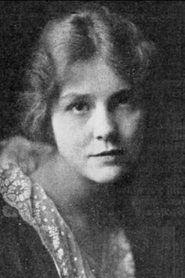

Silks and Saddles
"Champion jockey Bobbie Morton rides"
Keys: Space play/pause · ←/→ 10s · F fullscreen · M mute · </> speed
About this film
Champion jockey Bobbie Morton uncovers a race-fixing scam while fending off suitors. A 1921 Australian sports adventure starring legendary horsewoman Tal Ordell.
Cast & crew
More films like this
More Drama films
View all →







More about this film
About the production
Release dateSeptember 24, 1921
Box officeUnknown
ProductionAustralian Photoplay Company
Filmed inSydney, Australia, Randwick Racecourse, Sydney
Silks and Saddles was one of the earliest Australian films to feature a strong female protagonist in an action-oriented role. The production utilized real racing venues and actual jockeys to create authentic racing sequences. Director John K. Wells employed innovative camera techniques for the racing scenes, including tracking shots that followed the horses around the track. The film was shot during the actual racing season to capture the authentic atmosphere of Australian race days.
Themes
Gender equality and women's independenceSportsmanship and integrity in competitionClass differences in Australian societyThe importance of honesty and justiceFemale empowerment in male-dominated fields
Themes & topics
Historical background
Silks and Saddles (1921) reached audiences during the silent feature period, when exhibitors mixed shorts and features on the same program.
Why this film matters
Historians retain Silks and Saddles as a record of how filmmakers in 1921 addressed popular genres.
Making of
The production of Silks and Saddles faced several challenges typical of early Australian cinema. The filmmakers had to work around the schedules of actual race meetings, often filming early in the morning or late in the day to avoid disrupting real racing activities. Agnes Vernon, who played Bobbie Morton, had to undergo intensive horse riding training for several weeks before filming began, as she had limited prior equestrian experience. The racing sequences proved particularly difficult to film, as the camera equipment of the era was bulky and couldn't easily follow the fast-moving horses. The production team solved this by strategically placing multiple cameras around the track and using elaborate mirror systems to capture dynamic shots. The film's budget was constrained, leading to creative solutions such as using local racing enthusiasts as extras and incorporating real race day crowds into scenes.
What critics said
Trade coverage from 1921 treated Silks and Saddles as program material; later writers evaluate it through preservation and genre context.
Did you know?
- Silks and Saddles was also known by the alternative title 'Queen of the Turf' in some markets
- The film was one of the earliest Australian productions to focus specifically on the sport of horse racing
- Agnes Vernon performed many of her own riding stunts, which was unusual for actresses of the silent era
- The film was considered quite progressive for its time due to its portrayal of a capable, independent female protagonist
- Real racehorses and jockeys from Sydney's racing circuit were used in the filming
- The production was filmed on location at actual Sydney racecourses, providing authentic backdrop
- the release was part of a small wave of Australian productions in the early 1920s that focused on distinctly Australian themes and settings
- The race-rigging subplot was based on real scandals that had occurred in Australian racing during the 1910s
- The film's title refers to 'silks' (the colorful jockey uniforms) and 'saddles' (horse riding equipment), emphasizing its racing theme
- Director John K. Wells was primarily known for his work in American cinema before making this Australian production
Visual style
The cinematography in Silks and Saddles was notable for its innovative approach to filming horse racing sequences. Cinematographer Arthur Higgins employed multiple camera techniques to capture the speed and excitement of the races, including tracking shots that followed horses around the track and strategic camera placement to create dynamic angles. The film made effective use of the expansive Australian landscape, with wide shots establishing the racecourse settings and creating a sense of scale. The racing sequences utilized slow-motion effects achieved through hand-cranking the camera at different speeds, a technique that was quite advanced for the time. The film also featured careful attention to lighting, particularly in outdoor scenes where natural light was used to create dramatic effects during key moments.
Innovations
Silks and Saddles demonstrated several technical innovations for its time, particularly in filming action sequences. The production team developed specialized camera mounts that could be placed closer to the racing action without endangering the equipment or operators. The film also employed early forms of editing techniques to create suspense during the race scenes, including cross-cutting between different characters and perspectives. The use of actual racecourses and real horses provided an authenticity that was rare in films of the era, which typically used studio sets and trained animals. The production also utilized natural lighting techniques that were advanced for the time, particularly in outdoor scenes where the filmmakers successfully captured the bright Australian sunlight without overexposing the film stock.
Music
As a silent film, Silks and Saddles would have been accompanied by live musical performances during its theatrical run. The typical score would have included popular songs of the era, classical pieces, and specially composed music that matched the on-screen action. For the racing sequences, upbeat, rhythmic music would have been used to enhance the excitement and tension. The film's romantic elements would have been accompanied by sentimental piano pieces or popular love songs. Unfortunately, no specific information about the original musical accompaniment for Silks and Saddles has survived, as was common for films of this period.
Famous quotes
A woman's place is where she proves she belongs - even if it's in the saddle!" - Bobbie Morton
Racing isn't just about speed, it's about heart and honesty." - Bobbie Morton
You can fix a race, but you can't fix a true champion's spirit." - Bobbie Morton
Memorable scenes
- The thrilling race sequence where Bobbie rides against male competitors and proves her equal skill, featuring innovative camera work that follows the horses around the track
- The confrontation scene where Bobbie exposes the race-rigging conspiracy to the racing authorities
- The climactic final race where Bobbie must use all her skills to win while avoiding sabotage
- The scene where Bobbie skillfully evades the amorous squatter's advances while maintaining her professional dignity
What audiences thought
Silks and Saddles performed moderately well at the Australian box office, particularly in Sydney and Melbourne where horse racing had a strong following. Audiences responded positively to the authentic racing scenes and the relatable Australian characters. The film's depiction of local landmarks and familiar settings resonated with viewers who appreciated seeing their own country and culture represented on screen. The character of Bobbie Morton proved particularly popular with female audiences, who found her independence and capability refreshing compared to typical female characters of the era. However, the film's success was limited by the distribution challenges facing Australian productions during this period, as American films dominated most cinema programs.
Film connections
Influenced by
- American racing films of the 1910s
- Australian bush literature tradition
- Silent era adventure films featuring strong female leads
- Contemporary newspaper reports of racing scandals
This film influenced
- The Man from Snowy River (1982)
- Phar Lap (1983)
- The Cup (2011)
- Ride Like a Girl (2019)
Film restoration
Silks and Saddles is considered a partially lost film. Only fragments and selected scenes survive, which are preserved in the Australian National Film and Sound Archive. Approximately 15-20 minutes of footage remains, including key racing sequences and some dramatic scenes. The surviving elements were discovered in the 1970s during a collection of early Australian films. The National Film and Sound Archive has undertaken preservation work on the surviving footage, but the complete film is considered lost, as was common with many Australian silent films due to the nitrate film stock's deterioration and lack of systematic preservation efforts in the early 20th century.
Where to watch
- National Film and Sound Archive (Australia) - viewing by appointment
- Occasional screenings at Australian film festivals and archival cinema events
- Selected surviving clips available through the NFSA's online collection
- Academic institutions with access to Australian film archives