Snowball Fight
"Street and coming"
Keys: Space play/pause · ←/→ 10s · F fullscreen · M mute · </> speed
About this film
Wintertime in Lyon. About a dozen people, men and women, are having a snowball fight in the middle of a tree-lined street. The cyclist coming along the road becomes the target of opportunity. He falls off his bicycle. He's not hurt, but he rides back the way he came, as the fight continues.
Cast & crew
More films like this
More Documentary films
View all →
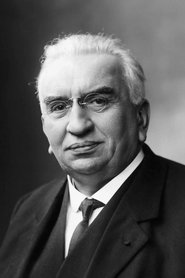
More from Louis Lumière
View all →


More about this film
About the production
Release dateJanuary 1897
Box officeNot applicable - early films were not exhibited commercially in the modern sense but were shown as part of Lumière demonstrations
ProductionLumière Company
Filmed inLyon, France
This film was shot using the Lumière Cinématographe, which served as both camera and projector. The single continuous take captures real people in an unscripted situation, typical of the Lumière brothers' actuality films. The film was likely shot in one take with no retakes, as was common for early cinema productions. The snowball fight may have been staged or spontaneous - historians debate whether early Lumière scenes were completely candid or lightly arranged for the camera.
Themes
Play and recreationCommunity and social interactionWinter activitiesSpontaneity and natural behaviorUrban life in the 19th century
Themes & topics
Historical background
Contemporary records classify Snowball Fight (1897) as 1897 short film produced by the lumiere company, placing it within the earliest years of projected motion pictures.
Why this film matters
Snowball Fight (1897) helps trace genre evolution, performer careers, and the material conditions of silent exhibition.
Making of
The making of Snowball Fight exemplifies the techniques of early cinema. The Lumière brothers' Cinématographe was a revolutionary device that combined camera, printer, and projector in one portable unit, weighing only about 5 kilograms. For this film, the camera would have been set up on a tripod at a strategic position to capture the entire street scene. The participants were likely local residents of Lyon who may have been instructed to engage in a snowball fight for the camera, or the camera may have simply captured a spontaneous moment. The single continuous take was a technical necessity due to the limited film capacity of early cameras. The film was hand-cranked, meaning the frame rate varied depending on the operator's speed, typically around 16-18 frames per second. The resulting film was processed using the Lumière brothers' own dry plate process, which produced clearer images than many contemporary methods.
What critics said
Where contemporary reviews survive, Snowball Fight is discussed in terms of audience appeal at release; later criticism often reframes it through archive restoration and festival programming.
Did you know?
- This film is one of approximately 1,422 films produced by the Lumière brothers between 1895 and 1905
- The Lumière brothers considered their films 'living photographs' rather than cinema as we know it today
- Snowball Fight exemplifies the Lumière philosophy of capturing real life rather than creating theatrical narratives
- The film was likely shot by either Louis Lumière himself or one of his trained camerapersons
- Early films like this were typically shown in programs of 10-12 short films lasting about 15-20 minutes total
- The Cinématographe camera used to film this could only hold about 17 meters of film, limiting shots to under one minute
- This film demonstrates early use of depth of field, with action occurring at multiple distances from the camera
- The bicycle featured in the film represents the growing popularity of cycling in late 19th-century Europe
- Snowball Fight was part of the Lumière brothers' efforts to document everyday activities from around the world
- The film survives today and has been digitized by various film archives, including the Institut Lumière in Lyon
Visual style
The cinematography of Snowball Fight demonstrates the sophisticated visual approach of the Lumière brothers despite the technical limitations of early cinema. The camera is positioned at an angle that captures the full width of the tree-lined street, creating a sense of depth and perspective. The composition uses the natural framing of the trees to guide the viewer's eye through the scene. The fixed camera position was a technical necessity of the time, but the Lumière brothers were skilled at choosing optimal viewpoints that would capture the most interesting action. The film shows early mastery of capturing movement within the frame, with the snowball fight creating dynamic patterns across different planes of depth. The natural lighting, typical of Lumière films who preferred to shoot outdoors, creates a bright, clear image that showcases the winter atmosphere. The camera's relatively wide field of view allows multiple interactions to occur simultaneously, creating a rich tableau of human activity that rewards repeated viewing.
Innovations
Snowball Fight represents several important technical achievements in early cinema. The film was shot using the Lumière Cinématographe, which was superior to many contemporary devices due to its intermittent movement mechanism and claw system for film advance. The camera's relatively high frame rate for the time (approximately 16-18 fps) created smoother motion than many early films. The film demonstrates early mastery of exposure control in challenging winter conditions, maintaining clear visibility despite the bright snow that could easily cause overexposure. The single continuous take showcases the efficient use of limited film capacity - at about 45 seconds, the film makes maximum use of the Cinématographe's approximately 17-meter film capacity. The preservation of the film's image quality over more than a century also testifies to the durability of the Lumière brothers' film stock and processing techniques.
Music
As a silent film from 1897, Snowball Fight had no original soundtrack or synchronized audio. When first exhibited, the film would have been accompanied by live music, typically a pianist or small ensemble playing appropriate mood music. In some venues, a sound effects man might have provided additional audio elements to enhance the viewing experience. Modern screenings and digital versions of the film are sometimes accompanied by newly composed scores or period-appropriate music from the late 19th century. The absence of recorded sound means that the visual storytelling had to carry the entire narrative, which the film accomplishes effectively through clear action and expressive movement.
Memorable scenes
- The climactic moment when the unsuspecting cyclist enters the frame and immediately becomes the target of the snowball fight, losing control of his bicycle and falling to the ground in a moment of accidental comedy that perfectly captures the chaotic energy of the scene
What audiences thought
Early audiences in 1897 would have been captivated by Snowball Fight, as they were by most of the Lumière brothers' films. The novelty of seeing moving, lifelike images of people engaged in familiar activities was astonishing to viewers who had never experienced cinema before. Contemporary accounts suggest that audiences particularly enjoyed films showing recognizable situations and activities, finding them more relatable than the staged performances common in theater. The snowball fight would have been especially entertaining due to its dynamic action and the humorous moment when the cyclist becomes an unexpected participant. Modern audiences viewing the film today often express fascination with its window into the past, noting details of clothing, architecture, and social behavior from the late 19th century. The film's brief runtime and simple narrative make it accessible even to contemporary viewers, who can appreciate both its historical value and its timeless depiction of play and community.
Film connections
Influenced by
- Still photography traditions
- Documentary and actuality photography
- The Lumière brothers' scientific background
- 19th-century interest in capturing reality
- Early observational documentary methods
This film influenced
- Other Lumière actuality films
- Early documentary traditions
- Cinéma vérité movement
- Direct cinema
- Modern street photography and videography
- Reality television and observational documentary
Film restoration
Snowball Fight is preserved and has been restored by various film archives including the Institut Lumière in Lyon, France. The original nitrate film has been carefully preserved and digitized for modern viewing. The film survives in good condition considering its age, with clear images that retain much of their original detail. Multiple archives hold copies of the film, ensuring its preservation for future generations. The digital restoration has allowed the film to be widely distributed and studied by film historians and enthusiasts worldwide.
Where to watch
- Institut Lumière website and museum
- YouTube (official archive uploads)
- British Film Institute collection
- Library of Congress digital archives
- Various film history streaming services
- Educational film collections and databases
- Museum of Modern Art film collection online