
Spooks
"Late in the evening, just as a skeleton puts out its cat for the night, the…"
Keys: Space play/pause · ←/→ 10s · F fullscreen · M mute · </> speed
About this film
Late in the evening, just as a skeleton puts out its cat for the night, the masked Phantom stalks the graveyard, pausing only to insult an overly inquisitive owl. The Phantom enters the local opera house and falls in love with Kitty, a feline singer who is terribly jealous of the
Cast & crew
More films like this
More Animation films
View all →


More from Walter Lantz
View all →
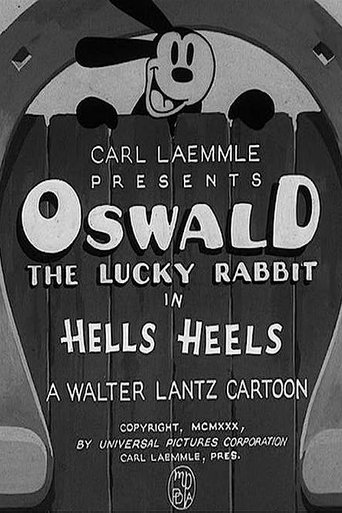
More about this film
About the production
Release dateJanuary 27, 1930
ProductionUniversal Pictures, Winkler Pictures
Filmed inUniversal City, California (Animation Studio)
This film was produced during the transitional period when Walter Lantz had recently taken over the Oswald the Lucky Rabbit series from Charles Mintz. It is notable for being one of the early 'sound-era' Oswald shorts, utilizing synchronized sound and music which was still a relatively new frontier for animation in 1930. The animation style reflects the 'rubber hose' aesthetic common in the early 1930s, characterized by fluid, limb-stretching movements. The production faced the challenge of balancing the horror elements of the 'Phantom of the Opera' parody with the lighthearted slapstick expected of the Oswald character.
Themes
Identity and MasqueradeUnrequited LoveDeception and ArtificeThe Macabre and SupernaturalJealousy and Rivalry
Themes & topics
phantomopera houseskeletonphonographcatacombsabductionparodygraveyardtalking animals
Historical background
Released in 1930 during the early sound era, Spooks reached audiences when exhibitors were still defining programming conventions. The narrative hook—Late in the evening, just as a skeleton puts out its cat for the night, the…—reflects what contemporary producers thought would draw viewers.
Why this film matters
Spooks remains discussed by archivists tracing how screen stories of its period represented work, desire, conflict, and social order. Its central situation—Late in the evening, just as a skeleton puts out its cat for the night, the…—still prompts questions about genre conventions and audience expectations.
Making of
The production of 'Spooks' occurred shortly after Universal took animation production in-house under Walter Lantz. Lantz wanted to move away from the Disney-influenced style of the early Oswald shorts and lean more into slapstick and topical parodies. The animation was handled by a small team including Bill Nolan, who was known for his incredibly fast drawing speed. The sound recording was done using the Western Electric sound-on-film system, which was the industry standard at the time. Animators had to carefully time the character movements to a pre-recorded beat or 'click track' to ensure the musical gags, like the skipping phonograph, landed perfectly with the visuals.
What critics said
Trade and newspaper notices for Spooks generally emphasized casting, spectacle, and program fit rather than extended aesthetic argument. Retrospective screenings and archival notes continue to shape how viewers evaluate Spooks today.
Did you know?
- This short is a direct parody of the 1925 silent horror classic 'The Phantom of the Opera', which was also a Universal Pictures property.
- Pinto Colvig, who provided voices for this short, later became world-famous as the original voice of Disney's Goofy and Pluto.
- The character of Kitty is a precursor to the more standardized love interests seen in later 1930s animation, though her personality here is notably vain and opportunistic.
- The gag involving a skeleton putting out a 'skeleton cat' for the night is a recurring trope in early 1930s 'spooky' cartoons.
- At one point in the film, the Phantom breaks the fourth wall by insulting an owl, a common trait in Walter Lantz's early directorial style.
- The 'deflating hippo' gag was a popular piece of surrealist animation that could only be achieved in the medium of cartoons at the time.
- This was one of the first Oswald shorts to be released in the 1930s, marking a decade of significant evolution for the character.
- The use of a phonograph to fake a singing voice was a topical joke, as 'lip-syncing' and sound synchronization were major talking points in Hollywood in 1930.
Visual style
The film utilizes high-contrast black and white animation to evoke a 'noirish' or gothic atmosphere appropriate for a horror parody. The use of shadows, particularly in the graveyard and catacomb scenes, was quite sophisticated for a 1930 cartoon. The 'camera' movements are simulated through panning backgrounds, creating a sense of depth as Oswald descends into the opera house's basement.
Innovations
The film is a technical showcase for early sound synchronization in animation. The ability to sync the 'skipping' audio perfectly with the character's physical stuttering was a complex feat of editing and timing for 1930. It also features early examples of 'morphing' animation, where characters change shape (like the deflating hippo) with fluid transitions.
Music
The soundtrack features a jaunty, orchestral score typical of early 1930s cartoons, with heavy use of 'Mickey Mousing' (where the music mimics the physical actions on screen). The highlight is the operatic sequence where the music intentionally skips and slows down to match the visual gag of the malfunctioning phonograph.
Famous quotes
The Phantom to the Owl: 'Why don't you go get a job in a clock?'
The Phantom: 'Curses! Foiled by a rabbit!'
Memorable scenes
- The opening scene where a skeleton treats a skeletal cat like a domestic pet, setting the surreal tone.
- The hippo singer literally deflating like a balloon after the Phantom pricks her with a pin.
- The sequence where Kitty 'sings' via a phonograph hidden under her dress, and the Phantom has to frantically crank her leg to keep the music playing.
What audiences thought
Audiences in 1930 responded well to the film's slapstick violence and the recognizable parody of the Phantom. The character of Oswald remained a top-tier cartoon star, and the 'spooky' theme was a perennial favorite for theater-goers of the era.
Film connections
Influenced by
- The Phantom of the Opera (1925)
- The Skeleton Dance (1929)
- The Cat and the Canary (1927)
This film influenced
- Mickey's Haunted House (1929)
- The Mad Doctor (1933)
- Phantom of the Operetta (1939)
Film restoration
The film is preserved and exists in various archives, including the UCLA Film & Television Archive. It has been released on several 'Classic Cartoon' DVD collections and is available in the public domain.
Where to watch
- YouTube (Public Domain uploads)
- Internet Archive
- Rare 1930s Animation DVD Collections