Stalingrad
"City under siege on film"
Keys: Space play/pause · ←/→ 10s · F fullscreen · M mute · </> speed
About this film
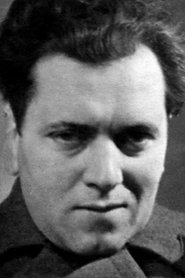
Soviet documentarians Leonid Varlamov and Ilya Kopalin assembled front-line footage of the 1942–43 Battle of Stalingrad, showing ruined streets, civilian endurance, and the Red Army counteroffensive. The 1943 compilation was released as Axis forces were driven from the city.
Cast & crew
More Documentary films
View all →
More from Leonid Varlamov
View all →
More about this film
About the production
Release date1943
Box officeUnknown - State-produced documentary
ProductionCentral Studio of Documentary Films (Moscow), Soviet State Committee for Cinematography (Goskino)
Filmed inStalingrad (now Volgograd), Soviet Union, Front lines during the actual battle, Ruined city districts immediately following the German surrender
Filmed under extremely dangerous conditions during active combat operations. Camera operators risked their lives to capture authentic footage of the battle. The production team included multiple camera units working simultaneously across different sectors of the city. The film was rushed into production immediately after the German surrender to capitalize on the propaganda value of the victory. The American version was re-edited and featured different narration by Brian Donlevy to appeal to Western audiences.
Themes
Soviet resilience and determination against overwhelming oddsThe human cost of total war and urban combatThe transformation of civilian spaces into battlegroundsThe contrast between destruction and reconstructionThe role of ordinary people in extraordinary historical events
Themes & topics
Battle of StalingradWorld War IISoviet UnionUrban warfareDocumentaryPropaganda filmTurning pointMilitary historyEastern FrontGerman surrenderCity destructionWar photographyCombat footageSoviet victoryRed Army
Historical background
Stalingrad was edited for morale as the battle turned; Soviet wartime newsfilm units risked death to capture combat and rubble.
Why this film matters
'Stalingrad' established a new standard for combat documentary filmmaking and influenced generations of war documentaries. It was among the first films to bring the reality of modern warfare to civilian audiences in such visceral detail. The documentary helped cement the Battle of Stalingrad as a event in Soviet and world history, contributing to the mythos of the city as a symbol of resistance against fascism. The film's success demonstrated the power of documentary as both art and propaganda, influencing how governments would use film to shape public perception during wartime. It also established techniques for combat cinematography that would be used in subsequent conflicts. The Academy Award win was significant as it represented one of the first major international recognitions of Soviet cinema and helped legitimize the Soviet cultural contribution to the Allied war effort. The film remains an important historical document that continues to be studied by historians, military strategists, and film scholars.
Making of
The production of 'Stalingrad' was itself a remarkable feat of wartime filmmaking. Directors Leonid Varlamov and Vasili Ordynsky led multiple camera teams that operated under constant artillery fire and air raids. The cinematographers used handheld cameras and portable equipment to navigate the rubble-strewn streets, often filming from trenches and bombed-out buildings. Many scenes were captured by placing cameras in fixed positions and leaving them running during combat engagements. The filmmakers worked with minimal safety equipment, and several crew members were injured during production. The editing process began even before the battle concluded, with footage being transported to Moscow under armed guard. The Soviet government provided unlimited resources for the production, recognizing its immense propaganda value. The American version required significant re-editing to meet Western censorship standards and to make the narrative more accessible to American audiences.
What critics said
Western and Russian historians treat it as primary propaganda documentary; its images remain among the most cited of the Eastern Front.
Did you know?
- Won the Academy Award for Best Documentary Feature at the 16th Academy Awards, sharing the award with 'Desert Victory' and 'Baptism of Fire'
- One of the first documentaries to be filmed during an active major battle, capturing combat as it happened
- Camera operators were embedded with Soviet troops and several were wounded during filming
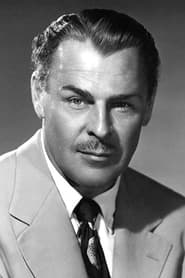
- The American version was retitled 'The City That Stopped Hitler: Heroic Stalingrad' and featured narration by actor Brian Donlevy
- Joseph Stalin personally approved the final cut of the film before its Soviet release
- The film was shown to Allied leaders including Roosevelt and Churchill to demonstrate Soviet resolve
- Some footage was later reused in other Soviet war films and documentaries
- The original Russian narration was performed by Yuriy Levitan, the most famous Soviet news announcer known as 'the voice of the Great Patriotic War'
- The film's success led to increased Soviet production of wartime documentaries
- Footage from this documentary was studied by military academies for decades as an authentic record of urban warfare
Awards & recognition
- Academy Award for Best Documentary Feature (1943)
- Stalin Prize (First Class) for outstanding achievement in cinema (1943)
- Order of the Red Banner of Labour awarded to the production team
Visual style
The cinematography in 'Stalingrad' was revolutionary for its time, featuring extensive use of handheld cameras to capture combat footage in real-time. The camera operators employed innovative techniques including low-angle shots from trenches, high-angle views from ruined buildings, and tracking shots through devastated streets. The film utilized natural lighting and available light sources, creating a gritty, authentic visual style that emphasized the harsh reality of the battle. The cinematographers mastered the art of capturing action sequences while maintaining focus and composition under fire. The documentary features remarkable long takes of artillery bombardments and urban combat that would be difficult to replicate even with modern equipment. The visual contrast between the intact city shown in early footage and the complete destruction in later scenes creates a powerful narrative arc. The American version employed different editing techniques to create a more fast-paced narrative suitable for Western audiences.
Innovations
The film pioneered several technical innovations in documentary filmmaking under combat conditions. The camera crews developed portable power systems and modified equipment to withstand extreme cold, dust, and combat conditions. They perfected techniques for filming during active artillery barrages and air raids, using remote camera triggering and protective barriers. The production team created a system for rapidly processing and transporting footage from the front lines to Moscow for editing, often using military couriers and aircraft. The film's editing techniques, particularly the juxtaposition of before-and-after shots of the same locations, became influential in subsequent documentaries. The American version demonstrated early techniques for adapting foreign documentaries for different cultural audiences while maintaining the essential narrative. The documentary also achieved remarkable clarity in its audio recordings of battle sounds, using primitive but effective microphone protection systems. These technical achievements were accomplished with equipment that would be considered primitive by modern standards, making the results even more impressive.
Music
The original Soviet version featured a powerful orchestral score composed specifically for the film by Soviet composers, incorporating military marches, somber themes for the destruction, and triumphant music for the victory sequences. The soundtrack made extensive use of Dmitri Shostakovich's 'Symphony No. 7' (the 'Leningrad Symphony'), which had become an international symbol of Soviet resistance. Sound effects were carefully synchronized with the visual footage, including authentic recordings of artillery, gunfire, and explosions captured during the battle. The American version replaced much of the original score with more conventional Hollywood-style dramatic music while retaining some of the most powerful Soviet musical themes. Yuriy Levitan's narration in the original version became for its authoritative and emotional delivery, while Brian Donlevy's American narration provided a more neutral, journalistic tone for Western audiences. The film's sound design was particularly innovative for its use of actual battle recordings rather than studio-created effects.
Famous quotes
Here, in this city of steel and fire, the fate of the world was decided.
Not a step back! Not an inch of Soviet soil shall be given to the enemy!
From the ruins of Stalingrad rises the dawn of victory.
Every stone, every brick of this city became a weapon in the hands of its defenders.
The world will remember that it was here, at Stalingrad, that the seemingly invincible German army met its match.
Memorable scenes
- The opening sequence showing intact Stalingrad before the German invasion, contrasted with the devastated cityscape after months of battle
- The dramatic footage of Soviet troops crossing the frozen Volga River under artillery fire
- The scenes of urban combat in the ruined factories, particularly the fighting in the Red October plant
- The capture of Field Marshal Paulus and the German high command in the basement of the department store
- The final victory sequences showing Soviet troops raising flags over the conquered city
- The emotional scenes of civilians emerging from cellars and bunkers after the German surrender
What audiences thought
The film was enormously successful in the Soviet Union, where it was shown to packed theaters and received standing ovations. Soviet audiences, many of whom had family members fighting at the front, found the film both emotionally moving and inspiring. In the United States and Britain, the film helped build sympathy for the Soviet war effort and counteracted some of the anti-Soviet sentiment present before the war. American audiences were shocked by the scale of destruction shown in the film, which gave them a clearer understanding of the price the Soviet Union was paying to defeat Nazi Germany. The documentary was particularly well-received by military audiences, who recognized its tactical value in understanding urban warfare. Veterans of the Eastern Front later commented on the film's accuracy in depicting the conditions they experienced. The film's international success helped establish the Soviet Union as a major cultural power among the Allied nations.
Film connections
Influenced by
- Earlier Soviet documentary traditions established by Dziga Vertov
- Leni Riefenstahl's 'Triumph of the Will' (as a counter-example of propaganda)
- British wartime documentaries such as 'London Can Take It'
- American newsreel traditions of combat footage
- Soviet socialist realist art and cinema
This film influenced
- The Unknown War (1978 documentary series)
- World at War (1973 documentary series)
- Stalingrad (1993 German film)
- Enemy at the Gates (2001 film)
- Numerous subsequent WWII documentaries
- Modern combat journalism and embedded reporting techniques
Film restoration
The film has been preserved in the Russian State Film Archive (Gosfilmofond) and multiple copies exist in international archives including the Library of Congress and the British Film Institute. The original negative was carefully maintained by Soviet authorities due to the film's historical and political importance. A restored version was released in the 1970s with improved sound and picture quality. The American version exists in several archives, though some copies have suffered from nitrate deterioration. Digital restoration efforts have been undertaken in recent years, particularly for the 70th anniversary of the battle in 2013. The film remains accessible through various educational and archival channels, ensuring its preservation as an important historical document.
Where to watch
- Available on DVD from various specialty distributors
- Streaming on Kanopy (educational platform)
- Accessible through the Internet Archive
- Available in the National Film Registry collection (Library of Congress)
- Screenings at film museums and war history museums
- Educational copies available through university film departments
- Included in some WWII documentary box sets
- Available through Russian cinema streaming services