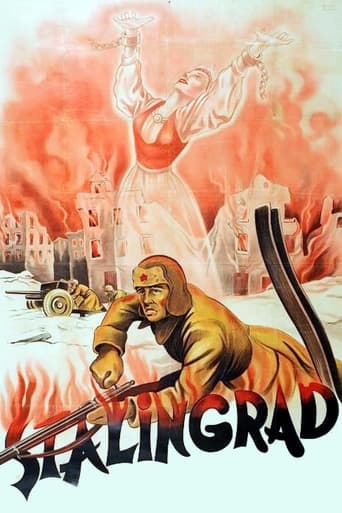
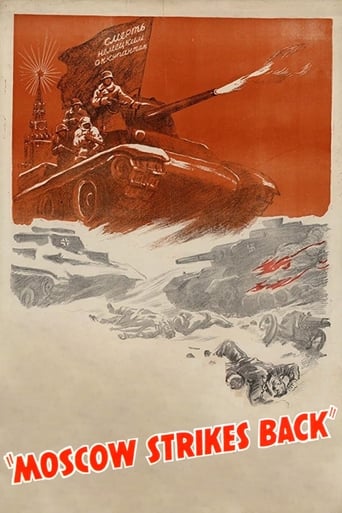
Films
2 films
About Leonid Varlamov
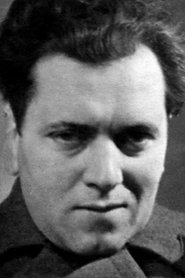
Prominent Soviet documentary filmmaker who rose to prominence during World War II, creating some of the most influential war documentaries of the era. His career, though brief and concentrated primarily during the early 1940s, on documentary filmmaking and wartime propaganda. Varlamov worked closely with the Soviet film establishment, collaborating with other notable directors like Ilya Kopalin to document the Soviet Union's struggle against Nazi invasion. His most significant achievement came with 'Moscow Strikes Back' (1942), a powerful documentary that captured the Soviet victory at the Battle of Moscow and earned international acclaim. Following this success, he continued his wartime documentation with 'Stalingrad' (1943), another crucial chronicle of the Eastern Front. Varlamov's work was characterized by its immediacy, dramatic composition, and ability to capture both the scale of battle and individual human experiences during wartime. Though his active period was relatively brief, his contributions to wartime documentary cinema were substantial and influential.
The Craft
Behind the Camera
Varlamov's directing style was characterized by its raw immediacy and powerful visual storytelling, combining front-line footage with carefully composed sequences to create compelling wartime narratives. His documentaries often employed a dramatic structure that built tension while maintaining authenticity through actual combat footage. He had a keen eye for both the grand scale of military operations and intimate human moments, creating works that served both as historical documents and emotional narratives. His technique blended observational cinema with carefully crafted propaganda elements, resulting in films that were both informative and emotionally resonant.
Milestones
- Directed 'Moscow Strikes Back' (1942) which won Academy Award for Best Documentary
- Co-directed 'Stalingrad' (1943) documenting the pivotal battle
- Pioneered Soviet wartime documentary filmmaking techniques
- Collaborated with prominent Soviet documentary filmmakers
Best Known For
Must-See Films
Accolades
Won
- Academy Award for Best Documentary Feature (1943) for 'Moscow Strikes Back'
- Stalin Prize (1943) for 'Moscow Strikes Back'
Special Recognition
- Order of the Red Star for wartime documentary work
- Honored Artist of the RSFSR
Working Relationships
Worked Often With
Studios
Why They Matter
Impact on Culture
Leonid Varlamov's work had significant cultural impact both within the Soviet Union and internationally, particularly during the critical years of World War II. His documentary 'Moscow Strikes Back' was not only a crucial propaganda tool for boosting Soviet morale but also served as one of the first comprehensive visual records of the Eastern Front for Western audiences. The film's Academy Award win represented a rare moment of cultural exchange between the Soviet Union and the United States during wartime, helping to build Allied solidarity. Varlamov's documentaries established important precedents for wartime journalism and documentary filmmaking, demonstrating how cinema could serve as both historical record and emotional testimony to human resilience during conflict.
Lasting Legacy
Varlamov's legacy endures primarily through his wartime documentaries that continue to be studied by film historians and military historians alike. His work represents a crucial chapter in the history of documentary cinema, particularly in the development of war documentary as a distinct genre. The techniques he helped develop for combining front-line footage with narrative structure influenced generations of documentary filmmakers. His films remain invaluable historical documents that provide authentic visual evidence of some of the most significant battles of World War II, while also exemplifying the power of cinema as a tool for historical memory and cultural preservation.
Who They Inspired
Varlamov influenced the development of Soviet documentary filmmaking traditions, particularly in the realm of war documentation. His approach to capturing both the epic scale of military operations and individual human experiences became a template for future war documentaries. The success of his films demonstrated the international potential of Soviet documentary cinema and helped establish standards for wartime documentary production that would influence filmmakers in other countries. His work also contributed to the development of documentary techniques that balanced authentic footage with narrative coherence, a challenge that continues to confront documentary filmmakers today.
Off Screen
Limited information is available about Varlamov's personal life, as was common for many Soviet filmmakers of his era whose public personas were primarily defined by their contributions to the state. His work during World War II suggests he was deeply committed to documenting the Soviet war effort, likely motivated by both professional duty and patriotic fervor. Like many Soviet artists of his generation, his career was intrinsically linked to the political and military needs of the state during.
Did You Know?
- 'Moscow Strikes Back' was one of the first Soviet films to receive widespread distribution in the United States during WWII
- The Oscar win for 'Moscow Strikes Back' was shared with co-director Ilya Kopalin
- Varlamov often worked in extremely dangerous conditions, filming near active combat zones
- His documentaries were screened for both Soviet domestic audiences and international Allied audiences
- The success of his films helped establish the Central Studio for Documentary Film as a major force in Soviet cinema
- Varlamov's work was part of a broader Soviet effort to document the 'Great Patriotic War' for posterity
- His films combined authentic front-line footage with carefully staged reenactments
- The international success of 'Moscow Strikes Back' helped counter Nazi propaganda about Soviet military defeats
In Their Own Words
Our cameras must be as brave as our soldiers, recording not just battles but the spirit of our people's resistance
Every frame we capture shows the price of freedom and the strength of the human will
In documenting war, we are not just recording history, we are creating the memory that will guide future generations
Frequently Asked Questions
Who was Leonid Varlamov?
Soviet documentary filmmaker active during World War II, best known for directing the acclaimed war documentaries 'Moscow Strikes Back' (1942) and 'Stalingrad' (1943). His work captured pivotal moments of the Eastern Front and earned international recognition, including an Academy Award.
What films is Leonid Varlamov best known for?
Titles linked here include Moscow Strikes Back (1942), Stalingrad (1943).
When was Leonid Varlamov born and when did he die?
Born 1908; died death date not listed.
What awards did Leonid Varlamov win?
Varlamov won the Academy Award for Best Documentary Feature in 1943 for 'Moscow Strikes Back', which he co-directed with Ilya Kopalin. He also received the Stalin Prize in 1943 for the same film and was honored with the Order of the Red Star for his wartime documentary work.
What was Leonid Varlamov's directing style?
Varlamov's directing style combined raw front-line footage with carefully composed dramatic sequences, creating powerful narratives that served both as historical documents and emotional wartime propaganda. He excelled at capturing both the grand scale of military operations and intimate human moments during combat.