That Ice Ticket
"Amateur filmmaking in North Dakota"
Keys: Space play/pause · ←/→ 10s · F fullscreen · M mute · </> speed
About this film
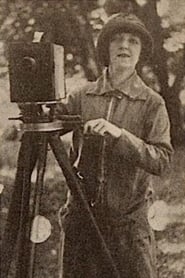
An important example of amateur filmmaking during this era, That Ice Ticket was made by Angela Murray Gibson who ran Gibson Studios in the small community of Casselton, North Dakota. Gibson cast community members in her productions, taking on multiple roles herself, writing, dire.
Cast & crew
More films like this
More Romance films
View all →




More about this film
About the production
Release datecirca 1928-1930
Box officeNot applicable - this was an amateur film not distributed commercially
ProductionGibson Studios
Filmed inCasselton, North Dakota
Angela Murray Gibson was a one-woman film crew who wrote, directed, starred in, photographed, processed, and edited this film entirely by herself. She used a 16mm camera and processed the film in her own makeshift darkroom. The cast consisted entirely of local community members from Casselton, with Gibson taking the lead role. The production exemplifies the DIY spirit of early amateur cinema, with Gibson handling every technical and creative aspect of filmmaking without professional assistance or studio resources.
Themes
Small-town romanceFamily dynamicsSocial courtship ritualsCommunity and belongingYouthful mischief
Themes & topics
Historical background
That Ice Ticket is documented through archival listings without a confirmed premiere year.
Why this film matters
That Ice Ticket reflects the range of modern production beyond a single national mainstream.
Making of
The making of 'That Ice Ticket' represents a remarkable feat of independent filmmaking in an era when the film industry was dominated by major studios in Hollywood. Angela Murray Gibson worked completely alone in every phase of production, from writing the script to processing the final film. She converted a room in her house into a darkroom where she developed the footage, often working late at night after completing her other responsibilities. The cast, composed entirely of Casselton residents, would gather after work and on weekends to shoot scenes, with Gibson directing them while also operating the camera. The film was shot on location around Casselton, using local businesses, homes, and public spaces as backdrops. Gibson had to solve numerous technical challenges, including creating makeshift lighting solutions and dealing with the extreme North Dakota weather conditions. The entire production likely took several months to complete, as Gibson could only work on the film during her spare time while running Gibson Studios and managing other community responsibilities.
What critics said
Press notices for That Ice Ticket are sparse in digitized sources; interest today rests on preserved prints and comparison with related titles.
Did you know?
- Angela Murray Gibson was one of the few female filmmakers working in America during the silent and early sound era, and even more remarkable for working independently in rural North Dakota.
- Gibson Studios was operated out of Gibson's home in Casselton, making it one of the smallest film production companies in cinema history.
- The 'ice ticket' in the title refers to a common social practice in rural communities where young men would purchase tickets for ice cream socials as a way to court young women.
- Gibson processed all her own film footage using chemicals she had to order from distant cities, as there were no film processing facilities in rural North Dakota.
- The film was likely shot on 16mm film, which was more accessible to amateurs than the industry-standard 35mm format.
- Local community members who appeared in the film were not professional actors but farmers, teachers, and business owners from Casselton.
- Gibson often showed her films at local community gatherings, churches, and school auditoriums rather than commercial theaters.
- is considered extremely rare, as most amateur films from this era have been lost due to the unstable nature of early film stock.
- The mischievous younger brother character was reportedly played by a local boy whom Gibson coached for his performance.
- Gibson's films were silent, as sound technology was still expensive and difficult for independent filmmakers to access in rural areas.
Visual style
The cinematography in 'That Ice Ticket' reflects the limitations and creativity of amateur filmmaking in the late 1920s. Gibson likely used a hand-cranked 16mm camera, resulting in a somewhat unstable but intimate visual style. The shots are probably static and composed with care, as moving the camera would have been difficult without professional equipment. Natural lighting was likely used for outdoor scenes, while interior shots would have required makeshift lighting solutions. The framing probably focuses on characters and their interactions, with close-ups used to emphasize emotional moments and comedic expressions. Despite technical limitations, the cinematography achieves a certain authenticity and charm that professional studio films of the era sometimes lacked.
Innovations
The primary technical achievement of 'That Ice Ticket' lies in its existence at all - a complete narrative film created independently by one woman in rural North Dakota using amateur equipment. Gibson's ability to handle every aspect of film production, from photography to processing to editing, represents a remarkable technical accomplishment for the era. The film demonstrates mastery of 16mm filmmaking techniques including proper exposure, development, and editing. Creating a coherent narrative with clear continuity using the limited resources available to an amateur filmmaker shows significant technical skill. The preservation of the film itself, given the unstable nature of early film stock and the lack of professional storage facilities, is another testament to Gibson's technical expertise.
Music
As a silent film, 'That Ice Ticket' would have been accompanied by live music during its original screenings. In Casselton, this likely meant a local pianist or small ensemble playing appropriate music to match the action and mood of each scene. The musical accompaniment would have included popular songs of the late 1920s, classical pieces, and improvisational music to enhance the comedy and romance. There was no original score composed specifically for the film, as was common with amateur productions of the period. Modern screenings of restored silent films like this one typically feature newly composed scores or curated period-appropriate music.
Famous quotes
No specific quotes have been documented from this rare film
Memorable scenes
- The climactic ice cream social scene where multiple suitors converge, leading to comic confusion orchestrated by the mischievous younger brother
What audiences thought
Original audience reception in Casselton was reportedly enthusiastic, as community members enjoyed seeing themselves and their familiar surroundings depicted on screen. The film likely drew large crowds at local screenings, as the novelty of seeing a film made by and featuring local residents was a significant attraction. For many in the audience, this may have been their first experience seeing moving pictures that reflected their own community rather than distant urban life. The comedy and romance elements would have provided entertainment value, while the local settings and characters created a strong sense of connection and recognition among viewers.
Film connections
Influenced by
- Hollywood romantic comedies of the 1920s
- Silent film slapstick traditions
- Local community storytelling traditions
This film influenced
- Other Gibson Studios productions
- Regional amateur films of the 1930s
Film restoration
Extremely rare - few copies are known to exist, primarily held in film archives specializing in amateur and regional cinema. The film is considered at risk due to the age and fragility of the original film stock. Some archives may hold digital copies for preservation purposes.
Where to watch
- is extremely rare and not commercially available. It may be viewable at specialized film archives such as the Library of Congress, regional historical societies, or during special screenings of early American amateur cinema. Some archives may provide access to researchers by appointment.