

The Astronomer's Dream
"Méliès' astronomer dreams the moon devours him."
Keys: Space play/pause · ←/→ 10s · F fullscreen · M mute · </> speed
About this film
An elderly astronomer works diligently in his observatory before falling asleep at his desk. In his surreal dream, the Moon descends from the sky, sprouting a human face that proceeds to eat the astronomer and then regurgitate him. The dream sequence continues with bizarre encounters including a devilish figure, a beautiful woman emerging from a telescope, and various celestial bodies coming to life in increasingly absurd scenarios. The film concludes with the astronomer awakening from his nightmare, only to find the moon's face still peering through his window, blurring the line between dream…
Cast & crew
More films like this
More Fantasy films
View all →


More from Georges Méliès
View all →

More about this film
About the production
Release date1898
BudgetNot documented - early films of this era had minimal budgets, typically just the cost of film stock and simple set construction
Box officeBox office data was not systematically tracked in 1898, but the film was commercially successful as part of Méliès's catalog
ProductionStar Film Company
Filmed inGeorges Méliès's studio glasshouse in Montreuil-sous-Bois, France
Filmed using Méliès's innovative substitution splicing technique, multiple exposure photography, and elaborate stage machinery. The moon face was created using a large painted mask worn by Méliès himself. The entire film was shot in Méliès's custom-built glass studio which allowed for maximum natural lighting while maintaining control over the theatrical effects.
Themes
Dreams vs. RealityScientific CuriosityFear of the UnknownCosmic HorrorThe Supernatural
Themes & topics
Historical background
The Astronomer's Dream (1898) reached screens through Star Film Company. Exhibitors of the time built nickelodeon-era programs that mixed shorts, features, and live acts, so a clear premise helped The Astronomer's Dream travel between cities and exchange markets.
Why this film matters
Archivists and revival programmers still cite The Astronomer's Dream (1898) when tracing studio habits, casting pools, and the visual rhetoric audiences once took for granted. Even modest surviving prints help map how The Astronomer's Dream fit beside competing releases of its day.
Making of
Georges Méliès, a former magician and theater owner, applied his stage illusion techniques to this pioneering film. The production utilized his signature substitution splicing technique, where the camera was stopped, objects were added or removed, and filming resumed to create magical transformations. The elaborate sets were built on movable platforms in his glass studio, allowing for quick scene changes. Méliès painted many of the backdrops himself and created the props using techniques from his theatrical background. The famous moon face mask was constructed from papier-mâché and painted to appear luminous. The entire film was created with a single camera position, typical of early cinema, but Méliès maximized the visual impact through his innovative special effects and theatrical staging.
What critics said
Trade coverage around 1898 discussed The Astronomer's Dream for pacing, clarity, and program fit rather than blockbuster grosses. Later writers value it as evidence of period style and as a reference point beside other films from the same era.
Did you know?
- Also known by its French title 'La Lune à un mètre' (The Moon at One Meter), referring to the scale of the moon prop used in the film
- The moon face that eats the astronomer was one of cinema's first examples of personification of celestial bodies
- Méliès performed multiple roles in the film, including the astronomer and the moon face
- The film was Méliès's Star Film catalog number 181-183, indicating it was part of a multi-part sequence
- The telescope prop used in the film was a practical effect that allowed actors to emerge from it through clever stagecraft
- the production represents one of the earliest examples of dream sequences in cinema history
- The devil character was played by Méliès using elaborate makeup and prosthetics that took hours to apply
- The film was hand-colored in some releases, a labor-intensive process where each frame was individually painted
- Méliès's background as a magician heavily influenced the theatrical tricks and illusions used throughout the film
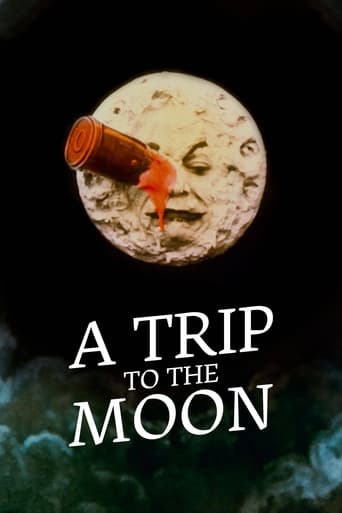
- The moon face design became so iconic that Méliès reused similar moon imagery in his later masterpiece 'A Trip to the Moon' (1902)
Visual style
The film was shot using a single static camera position, typical of early cinema, but Méliès maximized visual interest through his elaborate staging and effects. The cinematography employed multiple exposure techniques to create ghostly apparitions and magical transformations. Méliès used theatrical lighting techniques borrowed from his stage background, creating dramatic contrasts and highlighting key elements. The camera work was precise and deliberate, essential for the complex substitution splicing effects. In hand-colored versions, the cinematography was enhanced by vibrant colors applied frame by frame, creating a more fantastical atmosphere. The composition carefully framed the theatrical sets to maximize the illusion of depth and space within the confined studio environment.
Innovations
the production showcased several groundbreaking technical innovations including substitution splicing (stopping the camera to change elements in the frame), multiple exposure photography, and elaborate mechanical effects. Méliès pioneered the use of theatrical stagecraft techniques adapted for film, including trap doors, flying rigs, and movable scenery. The film demonstrated sophisticated matte painting techniques and the use of scale models to create the illusion of giant celestial bodies. The hand-coloring process, though labor-intensive, created some of the earliest examples of color in narrative cinema. These technical achievements established a foundation for special effects in cinema and demonstrated the unique possibilities of the film medium.
Music
As a silent film from 1898, it was originally presented without synchronized music. However, like many films of this era, it would have been accompanied by live musical performance during exhibition. Typical accompaniment might have included piano, organ, or small ensemble playing popular classical pieces or improvised music. Modern restorations often feature newly composed scores that reflect the film's fantastical and sometimes eerie mood. The musical accompaniment was crucial for establishing the dreamlike atmosphere and guiding audience emotional responses to the surreal imagery.
Famous quotes
As a silent film, it contains no spoken dialogue, but the visual storytelling creates memorable moments like the Moon's face appearing and devouring the astronomer, a sequence that became one of cinema's first iconic visual gags
Memorable scenes
- The Moon descending from the heavens and revealing a human face that proceeds to eat the astronomer - this groundbreaking sequence became one of cinema's first truly memorable special effects moments and established the personified moon as an enduring image in film history
What audiences thought
Audiences in 1898 were reportedly amazed and delighted by the film's magical effects and surreal imagery. The film was a popular attraction in Méliès's own Théâtre Robert-Houdin and was widely distributed internationally through his Star Film Company. Contemporary accounts describe audiences gasping at the transformation sequences and laughing at the absurd humor. The film's blend of horror, fantasy, and comedy appealed to broad audiences across different countries and cultures. Modern audiences viewing the film in retrospectives and film festivals continue to be impressed by its creativity and technical ingenuity, considering it remarkably sophisticated for its era.
Film connections
Influenced by
- Stage magic and illusion
- Phantasmagoria shows
- Gothic literature
- Astronomical illustrations
- Operatic productions
- Victorian scientific romance literature
This film influenced
- A Trip to the Moon (1902)
- The Impossible Voyage (1904)
- The Dream of a Rarebit Fiend (1906)
- Un Chien Andalou (1929)
- Fantasia (1940)
- 2001: A Space Odyssey (1968)
Film restoration
The film survives in multiple copies and has been preserved by various film archives including the Cinémathèque Française and the Library of Congress. Both black-and-white and hand-colored versions exist. The film has undergone digital restoration and is readily available through various film preservation organizations and public domain collections.
Where to watch
- YouTube (multiple public domain uploads)
- Internet Archive
- The Criterion Channel (as part of Méliès collections)
- Kino Lorber Blu-ray collections of Méliès films
- Flicker Alley DVD collections
- Various film streaming services specializing in classic cinema
- Museum film programs and retrospectives