The Barber Shop
"Barber shop laughs while you wait"
Keys: Space play/pause · ←/→ 10s · F fullscreen · M mute · </> speed
About this film
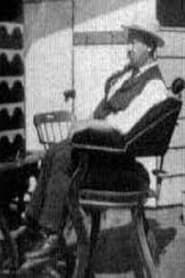
Customer reads a joke in the barber chair while another patron is shaved and trimmed unnoticed. Edison's 1893 Kinetoscope gag about simultaneous shop routines.
Cast & crew
More films like this
More Drama films
View all →







More from William Heise
View all →
More about this film
About the production
Release dateJune 1893
Box officeUnknown - early Edison films were sold rather than exhibited for profit
ProductionEdison Manufacturing Company
Filmed inEdison's Black Maria Studio, West Orange, New Jersey
Filmed in Edison's revolutionary Black Maria studio, which could be rotated to follow the sun. The film was shot on 35mm film using Edison's Kinetograph camera, which was so heavy it had to be bolted to the floor. The entire production likely took less than an hour to film, as early Edison shorts were typically shot in one take with minimal preparation.
Themes
Everyday lifeSocial interactionHumor and comedyAmerican cultureWork and leisure
Themes & topics
barber shopshavinghaircutnewspaperjokelaughtersmokingwaitingcustomer service19th century
Historical background
Archival records place The Barber Shop in 1893, a year when cinema's first decade shaped what theaters booked.
Why this film matters
Retrospectives include The Barber Shop when mapping craft and subject matter from cinema's first decade.
Making of
The Barber Shop was produced during the very dawn of commercial cinema, when Thomas Edison's laboratory was experimenting with moving images as a potential business venture. The film was shot in Edison's innovative Black Maria studio, a tar-paper-covered building designed specifically for film production that could rotate on tracks to follow the sunlight throughout the day. William Heise, who operated the camera and likely directed the action, was one of Edison's key technicians who helped develop early filmmaking techniques. The actors were probably Edison laboratory employees who were recruited to perform simple, everyday activities that would be recognizable to audiences. The entire production process was rudimentary by modern standards - there was no editing, the film was shot in one continuous take, and the camera remained stationary throughout.
What critics said
Critics revisiting The Barber Shop emphasize performative and technical choices visible in surviving prints.
Did you know?
- This is one of the earliest examples of narrative cinema, showing not just actions but also emotional reactions and social interaction
- The film was shot in Edison's Black Maria studio, the world's first film production studio, which was nicknamed the 'Doghouse' due to its appearance
- William Heise was one of Edison's most important early filmmakers, directing over 300 films between 1892-1900
- The film was exhibited on Edison's Kinetoscope, a peep-show device that allowed only one person at a time to view the motion picture
- At 30 seconds, this was actually longer than many early Edison films which often lasted only 10-15 seconds
- The actors in the film were likely Edison employees, as professional actors had not yet begun working in motion pictures
- the release represents an early example of comedy in cinema, with the shared laugh over the newspaper joke
- The film features everyday American life, making it valuable as both entertainment and historical documentation
- It was part of Edison's effort to create content that would be familiar and entertaining to American audiences
- The film survives today and is preserved in the Library of Congress collection
Visual style
The cinematography of The Barber Shop represents the state of the art in 1893. The film was shot using Edison's Kinetograph camera, which was hand-cranked and used 35mm film with four perforations per frame. The camera was stationary throughout the shot, positioned to capture the entire interior of the barber shop set. The lighting came from natural sunlight, which was directed into the Black Maria studio through a removable roof panel. The framing was wide enough to include all the action, a necessity since camera movement and editing had not yet been developed. The image quality was relatively good for the period, with clear visibility of the actors and their actions.
Innovations
The Barber Shop showcased several important technical achievements for its time. It demonstrated the ability to capture clear, stable images of human activity using Edison's Kinetograph camera. The film successfully recorded multiple people interacting in a confined space, showing early mastery of composition within the camera's fixed frame. The lighting, achieved through the innovative design of the Black Maria studio, was sufficient to clearly show all the action. At 30 seconds, it was relatively long for early Edison films, demonstrating the capability to sustain audience attention beyond brief novelty shots. The film also represents an early achievement in capturing natural human behavior and interaction rather than staged performances.
Music
The Barber Shop was a silent film, as synchronized sound technology would not be developed for another three decades. When exhibited on the Kinetoscope, viewers would hear the mechanical whirring of the device but no accompanying music or sound effects. In some exhibition contexts, particularly when the film was later shown on early projectors, it might have been accompanied by live piano music or other musical accompaniment typical of the period, but no specific soundtrack was composed or intended for the film.
Famous quotes
No dialogue - silent film era
Memorable scenes
- The moment when the attendant points out the joke in the newspaper to the waiting customer, prompting both men to break into laughter - this scene represents one of the earliest examples of visual comedy and shared humor in cinema history
What audiences thought
The Barber Shop was viewed by audiences through Edison's Kinetoscope peep-show devices, which were installed in penny arcades and parlors across major American cities. Audiences of the 1890s were fascinated by the novelty of seeing moving images, and films depicting familiar scenes like a barber shop were particularly popular because they showed recognizable aspects of daily life brought to life through this new technology. The humor of the shared joke over the newspaper would have been easily understood and appreciated by contemporary viewers. The film was successful enough that Edison continued to produce similar short films showing everyday activities and humorous situations.
Film connections
Influenced by
- Stage magic shows and lantern slides
- Photography
- Vaudeville theater
- Newspaper comic strips
This film influenced
- The Barbershop (1894)
- The Gay Shoe Clerk (1903)
- The Whole Dam Family and the Dam Dog (1905)
- The Kiss (1896)
Film restoration
The film is preserved and available. A 35mm nitrate print exists in the collection of the Library of Congress, and digital copies are maintained by several film archives. The film has been digitized and is part of the public domain.
Where to watch
- Library of Congress National Screening Room
- Internet Archive
- YouTube (through various public domain channels)
- Museum of Modern Art (MoMA) film collection
- Edison National Historic Site archives