The Blacksmiths
"While his aide continuously turns the handle of the bellows"
Keys: Space play/pause · ←/→ 10s · F fullscreen · M mute · </> speed
About this film
While his aide continuously turns the handle of the bellows, keeping hot a small furnace in front of him, a blacksmith is pounding a piece of metal on an anvil, then plunges the shaft into a tub of water, causing a cloud of vapor in the process.
Cast & crew
More films like this
More Documentary films
View all →
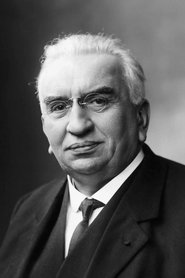
More from Louis Lumière
View all →




More about this film
About the production
Release dateDecember 28, 1895
Box officeUnknown - early films were not commercially tracked in modern terms
ProductionLumière Company
Filmed inLa Ciotat, France
Filmed using the Lumière brothers' Cinématographe device, which served as both camera and projector. This was one of the earliest examples of documentary filmmaking, capturing actual workers rather than staged performances. The film was shot outdoors or in a well-lit workshop, requiring natural light as artificial lighting was not yet practical for motion pictures. The blacksmiths were likely actual craftsmen from the local community, not actors.
Themes
Industrial laborCraftsmanshipTechnological progressDocumentation of everyday lifeThe dignity of work
Themes & topics
Historical background
Photography and projected motion were still experimental in 1895, when short actualities and staged scenes competed for public curiosity.
Why this film matters
Early works like The Blacksmiths help map how filmmakers, exhibitors, and viewers developed the visual language of cinema during the medium's first decades. Later revivals, archive screenings, and digitization have kept such titles accessible to researchers and dedicated viewers long after their first commercial runs.
Making of
The film was created using the revolutionary Cinématographe device invented by Louis and Auguste Lumière. Unlike Thomas Edison's Kinetoscope which allowed only one viewer at a time, the Cinématographe could project images for an audience. The blacksmiths were filmed in a single continuous take, as editing technology did not yet exist. The Lumière brothers sent their cameramen across France and the world to capture such everyday scenes, believing that cinema's value lay in documenting reality rather than creating fiction. The film was processed and developed using techniques the brothers had perfected in their photographic factory in Lyon.
What critics said
Trade and newspaper reviews from the silent period for The Blacksmiths survive only in fragments, making precise reception history difficult to reconstruct. Modern assessment tends to emphasize historical value, craft, and cultural context rather than box-office performance.
Did you know?
- This film was part of the historic first public screening of motion pictures at the Grand Café in Paris on December 28, 1895
- The Lumière brothers considered their films 'scientific curiosities' rather than entertainment
- It was one of approximately 10 films shown during the groundbreaking first public screening
- The film demonstrates the Lumière principle of capturing 'actualités' - real scenes from everyday life
- The Cinématographe camera used to film this could also serve as a projector and developer
- Each film reel could hold only about 17 meters of film, limiting runtime to under a minute
- The blacksmiths were likely paid workers rather than professional actors
- This film represents one of the earliest examples of industrial documentation in cinema
- The steam effect created when quenching the metal would have been visually striking to 1895 audiences
- The film was hand-cranked during shooting, resulting in variable frame rates typically around 16-18 frames per second
Visual style
The film employs a fixed camera position typical of early Lumière productions, providing a straightforward documentary perspective. The composition balances the blacksmith and his assistant within the frame, showing both their actions and the workshop environment. Natural lighting was used, creating authentic shadows and highlights that emphasize the metallic surfaces and steam effects. The single, uninterrupted take captures the complete work process in real-time, reflecting the Lumière principle of observational cinema. The camera's perspective places the viewer as an observer of the work process, creating an intimate view of the craft.
Innovations
Filmed using the Lumière Cinématographe, which was lighter and more portable than competing devices. The camera used 35mm film with a patented perforation system that became the industry standard. The device could shoot, develop, and project film, making it an all-in-one system. The film demonstrates early mastery of exposure and focus in challenging lighting conditions. The successful capture of the steam effect showed early understanding of how motion could enhance visual impact. The film's clarity and stability were remarkable for the period, showcasing the technical superiority of the Cinématographe over early competitors.
Music
Silent film - no original soundtrack. Early screenings may have been accompanied by live piano music or commentary from the presenter.
Memorable scenes
- The dramatic moment when the blacksmith plunges the heated metal into water, creating a cloud of steam that would have startled and amazed 1895 audiences with its realistic effect
What audiences thought
Early audiences were reportedly terrified and fascinated by the lifelike movement on screen. According to contemporary accounts, some viewers ducked when the blacksmith raised his hammer, believing the action was real. The film's inclusion in the first public screening helped establish the commercial viability of cinema. The simple, direct depiction of familiar work made the new technology accessible and relatable to working-class audiences. The steam effect when the metal was quenched was particularly impressive to viewers who had never seen such effects in motion pictures before.
Film connections
Influenced by
- Early photography
- Scientific documentation
- Industrial Revolution imagery
- Étienne-Jules Marey's chronophotography
This film influenced
- Workers Leaving the Lumière Factory (1895)
- The Arrival of a Train (1895)
- The Sprinkler Sprinkled (1895)
- Feeding the Baby (1895)
- subsequent Lumière actualités
Film restoration
Preserved - The film survives in the Lumière Institute archives and has been digitally restored. It is part of the collection of early cinema preserved by film archives worldwide.
Where to watch
- Available on YouTube through various film history channels
- Included in DVD collections of early cinema
- Accessible through the Lumière Institute's online archives
- Featured in streaming services specializing in classic films
- Available in educational film databases and museum collections