The Boxing Kangaroo
"No easy way through stand"
Keys: Space play/pause · ←/→ 10s · F fullscreen · M mute · </> speed
About this film
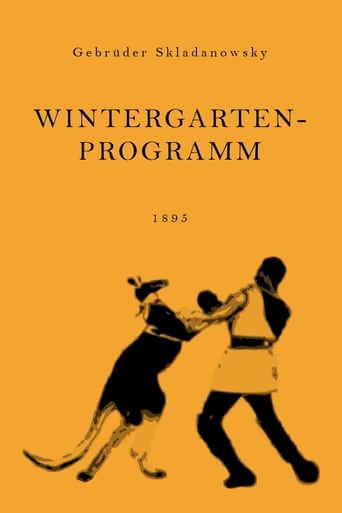
A man and a kangaroo stand up in front of each other with boxing gloves, and simulate a boxing match on a theatre stage. Exhibitors circulated the 1895 print in short programs.
Cast & crew
More films like this
More Documentary films
View all →
More from Max Skladanowsky
View all →
More about this film
About the production
Release dateNovember 1, 1895
Box officeNot documented - early films were not commercially tracked in modern terms
ProductionSkladanowsky Brothers
Filmed inBerlin, Germany
This film was created using the Bioskop, an early film projector invented by the Skladanowsky brothers. The kangaroo was likely a trained performing animal that was part of traveling circuses or variety shows common in 19th century Europe. The film was shot in a studio setting with minimal lighting, typical of early cinema productions. The boxing gloves and staging suggest this was a rehearsed performance rather than spontaneous footage.
Themes
Human-animal interactionEntertainment and spectacleThe novelty of technologyComedy and humorPerformance and showmanship
Themes & topics
Historical background
The Boxing Kangaroo reached screens around 1895, produced in its country of origin. Programs then mixed actualities, dances, and staged scenes in single-reel slots.
Why this film matters
Researchers cite The Boxing Kangaroo when tracing screen culture of its decade. Its brevity makes it useful for teaching how early narratives were staged.
Making of
The creation of 'The Boxing Kangaroo' was part of the Skladanowsky brothers' ambitious venture into moving pictures. Max and his brother Emil had been experimenting with motion picture technology since 1892, building on their background in magic lantern shows and optical devices. The film was likely shot in their makeshift studio in Berlin, where they had to contend with the technical limitations of their Bioskop camera, which required bright lighting and could only capture very short sequences. The kangaroo performer would have been sourced from traveling circuses or menageries that were popular entertainment in 19th century Germany. The human boxer was probably one of the brothers or an associate, as early filmmakers often appeared in their own productions due to limited resources and the experimental nature of the medium.
What critics said
Reviewers in 1895 weighed The Boxing Kangaroo on clarity, pacing, and audience response rather than prestige status. No single canonical review dominates later reference works for the title.
Did you know?
- This film was part of the first-ever film program shown to a paying audience in Europe, preceding the Lumière brothers' famous Paris screening by nearly two months
- The Skladanowsky brothers used their Bioskop projector, which could show two films simultaneously by using two separate film loops
- The kangaroo in the film was likely 'Jack,' a famous performing kangaroo that appeared in various European circuses and variety shows
- This film represents one of the earliest examples of animal performers in cinema history
- The boxing theme was popular in early cinema as it demonstrated clear action and movement, perfect for showcasing the new medium
- Max Skladanowsky was originally a magician and showman, which influenced his approach to creating entertaining visual spectacles
- The film was shot on 35mm film, though the Bioskop used a unique format with circular perforations
- Only fragments of this film survive today, as many early films deteriorated or were lost
- The boxing kangaroo became a recurring trope in early cinema, with several similar films made by different pioneers
- This film was shown at the Wintergarten theatre in Berlin as part of a variety program that included live acts
Visual style
The cinematography of 'The Boxing Kangaroo' reflects the extreme limitations of early film technology. The camera was likely stationary, capturing the action from a single frontal perspective, as camera movement was not yet possible. The lighting would have been harsh and direct, necessary to expose the slow film stock of the era. The framing is simple and functional, designed primarily to clearly show the performers rather than create artistic compositions. The black and white image has the characteristic high contrast and grain of 19th century film stock. Despite these technical constraints, the filmmakers managed to create a clear view of the boxing action, demonstrating an early understanding of how to stage action for the camera.
Innovations
The primary technical achievement of 'The Boxing Kangaroo' lies in its role as part of the first commercial film projection system. The Skladanowsky brothers' Bioskop projector was innovative for its time, using a Maltese cross mechanism and capable of projecting at 16 frames per second. The film was shot on celluloid, a relatively new and expensive medium. The ability to capture and project movement at all was revolutionary in 1895. The film also demonstrates early understanding of continuity and staging for the camera, technical skills that would become fundamental to cinema language. The survival of any footage from this period is itself a technical achievement, given the fragile nature of early film stock.
Music
This film was created during the silent era and would have been accompanied by live music during its original screenings. The Wintergarten theatre likely employed a small orchestra or pianist to provide musical accompaniment that matched the action on screen. The music would have been typical of late 19th century popular entertainment, possibly including familiar tunes or improvised pieces that emphasized the comical nature of the boxing match. No original score exists for this film, though modern screenings are sometimes accompanied by period-appropriate music.
Memorable scenes
- The climactic moment where the kangaroo stands on its hind legs and delivers a boxing pose, creating an unforgettable image of animal mimicry that has become notable in early cinema history
What audiences thought
The audience at the Wintergarten theatre in Berlin reportedly reacted with amazement and enthusiasm to 'The Boxing Kangaroo' and the other films shown in the historic November 1895 program. Contemporary accounts describe gasps, applause, and disbelief from viewers who had never seen moving images before. The novelty of seeing a kangaroo boxing on screen would have been particularly striking to 19th century audiences, many of whom had never even seen photographs move. The film's success encouraged the Skladanowsky brothers to continue their filmmaking efforts, though they were soon overshadowed by more technically advanced systems from other pioneers.
Film connections
Influenced by
- Circus and vaudeville performances
- Magic lantern shows
- Photographic series studies of motion
- Popular 19th century entertainments featuring exotic animals
This film influenced
- Subsequent boxing films by early pioneers
- Animal comedy films
- Sports films
- Various 'boxing animal' shorts throughout cinema history
Film restoration
Partially preserved - fragments of the film survive in archives, though the complete original may be lost. The surviving footage is held by film archives including the Bundesarchiv in Germany and has been included in collections of early cinema.
Where to watch
- Available in various early cinema compilations
- Featured in documentary collections about film history
- Sometimes screened at film archives and cinematheques specializing in early cinema
- Available in some online archives dedicated to pioneering films
- Included in DVD collections of historic cinema