The Bridge
"The Hefbrug may not be a remarkably beautiful bridge"
Keys: Space play/pause · ←/→ 10s · F fullscreen · M mute · </> speed
About this film
The Hefbrug may not be a remarkably beautiful bridge, but through a mix of close-ups, long shots, bird’s eye views and low angles, Joris Ivens conveys a sense of the bridge’s structure, its intricate mechanisms and ways of operating, the way it fits into the overall transport inf.
Cast & crew
More films like this
More Documentary films
View all →


More about this film
About the production
Release date1928
Box officeNot commercially released - primarily shown in avant-garde film circles
ProductionJoris Ivens Film Studio
Filmed inRotterdam, Netherlands, Koningshavenbrug (Hefbrug)
Filmed over several weeks to capture the bridge in various weather conditions and operational states. Ivens used a hand-cranked camera and had to physically position himself and his equipment in precarious locations, including climbing on the bridge structure itself to achieve certain shots. The film was made without any formal funding, relying on Ivens' personal resources and the support of fellow avant-garde artists in Amsterdam.
Themes
Industrial modernity and the machine ageThe intersection of art and engineeringUrban infrastructure and city lifeThe beauty of functional designRhythm and motion in mechanical systems
Themes & topics
bridgeRotterdamindustrialmachinerytransportationengineeringurbandocumentarysilent filmavant-gardearchitecturemechanicalinfrastructureDutch cinema
Historical background
Silent-era production in 1928 relied on intertitles, live accompaniment, and studio systems that were rapidly consolidating into national industries.
Why this film matters
The Bridge remains part of the screen heritage of its era, offering evidence of prevailing genres, production methods, and audience tastes. Later revivals, archive screenings, and digitization have kept such titles accessible to researchers and dedicated viewers long after their first commercial runs.
Making of
The making of 'The Bridge' was proof of Joris Ivens' determination and innovative spirit as a young filmmaker. Working with minimal resources, Ivens spent weeks studying the bridge's operations, building rapport with the bridge operators, and planning his shots. He often had to climb onto the bridge structure himself, carrying heavy camera equipment, to achieve the dramatic angles that would become the film's signature. The filming process was physically demanding and sometimes dangerous, as Ivens positioned himself and his camera in precarious locations to capture the bridge's machinery from intimate perspectives. The film was edited in Ivens' small studio in Amsterdam, where he experimented with montage techniques inspired by Soviet cinema, creating a rhythmic flow that emphasized the bridge's mechanical ballet. Despite the technical challenges and lack of formal support, Ivens' passion for his subject and his innovative approach resulted in a film that would become a landmark in documentary cinema.
What critics said
Trade and newspaper reviews from the silent period for The Bridge survive only in fragments, making precise reception history difficult to reconstruct. Modern assessment tends to emphasize historical value, craft, and cultural context rather than box-office performance.
Did you know?
- The bridge featured is the Koningshavenbrug, commonly known as De Hef, which was built in 1878 and is still standing in Rotterdam today
- Joris Ivens was only 20 years old when he made this film, his directorial debut
- The film was shot without any sound, as it was made during the silent era, but its visual rhythm creates its own musicality
- Ivens was inspired to make the film after seeing Soviet montage films, particularly the works of Dziga Vertov
- The bridge operators in the film were actual workers who agreed to be filmed during their regular duties
- Despite its short length, the film required weeks of shooting to capture the bridge in all its operational states
- The film was initially rejected by Dutch film distributors who found it too experimental
- Ivens had to build some of his own camera equipment to achieve certain angles, including custom mounts for the bridge structure
- The film was one of the first Dutch documentaries to focus on industrial subjects rather than traditional landscapes or people
- De Hef bridge was chosen specifically for its mechanical complexity and visual appeal as a vertical lift bridge
Awards & recognition
- Recognized as a pioneering work in documentary cinema by the International Documentary Film Festival Amsterdam (IDFA)
- Included in the Canon of Dutch Cinema as among the pivotal Dutch films ever made
Visual style
The cinematography of 'The Bridge' was revolutionary for its time, featuring an extraordinary range of camera positions and movements that would become influential in documentary filmmaking. Ivens employed dramatic low angles that emphasized the bridge's monumental scale, bird's-eye views that revealed its integration into the city's infrastructure, and intimate close-ups that highlighted the intricate details of its mechanical components. The film features tracking shots that follow the movement of ships and trains, creating a dynamic sense of the bridge's role in urban transportation. Ivens used natural light to sculpt the bridge's metallic surfaces, creating striking contrasts between light and shadow that emphasized the structure's geometric forms. The camera work demonstrates remarkable technical precision, with each shot carefully composed to reveal different aspects of the bridge's design and operation. The cinematography creates a visual rhythm that mirrors the mechanical movements of the bridge, turning industrial processes into a form of visual poetry.
Innovations
'The Bridge' represented several significant technical achievements in early documentary filmmaking. Ivens pioneered the use of multiple camera angles in documentary, moving beyond the static shots common in non-fiction films of the era. The film demonstrated innovative approaches to capturing industrial subjects on film, including techniques for filming machinery in motion and revealing mechanical processes through visual storytelling. Ivens developed custom camera mounts and rigging to achieve shots from unusual positions on the bridge structure. The film's editing techniques, influenced by Soviet montage theory, created a rhythmic flow that enhanced the mechanical movements of the bridge. The successful integration of various shot scales - from extreme close-ups to wide establishing shots - established a visual language that would become standard in documentary cinematography. The film also demonstrated how documentary could capture the poetry of machines, influencing subsequent industrial and architectural films.
Music
As a silent film, 'The Bridge' was originally presented without any synchronized soundtrack. However, during its initial screenings, it was often accompanied by live musical performances, typically featuring avant-garde or classical compositions that emphasized the film's mechanical rhythms. Some screenings featured specially commissioned scores from contemporary Dutch composers. In modern restorations and screenings, the film has been presented with various musical accompaniments, ranging from classical pieces to contemporary electronic compositions that highlight its industrial themes. The absence of dialogue or sound effects forces viewers to focus entirely on the visual elements, making the film's rhythmic editing and visual patterns even more pronounced.
Famous quotes
The film shows that a bridge is not just a structure, but a living organism in the city's circulatory system - Joris Ivens
I wanted to make visible the invisible poetry of the machine - Joris Ivens in later interviews
In the movement of the bridge, I saw the rhythm of modern life itself - Joris Ivens
Memorable scenes
- The opening sequence where the camera slowly reveals the bridge's massive structure through a series of progressively wider shots
- The intricate close-ups of the bridge's mechanical gears and counterweights moving in perfect synchronization
- The dramatic low-angle shot showing a train crossing overhead while a ship passes beneath
- The bird's-eye view revealing how the bridge connects different parts of Rotterdam's infrastructure
- The final sequence showing the bridge at night, illuminated by industrial lights, creating a stark geometric composition
What audiences thought
Initial audience reception was limited to specialized screenings in avant-garde film clubs and art circles, where it found an appreciative but small audience. Many viewers were fascinated by the film's ability to transform a mundane structure into something beautiful and compelling. Some audience members reported being hypnotized by the rhythmic movements of the bridge and the precision of its mechanical operations. The film's short length and lack of narrative made it more accessible to experimental film enthusiasts than general audiences. Over the decades, as the film's reputation grew, it found wider appreciation through retrospectives and film festivals. Modern audiences viewing the film in proper contexts often express surprise at how engaging a ten-minute film about a bridge can be, with many noting its timeless quality and continuing relevance as a meditation on technology and urban infrastructure.
Film connections
Influenced by
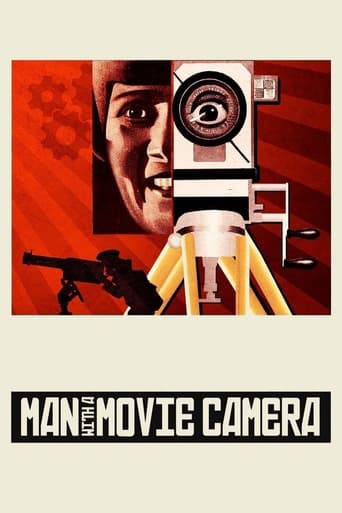
- Dziga Vertov's 'Man with a Movie Camera' (1929)
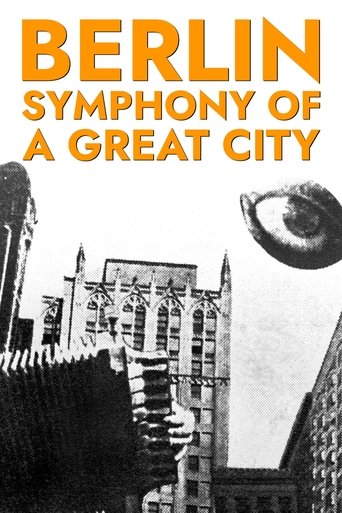
- Walter Ruttmann's 'Berlin: Symphony of a Great City' (1927)
- Soviet montage theory and filmmaking techniques
- Bauhaus design principles and geometric abstraction
- Futurist movement's celebration of machines and technology
This film influenced
- Reginald Beck's 'Bridge' (1929)
- Leni Riefenstahl's 'Olympia' (1938) - in its technical approach to capturing movement
- Alain Resnais' 'Guernica' (1950) - in its poetic treatment of structural subjects
- Godfrey Reggio's 'Koyaanisqatsi' (1982) - in its meditation on technology and modernity
- Numerous industrial and architectural documentaries throughout the 20th century
Film restoration
The film has been preserved and restored by the EYE Film Institute Netherlands (formerly the Netherlands Film Museum). A high-quality digital restoration was completed in the early 2000s, ensuring the film's continued accessibility. The original negative is stored in optimal archival conditions. The restoration has allowed the film to be screened in modern digital formats while maintaining its original visual quality. The film is considered well-preserved and is regularly featured in retrospectives of classic documentary cinema.
Where to watch
- Available on DVD in the 'Joris Ivens Collection' from various distributors
- Streaming on the Criterion Channel as part of their documentary collection
- Available for viewing at the EYE Film Institute Netherlands in Amsterdam
- Included in various film festival retrospectives and museum exhibitions
- Accessible through academic film archives and university libraries
- Available on some specialized streaming platforms focusing on classic cinema