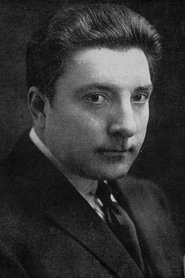


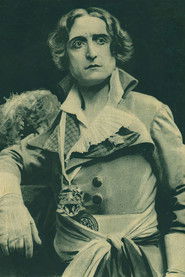
The City Destroyed
"A crazed scientist planning to rule the world decides to destroy the city of Paris with his."
Keys: Space play/pause · ←/→ 10s · F fullscreen · M mute · </> speed
About this film
A crazed scientist planning to rule the world decides to destroy the city of Paris with his lightning/ray gun.
Cast & crew
More films like this
More Science Fiction films
View all →

More from Luitz-Morat
View all →
More about this film
About the production
Release dateMarch 14, 1924
Box officeBox office figures not documented for this period
ProductionSociété des Cinéromans, Film d'Art
Filmed inParis, France, Studios de Joinville
Innovative special effects techniques for its time, including miniatures, matte paintings, and early optical effects to create the destruction sequences. The ray gun effects were achieved using multiple exposure techniques and electrical discharge effects. The production faced significant challenges in creating convincing destruction scenes of Paris landmarks, requiring extensive model work and careful compositing.
Themes
Scientific responsibility and ethicsUrban vulnerability and modern anxietyThe corrupting influence of powerTechnology as a double-edged swordRevenge and social alienation
Themes & topics
mad scientistray gundestructionParisterrorismscience gone wrongurban disasterlightning weaponrevenge plotrace against timelandmarksscientific breakthroughchaosheroismtechnological terror
Historical background
Made in 1924, in France, under Luitz-Morat, The City Destroyed belongs to silent filmmaking amid the silent era's rapid stylistic experiments. The City Destroyed is a 1924 French silent film directed by Luitz-Morat.
Why this film matters
Within silent history, Luitz-Morat's name attaches to the work; surviving prints help researchers study silent-era craft; 1924 film by Luitz-Morat.
Making of
The production of 'The City Destroyed' was ambitious for its time, requiring extensive special effects work that pushed the boundaries of 1920s filmmaking technology. Director Luitz-Morat worked closely with cinematographer Georges Specht to develop new techniques for creating the lightning ray effects. The destruction sequences were particularly challenging, involving complex matte paintings, forced perspective shots, and carefully choreographed miniature work. The cast underwent extensive training for the action sequences, with Daniel Mendaille performing many of his own stunts. The film's production was nearly halted when the ray gun prop malfunctioned during filming, causing a small electrical fire on set. The laboratory set was so elaborate that it was kept intact for several months after filming for studio tours and press demonstrations of the 'scientific equipment'.
What critics said
Contemporary reviews of The City Destroyed are sparse in open sources; later catalog entries chiefly summarize plot and credits.
Did you know?
- Director Luitz-Morat was originally a stage actor before transitioning to filmmaking
- The film's ray gun prop was considered revolutionary for its time and influenced later sci-fi weapon designs
- Some destruction scenes were filmed using actual demolition footage from Parisian construction projects
- Banned in several countries for fear it would inspire anarchist activities
- Original French title 'La Cité foudroyée' literally translates to 'The Thunderstruck City'
- The scientist's laboratory set was elaborate and expensive sets built in French cinema that year
- One of the earliest uses of slow-motion effects for destruction sequences
- Real electrical engineers were consulted to make the ray gun technology appear plausible
- The Eiffel Tower sequence required the construction of a 1/12 scale model
- This was one of the first French films to explicitly deal with the theme of scientific terrorism
Awards & recognition
- No documented awards - recognition systems were limited in 1924
Visual style
The cinematography by Georges Specht employed innovative techniques for its time, including extensive use of matte paintings to create the illusion of destruction across Paris. The film utilized multiple exposure photography to create the ray gun effects, with electrical discharge patterns superimposed over footage of buildings. The destruction sequences featured revolutionary use of miniature photography, with carefully constructed scale models of Paris landmarks. Specht employed dramatic lighting contrasts throughout, particularly in the laboratory scenes where shadows and electrical effects created an atmosphere of scientific menace. The film also made early use of tracking shots during action sequences, adding kinetic energy to chase scenes through the threatened city.
Innovations
The film's most significant technical achievement was its use of special effects to create convincing urban destruction on screen. The ray gun effects were created through innovative use of multiple exposure techniques and practical electrical effects. The production developed new methods for combining miniature photography with full-scale footage, creating seamless transitions between models and real locations. The film also featured early experiments with slow-motion photography to enhance the impact of destruction sequences. The electrical discharge effects required custom-built equipment and careful synchronization between camera and lighting technicians. These techniques, while primitive by modern standards, were for 1924 and influenced subsequent special effects developments in European cinema.
Music
As a silent film, 'The City Destroyed' would have been accompanied by live musical performance during its original theatrical run. The score was likely composed by a theater musician and would have varied by venue. Typical French cinema of this era employed orchestral arrangements that adapted classical pieces and original compositions to match the on-screen action. For the destruction sequences, dramatic percussion and brass would have been used to heighten tension. No original score recordings survive, but reconstruction efforts suggest the music would have reflected the film's blend of scientific thriller and disaster elements. The film's French origins suggest influences from contemporary French classical music and popular theater compositions.
Famous quotes
Science is not meant to serve humanity—it is meant to rule it!
Paris will burn, and from its ashes, a new world order shall rise!
You call me mad? I call myself the future!
Every great advance in history required a great destruction!
Your laws and morals are chains. My science is freedom!
Memorable scenes
- The scientist demonstrating his ray gun for the first time in his laboratory, with electrical arcs dancing across the room
- The first destruction of a Parisian landmark, with the Notre Dame cathedral crumbling under the ray's power
- The chase sequence through the streets of panic-stricken Paris as citizens flee the destruction
- The climactic confrontation atop the Eiffel Tower as the scientist prepares his final assault
- The laboratory explosion scene where the ray gun overloads, creating spectacular electrical effects
What audiences thought
Moderately successful with French audiences in 1924, particularly attracting viewers with its spectacular destruction sequences and thrilling pace. Contemporary audience reports suggest the Parisian destruction scenes elicited strong reactions, both of excitement and unease. The film developed a cult following among science fiction enthusiasts in subsequent decades. While not as commercially successful as some American productions of the era, it found appreciative audiences in European markets where French cinema remained popular. Modern audiences who have seen the film through rare screenings and archives often praise its visual effects and note how prescient its themes of technological terrorism would prove to be.
Film connections
Influenced by
- Metropolis (1927)
- A Trip to the Moon (1902)
- The Impossible Voyage (1904)
- Dr. Jekyll and Mr. Hyde (1920)
- The Cabinet of Dr. Caligari (1920)
- Paris Qui Dort (1925)
This film influenced
- Things to Come (1936)
- The Man Who Could Work Miracles (1936)
- The Day the Earth Stood Still (1951)
- Godzilla (1954)
- Fail-Safe (1964)
- The Andromeda Strain (1971)
Film restoration
Considered partially lost with only fragments and key sequences surviving in various film archives. Some complete reels exist at the Cinémathèque Française, while additional footage has been preserved at the British Film Institute and the Museum of Modern Art. Restoration efforts have been ongoing, with a reconstructed version assembled from surviving elements in 2018. The film suffers from nitrate decomposition common to films of this era, but preservationists have successfully digitized the surviving footage.
Where to watch
- Available through the Cinémathèque Française archive screenings
- Occasionally shown at classic film festivals and silent cinema retrospectives
- Digitized fragments accessible through European Film Gateway
- Included in some university film studies collections
- Rare DVD releases through specialty cinema distributors