The Demolition of the Russian Monument at St Stephen
"Ottoman cameras record a monument's demolition"
Keys: Space play/pause · ←/→ 10s · F fullscreen · M mute · </> speed
About this film
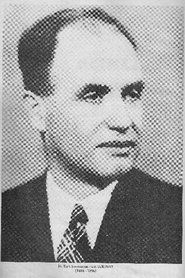
Filmed by reserve army officer Fuat Uzkinay shortly after the Ottoman empire's entry into the Great War. A General Enver's establishes a film centre and several more scenes are shot during the war.
Cast & crew
More films like this

More History films
View all →


More about this film
About the production
Release dateNovember 1914
Box officeNot applicable - this was a military documentary, not a commercial release
ProductionOttoman War Department Central Cinema Directorate
Filmed inBüyükada (St. Stephen Island), Istanbul, Ottoman Empire
This film was commissioned by Enver Pasha, the Ottoman Minister of War, as part of the newly established Central Cinema Directorate. Fuat Uzkınay, a reserve army officer with the 3rd Army, was given the task of documenting this event. The filming took place on November 14, 1914, just weeks after the Ottoman Empire entered World War I. The camera used was likely a Pathé or Gaumont model, commonly available to military photographers of the era. The demolition itself was a significant political statement, as the monument had been erected to commemorate Russian sailors who died in the Ottoman Empire.
Themes
NationalismWar propagandaAnti-Russian sentimentOttoman patriotismHistorical documentation
Themes & topics
documentarypropagandaWorld War Imonument demolitionOttoman EmpireRussian relationsmilitaryhistorypatriotismIstanbul
Historical background
Made during the nickelodeon years around 1914, The Demolition of the Russian Monument at St Stephen reached audiences through theatrical programs, fairground booths, or specialized distribution channels typical of its generation. Filmed by reserve army officer Fuat Uzkinay shortly after the Ottoman empire's entry into the Great War. A General. Historians now read such works for what they reveal about production methods, national taste, and the expanding vocabulary of screen narrative.
Why this film matters
Archivists and programmers still screen The Demolition of the Russian Monument at St Stephen when tracing how popular entertainment evolved. Its subject—filmed by reserve army officer fuat uzkinay shortly after the ottoman empire's entry into the great—gives later viewers tangible evidence of what drew crowds in the silent period. Home video, restorations, and festival sidebars keep the title circulating among students of film history.
Making of
The making of this film was directly tied to the outbreak of World War I and the Ottoman Empire's decision to join the conflict on the side of the Central Powers. Enver Pasha, recognizing the power of cinema as a propaganda tool, established the Central Cinema Directorate and tasked Fuat Uzkınay with documenting significant war-related events. Uzkınay, who had experience with still photography, was given a movie camera and minimal training. The demolition of the Russian monument was chosen as an ideal subject because it symbolized the break with Russia and could be filmed safely in Istanbul. The filming process was rudimentary by modern standards - Uzkınay likely operated a hand-cranked camera, manually exposing each frame. The entire production was overseen by military officials who wanted to ensure the footage served their propaganda purposes. Despite these limitations, Uzkınay managed to capture clear, steady footage that documented the event comprehensively.
What critics said
Original trade coverage treated The Demolition of the Russian Monument at St Stephen as routine program filler rather than a landmark production—common for shorts. Later criticism emphasizes preservation, stylistic comparison with contemporaries, and whatever cast or crew names later gained prominence. Contemporary writing is mostly historical: assessing completeness, influence, and place in a director's or studio's catalog.
Did you know?
- This is widely considered the first Turkish film ever made, marking the birth of Turkish cinema
- Director Fuat Uzkınay was actually a reserve army officer, not a professional filmmaker
- The film was shot just 10 days after the Ottoman Empire entered World War I
- The Russian monument being demolished was a memorial to Russian sailors who had died of cholera in the 19th century
- Enver Pasha, who commissioned the film, was one of the 'Three Pashas' who led the Ottoman Empire during WWI
- The film was originally intended as propaganda to boost morale and show Turkish resistance to Russian influence
- Only fragments of the original film are believed to survive today
- The demolition took place on Büyükada, one of the Princes' Islands in the Sea of Marmara
- Uzkınay would go on to establish the first Turkish film studio and direct over 100 films
- The film's existence helped establish the Ottoman War Department's Central Cinema Directorate, the first official film production unit in Turkey
Visual style
The cinematography of this film reflects the limitations and practices of early documentary filmmaking. Shot on what was likely a hand-cranked 35mm camera, the footage exhibits the characteristic stationary shots and long takes of newsreel-style cinematography of the 1910s. Uzkınay, working with minimal experience, employed straightforward, observational camera positioning, likely setting up his camera at a distance to capture the entire demolition process. The black and white footage shows the high contrast and occasional overexposure common in early film stock. Despite these technical limitations, the framing demonstrates an awareness of composition, with the monument positioned prominently within the frame. The camera work is steady and functional, prioritizing clear documentation over artistic expression. The cinematography serves its purpose effectively, providing a clear visual record of the historical event.
Innovations
While technically rudimentary by modern standards, this film represented several important achievements for its time and place. It was the first film shot by a Turkish director, marking a significant milestone in the development of indigenous film production in the Ottoman Empire. The successful documentation of a real-time event demonstrated that Turkish filmmakers could handle the technical challenges of location shooting and documentary work. The film also showed that the Ottoman military could organize and execute film production for propaganda purposes, establishing a model for future wartime filmmaking. The preservation of footage from this period is itself a technical achievement, given the fragility of early film stock and the political upheavals that followed in the region. The film's existence proves that cinematic technology had reached and was being utilized in the Ottoman Empire by the early 1910s.
Music
This film was produced during the silent era and contained no synchronized soundtrack. Like most films of 1914, it would have been accompanied by live music during screenings. For military or government screenings, this likely consisted of patriotic Ottoman military music or popular songs of the period. The musical accompaniment would have been chosen to enhance the film's propaganda value, with triumphant or martial themes accompanying the demolition scenes. In some cases, a narrator might have provided live commentary explaining the significance of what was being shown. The absence of recorded sound was typical for the era, and the film's documentary nature made it particularly suitable for live musical adaptation based on the screening context.
Famous quotes
No recorded dialogue - silent film with no intertitles documented
Memorable scenes
- The climactic moment when the Russian monument finally topples after workers have been chipping away at its base with tools and ropes, capturing the symbolic destruction of Russian influence in Ottoman territory
What audiences thought
The film was not shown to general commercial audiences in the modern sense, as it was produced for military and governmental purposes. It was likely screened for military officials, government personnel, and possibly at patriotic gatherings in Istanbul during the early months of World War I. Contemporary audiences who did see the footage reportedly responded with patriotic enthusiasm, as the demolition of the Russian monument was a popular act that resonated with anti-Russian sentiment following the outbreak of war. The film served to reinforce existing nationalist feelings and validate the Ottoman Empire's decision to enter the conflict. Today, the film is viewed primarily by film historians, students of cinema, and those interested in Turkish history, with audiences appreciating its historical value over its entertainment content.
Film connections
Influenced by
- European war newsreels
- Early documentary films
- Military propaganda films
- Pathé newsreels
This film influenced
- Early Turkish documentaries
- Ottoman wartime propaganda films
- Turkish historical documentaries
- Military training films
Film restoration
The film is partially preserved with only fragments surviving today. Some footage exists in the Turkish State Archives, though the complete original version is believed to be lost. The surviving material has been restored and digitized by film preservationists, making it accessible for historical study. The fragmentary nature of the survival is typical for films from this era and region, given the political upheavals, wars, and technological limitations of film preservation in the early 20th century.
Where to watch
- Turkish State Archives (in-person viewing for researchers)
- Film archives specializing in early cinema
- Academic film collections
- Occasional screenings at film festivals focusing on early or Turkish cinema
- Museum exhibitions on World War I or Turkish film history