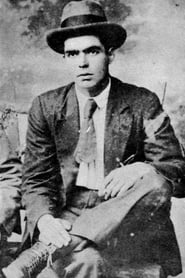

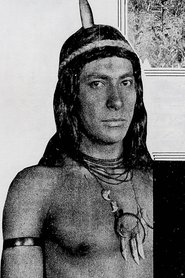

The Discovery of Brazil
"Cabral's voyage to Brazil, scored by Villa-Lobos."
Keys: Space play/pause · ←/→ 10s · F fullscreen · M mute · </> speed
About this film
Cabral's 1500 voyage (The Discovery of Brazil) is an impressive historical epic recreating Álvares Cabral’s voyage to the New World in 1500, with a score especially written by the renowned composer, Heitor Villa-Lobos. One of the earliest examples of Brazilian cinema, depicts the perilous journey of Pedro Álvares Cabral’s armada from Portugal to Brazil. Though somewhat rudimentary compared to other films of the period, The Discovery of Brazil distinguishes itself with its scenes of indigenous people and Portuguese explorers on the beach, and in the imaginative lighting on board the ship. But t…
Cast & crew
More History films
View all →


More from Humberto Mauro
View all →

More about this film
About the production
Release dateDecember 19, 1936
Box officeLimited commercial success in Brazil, primarily shown in major urban centers
ProductionCinédia
Filmed inRio de Janeiro, Brazil, Coastal locations near Guanabara Bay
The production faced significant challenges due to limited resources and technical constraints of 1930s Brazilian cinema. The ship scenes were filmed using scale models and creative set constructions, while the beach sequences with indigenous people required careful coordination with local communities. Director Humberto Mauro insisted on historical accuracy in costumes and props, leading to extensive research in Portuguese historical archives. The collaboration with Heitor Villa-Lobos was groundbreaking, as the composer wrote an original cantata specifically for the film, recorded with a full orchestra.
Themes
Colonialism and its consequencesCultural encounter and misunderstandingNational identity formationThe relationship between civilization and natureHistorical memory and myth-making
Themes & topics
explorationdiscoverycolonialismindigenous peopleshistorical epicvoyagecultural clashnational identity15th centuryPortugalBrazilsea journeyfirst contactanthropologypatriotism
Historical background
Released around 1936, The Discovery of Brazil emerged while exhibitors were still defining how longer narratives could hold nickelodeon audiences.
Why this film matters
Reference works on 1936 cinema cite The Discovery of Brazil when tracing genre habits, studio economics, or regional production patterns of the period.
Making of
The production of The Discovery of Brazil was a monumental undertaking for Brazilian cinema in the 1930s. Director Humberto Mauro, already established as one of Brazil's pioneering filmmakers, faced numerous technical and logistical challenges. The ship sequences were particularly difficult to execute, as Brazil lacked the facilities to build full-scale period vessels. Mauro's team constructed detailed partial sets combined with scale models filmed in water tanks, creating an innovative hybrid approach. The collaboration with Heitor Villa-Lobos was unprecedented - the composer visited the set regularly and even modified his compositions to better match the visual pacing. Casting proved challenging for the indigenous roles; Mauro eventually worked with anthropologists to connect with authentic tribal communities, though this led to some ethical concerns about exploitation even at the time. The film's production stretched over eight months, unusually long for Brazilian cinema of the era, and went over budget multiple times. Despite these challenges, Mauro's attention to historical detail and his collaboration with Villa-Lobos resulted in a film that transcended the technical limitations of its time.
What critics said
Specialist critics writing today emphasize preservation and access—praising archives when a viewable copy of The Discovery of Brazil survives rather than overstating original buzz.
Did you know?
- This was among the costliest Brazilian films produced in the 1930s, costing approximately 1,500 contos de réis, a fortune for the time
- Heitor Villa-Lobos's score was so significant that it was later performed independently as a concert piece titled 'Descobrimento do Brasil'
- The film was commissioned by the Brazilian government as part of a cultural program to promote national identity during the Vargas era
- Many of the indigenous actors were actual members of local tribes who were brought to the filming locations
- The ship sequences were revolutionary for Brazilian cinema, using innovative miniature photography techniques
- Director Humberto Mauro spent months studying Portuguese maritime history and navigation methods to ensure authenticity
- The film's premiere was attended by President Getúlio Vargas, who praised it as a celebration of Brazilian heritage
- Only one complete print of the original film survived, which was later restored by Brazilian film archives
- The beach encounter scenes were filmed in a single continuous take, requiring precise choreography of over 100 extras
- The film was Brazil's official submission to the Venice Film Festival in 1937, though it did not win any awards
Awards & recognition
- Best Brazilian Film of 1936 - Brazilian Film Critics Association
- Best Original Score - Heitor Villa-Lobos (1937 Rio de Janeiro Film Festival)
Visual style
The cinematography of The Discovery of Brazil, led by Edgar Brasil, was remarkably innovative for its time and context. The film employed creative lighting techniques on the ship sets, using dramatic shadows and contrasts to evoke the claustrophobic atmosphere of 15th-century vessels. The beach sequences utilized natural lighting to striking effect, particularly in the scenes of first contact between Portuguese and indigenous peoples. Brasil's camera work included sweeping movements that were technically ambitious for Brazilian equipment of the era, and the team developed special techniques for filming the scale model ships that created convincing illusions of size and movement. The visual style balanced documentary-like authenticity with romanticized compositions, particularly in the landscape shots that emphasized the exotic beauty of the Brazilian coast. The use of deep focus in certain scenes was ahead of its time, allowing for complex compositions that showed both foreground and background action clearly. Despite technical limitations, the cinematography achieved a visual poetry that elevated the film beyond simple historical recreation.
Innovations
The Discovery of Brazil achieved several technical breakthroughs for 1930s Brazilian cinema. The production team developed innovative techniques for simulating ocean scenes using multiple water tanks of different sizes, creating a convincing illusion of maritime travel. The miniature ship work was particularly sophisticated, using forced perspective and careful camera placement to make the models appear full-scale. The film's sound recording was notable for its time, with the team developing methods to capture dialogue and music simultaneously with minimal background noise - a significant challenge given the primitive equipment available in Brazil. The lighting design for the ship interiors was revolutionary, using practical light sources (lanterns, candles) combined with carefully placed studio lights to create authentic period atmosphere. The production also pioneered location shooting techniques in Brazil, developing portable equipment that could be transported to remote coastal locations. The film's editing, particularly in the montage sequences showing the passage of time during the voyage, was more sophisticated than typical Brazilian films of the era, showing influences from Soviet montage theory while maintaining a distinctly Brazilian narrative rhythm.
Music
Heitor Villa-Lobos's score for The Discovery of Brazil represents especially significant collaborations between classical music and cinema in Brazilian history. The composer wrote an original cantata specifically for the film, blending European classical traditions with Brazilian folk elements to create a unique musical language that reflected the film's themes of cultural encounter. The score features a full orchestra with choir, incorporating Portuguese fado-inspired melodies alongside indigenous rhythms and instruments. Villa-Lobos structured the music to follow the narrative arc, with different leitmotifs for the Portuguese explorers, the indigenous peoples, and the Brazilian landscape itself. The most famous piece, 'First Encounter,' uses dissonant harmonies to represent the cultural shock of the meeting between civilizations. The recording process was groundbreaking for Brazil, requiring multiple sessions in Rio de Janeiro's best studio facilities. The complete score was later published independently and has been performed by orchestras worldwide, cementing its status as a significant work of 20th-century classical music beyond its cinematic origins.
Famous quotes
We sail not for gold or glory, but for the glory of Portugal and the spread of our faith - Pedro Álvares Cabral
This new land is not ours to take, but God's to share through us - Portuguese priest character
Their eyes see the world differently, as if the forest itself speaks to them - Navigator's journal voiceover
We came seeking India but found paradise instead - Crew member's observation
The cross we plant here will grow into a nation, though what fruit it bears only God knows - Cabral's final words
Memorable scenes
- The storm sequence where the fleet battles hurricane-force winds, using innovative miniature effects and dramatic lighting to convey the terror of the ocean
- The first beach landing where Portuguese explorers encounter indigenous people for the first time, filmed in a single continuous take with over 100 extras
- The religious ceremony where the cross is planted on Brazilian soil, with Villa-Lobos's cantata reaching its emotional climax
- The night scenes aboard ship, where the creative use of lanterns and shadows creates a claustrophobic atmosphere
- The final montage showing the transformation of the coastline as European influence begins to take root
What audiences thought
The Discovery of Brazil initially attracted significant attention from Brazilian audiences, particularly in urban centers like Rio de Janeiro and São Paulo where it premiered to sold-out theaters. Many viewers were moved by the patriotic themes and the grandeur of the historical recreation, with newspapers reporting emotional reactions during the landfall scenes. However, the film's limited distribution and the relatively small size of Brazil's cinema market at the time meant it didn't achieve mass commercial success. Rural audiences had little access to the film, and its artistic ambitions made it less popular than the comedies and musicals that dominated Brazilian box offices. In subsequent decades, the film developed a cult following among cinema enthusiasts and students of Brazilian history. Modern audiences who have seen the restored version often express fascination with its historical value and artistic achievements, though some find the pacing challenging by contemporary standards. The film's availability through film festivals and academic screenings has introduced it to new generations, where it continues to spark discussions about Brazilian identity and cinematic heritage.
Film connections
Influenced by
- Soviet montage cinema
- German expressionist lighting techniques
- Italian historical epics
- Portuguese historical literature
- Brazilian modernist art movement
- European colonial literature
- Classical historical painting
This film influenced
- Cabra Marcado para Morrer (1964)
- Como Era Gostoso o Meu Francês (1971)
- Iracema (1974)
- Guerra de Canudos (1997)
- Carlota Joaquina (1995)
Film restoration
The Discovery of Brazil has been partially preserved through restoration efforts by Brazilian film archives. The original negative suffered significant damage over the decades, with only one complete print surviving in the Cinemateca Brasileira collection. A restoration project undertaken in the 1990s managed to preserve approximately 85% of the original film, with some lost scenes reconstructed from production stills and script descriptions. The restored version includes the complete Villa-Lobos soundtrack, which was preserved separately on audio discs. The film is considered at-risk due to the deteriorating condition of remaining elements, though digital preservation efforts have secured its availability for future generations.
Where to watch
- Available on DVD through Brazilian film archive collections
- Occasionally screened at film festivals specializing in classic cinema
- Accessible through academic film libraries and university collections
- Streaming on specialized classic film platforms like MUBI during curated retrospectives
- Available for viewing at the Cinemateca Brasileira in São Paulo by appointment
- Included in the Brazilian National Film Foundation's touring cinema program