The Gay Shoe Clerk
"A shoe clerk's kiss scandalizes a chaperoned fitting room."
Keys: Space play/pause · ←/→ 10s · F fullscreen · M mute · </> speed
About this film
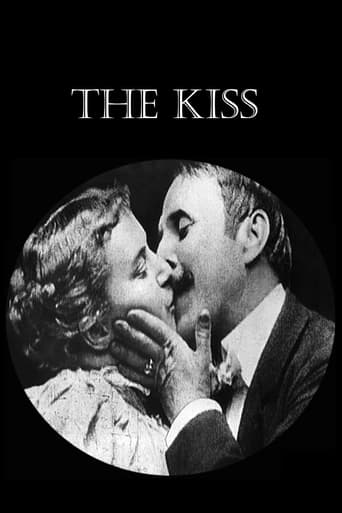
A woman being fitted for shoes exposes her ankle to the shoe clerk, who is intrigued. He kisses her, but her chaperone hits him with her umbrella.
Cast & crew
More films like this
More Comedy films
View all →







More from Edwin S. Porter
View all →

More about this film
About the production
Release dateJuly 1903
Box officeUnknown - Edison films were sold rather than rented, so box office figures weren't tracked as they are today
ProductionEdison Manufacturing Company
Filmed inEdison Studio, New York City, New York
This film was shot on the Edison 'Black Maria' studio's successor indoor stage. The production utilized a single camera setup with minimal sets, typical of early cinema. The film was made during Porter's most prolific period at Edison, when he was experimenting with narrative storytelling techniques. The shoe store set was deliberately kept simple to focus attention on the actors' performances and the central action.
Themes
Sexual suggestivenessVictorian moralityCourtship ritualsClass differencesGender roles
Themes & topics
Historical background
By 1903, The Gay Shoe Clerk was shaped by the earliest projected-film era technology, distribution, and audience expectations.
Why this film matters
The Gay Shoe Clerk (1903) helps trace genre evolution, performer careers, and exhibition practices of its period.
Making of
The film was made during a period when Edwin S. Porter was establishing himself as Edison's principal director and innovator. Porter was experimenting with narrative storytelling beyond the simple actualities that dominated early cinema. The casting of Edward Boulden was typical of Edison's practice of using regular studio actors rather than theatrical stars. The film was shot in a single take with minimal editing, as was common for the era. The production team had to be careful with the suggestive content to avoid censorship issues that were beginning to emerge in some cities. The umbrella prop was chosen specifically as it was a common accessory for respectable women of the period and symbolized moral authority.
What critics said
Trade coverage around 1903 discussed The Gay Shoe Clerk in terms of craft and audience appeal rather than blockbuster scale.
Did you know?
- This film was considered quite scandalous for its time due to the glimpse of the woman's ankle, which was taboo in Victorian society
- The film was one of the earliest examples of cinema using sexual suggestiveness as a comedic device
- Edwin S. Porter was among the pivotal early American filmmakers, known for 'The Great Train Robbery' (1903)
- The film's title uses 'gay' in its original meaning of 'carefree' or 'joyful,' not the modern connotation
- This was one of many short comedies Porter made for Edison focusing on romantic or mildly suggestive situations
- The film was part of Edison's strategy to produce content that would appeal to urban, working-class audiences
- Only one copy of the film is known to survive, preserved at the Museum of Modern Art
- The film was originally sold to exhibitors for $10.57 per copy, Edison's standard price for one-minute films
- The chaperone character was a common trope in early films, representing Victorian moral authority
- This film helped establish the 'shop girl' genre that would become popular in the 1910s and 1920s
Visual style
The film employs the standard stationary camera technique of the era, with the camera positioned to capture the entire action in a single wide shot. The lighting is typical of early studio productions, using natural light from above or basic artificial illumination. The composition places the three characters in a triangular arrangement that emphasizes their relationships and the central conflict. The visual storytelling relies entirely on the actors' gestures and movements, as intertitles were not commonly used in such short films. The simple set design focuses attention on the characters and their interactions.
Innovations
While not technically innovative like some of Porter's other work, the film demonstrates effective use of the limited cinematic tools available in 1903. Porter shows skill in staging action for the camera and using actors' performances to convey narrative clearly without dialogue. The film's success in telling a complete story with a beginning, middle, and end in just one minute was notable for the period. Porter's experience in editing and camera work is evident in the efficient visual storytelling. The film represents the refinement of narrative techniques that Porter would perfect in his more famous works of the same year.
Music
As with all films of this era, The Gay Shoe Clerk was originally silent and would have been accompanied by live music during exhibition. Typical accompaniment might have included popular songs of the period, light classical pieces, or improvisation by a house pianist. The music would have been chosen to match the film's light, comedic tone. Some exhibitors might have used sound effects, such as a thud when the umbrella strikes the clerk, to enhance the comedy. The Edison company sometimes provided suggested musical cues with their films, though specific recommendations for this title have not survived.
Memorable scenes
- The central moment when the woman raises her skirt to expose her ankle to the shoe clerk, creating a scandalous yet pivotal moment in early cinema that pushed the boundaries of acceptable on-screen content
What audiences thought
The film was reportedly very popular with early nickelodeon audiences, who enjoyed its combination of mild scandal and humor. The suggestive nature of the ankle exposure made it a talking point among viewers, contributing to its commercial success. Working-class audiences in particular seemed to appreciate films that pushed social boundaries, even slightly. The film's clear visual storytelling made it accessible to the diverse immigrant audiences who frequented early motion picture theaters. Its popularity helped demonstrate to producers that there was a market for films with romantic and slightly risqué content.
Film connections
Influenced by
- French comedy shorts of the period
- Stage comedy traditions
- Vaudeville sketches
- Earlier Edison comedies
This film influenced
- Other Edison romantic comedies
- Early shop girl films
- Mack Sennett's Keystone comedies
- Romantic comedy shorts of the 1910s
Film restoration
The film is preserved at the Museum of Modern Art in New York and has been included in various early cinema collections. A 35mm print exists and has been digitized for archival purposes. The film is considered to be in good condition for its age, though some deterioration is evident. It has been included in DVD collections of early Edison films and Porter's work.
Where to watch
- The film is available on the Library of Congress website
- Included in the DVD collection 'Edison: The Invention of the Movies'
- Available on YouTube through various archives
- Can be viewed on the Museum of Modern Art's online collection
- Included in some streaming services specializing in classic cinema