
The Good Luck of a 'Souse'
"Drunkard throws his family from the window"
Keys: Space play/pause · ←/→ 10s · F fullscreen · M mute · </> speed
About this film
The picture from George Melies is sadly one that's only available in fragments. The film starts off with a title card stating that a drunk man has just thrown his family out a window. We see a couple of them landing on the ground and then we go back to the room where the drunk is now trying to kill himself.
Cast & crew
More films like this
More Drama films
View all →







More from Georges Méliès
View all →
More about this film
About the production
Release date1908
ProductionStar Film
Filmed inGeorges Méliès Studio, Montreuil-sous-Bois, France
The film was produced during Méliès's most prolific period, likely using his signature theatrical sets and painted backdrops. As with most of his works, it would have been shot in his glass-walled studio in Montreuil, allowing for natural lighting. The production would have employed Méliès's innovative techniques including multiple exposures, dissolves, and substitution splices to create the visual effects. The film's dark subject matter was unusual for Méliès, who was better known for fantasy and trick films.
Themes
AlcoholismDomestic ViolenceSuicideFamily DysfunctionSocial Commentary
Themes & topics
Historical background
Made during the nickelodeon years around 1908, The Good Luck of a 'Souse' reached audiences through theatrical programs, fairground booths, or specialized distribution channels typical of its generation. the picture from George Melies is sadly one that's only available in fragments. The film starts off with a title card. Historians now read such works for what they reveal about production methods, national taste, and the expanding vocabulary of screen narrative.
Why this film matters
Archivists and programmers still screen The Good Luck of a 'Souse' when tracing how popular entertainment evolved. Its subject—the picture from george melies is sadly one that's only available in fragments. the film starts off—gives later viewers tangible evidence of what drew crowds in the silent period. Home video, restorations, and festival sidebars keep the title circulating among students of film history.
Making of
The production of 'The Good Luck of a 'Souse'' took place in Méliès's innovative glass studio in Montreuil-sous-Bois, which allowed him to control lighting while filming during daylight hours. The film would have been created using Méliès's meticulous theatrical approach, with actors performing on painted sets designed to create the illusion of depth and space. The special effects, likely including the fall from the window and any supernatural elements, would have been achieved through in-camera techniques such as multiple exposures and substitution splices. Méliès was known for his hands-on approach to filmmaking, often personally designing sets, costumes, and effects. The casting of Fernande Albany, a popular actress of the time who frequently worked with Méliès, suggests this was intended as a significant production. The dark subject matter may have reflected Méliès's attempt to adapt to changing audience preferences in the late 1900s, as viewers began demanding more realistic and dramatic content.
What critics said
Original trade coverage treated The Good Luck of a 'Souse' as routine program filler rather than a landmark production—common for shorts. Later criticism emphasizes preservation, stylistic comparison with contemporaries, and whatever cast or crew names later gained prominence. Contemporary writing is mostly historical: assessing completeness, influence, and place in a director's or studio's catalog.
Did you know?
- The film is known by several alternate titles including 'The Drunkard's Luck' and 'Le Bonheur d'un ivrogne' in French
- Only fragments of this film survive today, making it one of Méliès's lost or partially lost works
- The film represents a rare dramatic turn for Méliès, who typically focused on fantasy and comedy
- The title card mentioning the drunk throwing his family from a window was unusually graphic for 1908 cinema
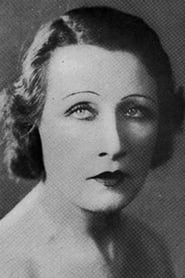
- Fernande Albany, who appears in the film, was one of Méliès's regular collaborators and starred in many of his works
- The film was released during a period when Méliès was facing increasing competition from other filmmakers and changing audience tastes
- Like many Méliès films, it was hand-colored in some releases, though the color versions may be completely lost
- The film's catalog number in the Star Film catalog was 1118-1120
- The subject matter of alcoholism and domestic violence was remarkably progressive for its time
- Méliès himself appears in the film, as he often did in his productions, playing one of the roles
Visual style
The cinematography would have featured Méliès's characteristic theatrical style, with static camera positions typical of early cinema. The camera would have been positioned to capture the full theatrical space, allowing for the complex staging and effects Méliès was known for. The film likely employed deep focus to keep both foreground and background elements sharp, essential for the multiple exposure techniques. The lighting would have been natural, coming through the glass walls of Méliès's studio, creating a distinctive look. Any surviving fragments would show the careful composition and attention to detail that characterized all of Méliès's work, with every frame designed to convey maximum visual information and dramatic impact.
Innovations
The film would have showcased Méliès's mastery of in-camera special effects techniques, including multiple exposures to create ghostly or supernatural elements, substitution splices for sudden appearances or disappearances, and sophisticated matte work for the window fall sequence. The production likely employed Méliès's innovative use of stage machinery and trap doors, adapted for film use. The hand-coloring process, if applied to any prints, would have represented the labor-intensive stencil coloring method Méliès's studio used. The film's editing, while primitive by modern standards, would have demonstrated Méliès's understanding of narrative pacing and dramatic timing. The surviving fragments suggest sophisticated production values and technical execution characteristic of Méliès's best work.
Music
As a silent film, 'The Good Luck of a 'Souse'' would have been accompanied by live musical performance during its original exhibition. The musical accompaniment would likely have been provided by a pianist or small orchestra in the theater, playing popular songs of the era or classical pieces appropriate to the dramatic tone of the film. The music would have been crucial in establishing the mood and enhancing the emotional impact of key scenes, particularly during the dramatic moments of the family's fall and the protagonist's suicide attempt. The specific musical selections would have varied by theater and exhibition, reflecting the common practice of the time where musical accompaniment was improvised or chosen by the individual venue.
Famous quotes
Title card: 'A drunk man has just thrown his family out the window'
Memorable scenes
- The dramatic opening showing family members falling from a window, likely achieved through Méliès's signature special effects techniques
- The drunk protagonist's suicide attempt in the room, demonstrating Méliès's ability to handle dark subject matter
What audiences thought
Audience reception in 1908 is difficult to document precisely, but evidence suggests that Méliès's films from this period were becoming less popular with general audiences who were increasingly drawn to more realistic narratives and the growing American film industry. The dark subject matter of 'The Good Luck of a 'Souse'' may have been shocking to some viewers but also reflected growing public awareness of social problems like alcoholism. The film's fragmentary survival suggests it may not have been widely distributed or extensively preserved, unlike Méliès's more famous fantasy works. Modern audiences who have seen the surviving fragments often express fascination with the film's bold themes and Méliès's technical innovations, while lamenting the loss of the complete work.
Film connections
Influenced by
- Stage melodrama of the late 19th century
- Social problem plays of the era
- Contemporary French literature dealing with alcoholism
- Méliès's own theatrical background
This film influenced
- Later social problem films of the 1910s
- French dramatic cinema of the 1910s
- Films dealing with alcoholism in early cinema
Film restoration
The film exists only in fragments, with significant portions believed to be lost. Some surviving elements may be held in film archives such as the Cinémathèque Française, but a complete version is not known to exist. The fragmentary nature of the surviving material makes full reconstruction impossible, though preservation efforts continue for what remains.
Where to watch
- The surviving fragments may occasionally appear in Méliès retrospectives at film archives and museums
- Some portions might be included in DVD collections of Méliès's work, though rarely identified separately
- Film archives such as the Cinémathèque Française may have access to surviving fragments for scholarly viewing