
The Grasshopper and the Ant
"Aesop's ant and the idle grasshopper"
Keys: Space play/pause · ←/→ 10s · F fullscreen · M mute · </> speed
About this film
An ant works to prepare for winter while a drunken grasshopper plays his violin and dances away his time. When the snow arrives, the grasshopper pleads with the ant for shelter and is turned away to die.
Cast & crew
More films like this
More Animation films
View all →


More from Władysław Starewicz
View all →
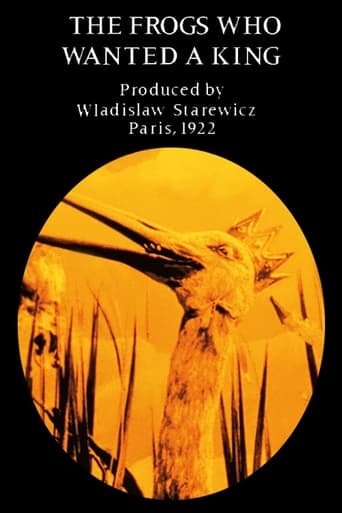
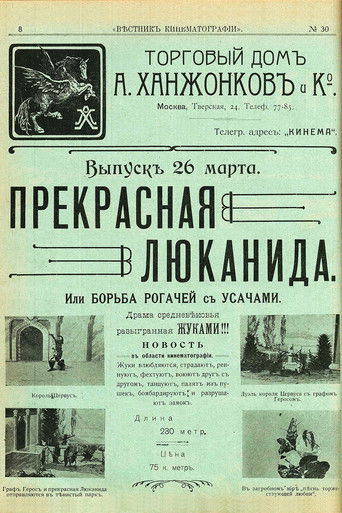
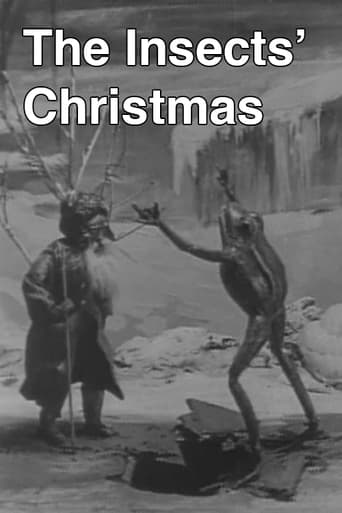
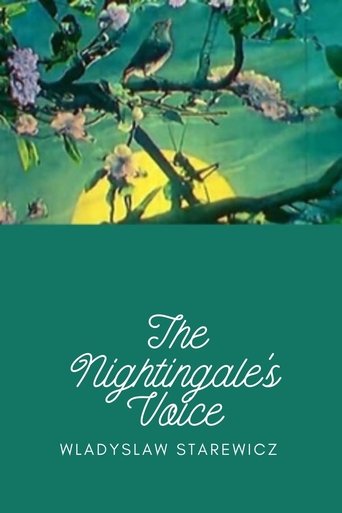
More about this film
About the production
Release date1913
ProductionKhanzhonkov Company
Filmed inMoscow, Russia
This film was created using stop-motion animation with articulated insect puppets, a revolutionary technique for the time. Starewicz had previously experimented with dead insects, creating movement by repositioning their bodies frame by frame, but for this film he developed more sophisticated puppets with jointed limbs. The production required immense patience, with each second of screen time requiring approximately 24 individual frames to be photographed. The film's detailed miniature sets were meticulously crafted to create a believable world for the insect characters.
Themes
The value of hard work and preparationThe consequences of procrastinationMoral education through entertainmentThe harsh realities of natureIndividual responsibility
Themes & topics
fableanimationstop-motioninsectswinterpreparationmoral lessonsurvivalconsequenceshard worklazinessdeath
Historical background
Programmers in 1913 slotted The Grasshopper and the Ant from Khanzhonkov Company beside newsreels, cartoons, and serial chapters.
Why this film matters
Repertory houses screen The Grasshopper and the Ant to show how 1913 filmmakers staged an ant works to prepare for winter while a drunken grasshopper plays his violin and dances.
Making of
Władysław Starewicz, a Polish-Lithuanian filmmaker working in the Russian Empire, developed his revolutionary animation techniques out of necessity. He had originally wanted to film two stag beetles fighting but discovered that the bright studio lights caused them to become docile. His solution was to create articulated puppets from preserved insect carcasses, carefully repositioning them frame by frame. For 'The Grasshopper and the Ant,' he improved upon these techniques, creating more sophisticated puppets with better range of motion. The production was incredibly labor-intensive, with Starewicz often working alone for months to complete just a few minutes of footage. The miniature sets were constructed with remarkable detail, including tiny furniture and props scaled to the insect characters. The film's emotional impact was achieved through subtle puppet movements and expressive positioning, as the characters had no facial features to convey emotion.
What critics said
Repertory notes on The Grasshopper and the Ant highlight survival of the print more than 1913 box-office records.
Did you know?
- This was one of the earliest narrative stop-motion animated films ever created, predating many more famous animated works.
- Director Władysław Starewicz was originally a biologist and entomologist, which explains his fascination with insect subjects.
- The film's original title was 'Strekoza i muravey' in Russian, based on Ivan Krylov's version of the fable rather than Aesop's original.
- Starewicz created the puppets by carefully removing and preserving insect exoskeletons, then rearticulating them with wire joints.
- The violin-playing grasshopper character required particularly complex puppetry to achieve the illusion of playing the instrument.
- This film was part of a series of insect fables Starewicz created for the Khanzhonkov Company.
- The film's dark ending, where the grasshopper dies, was typical of the moralistic tone of early 20th century children's entertainment.
- Starewicz later moved to France after the Russian Revolution, where he continued his pioneering work in stop-motion animation.
- The film's techniques were so advanced that many viewers at the time believed Starewicz had somehow trained live insects to perform.
- This work influenced generations of stop-motion animators, including Willis O'Brien, who would later create 'King Kong'.
Visual style
The cinematography employed innovative techniques for capturing miniature stop-motion animation. Starewicz used carefully controlled lighting to create dramatic shadows and depth in the tiny sets, giving them a realistic appearance despite their small scale. The camera work was remarkably steady for the period, essential for maintaining the illusion of movement in the puppets. Close-up shots were used effectively to emphasize the characters' actions, particularly the grasshopper's violin playing and the ant's diligent work. The film utilized depth of field to create a sense of three-dimensional space within the miniature environments. The snow scenes were particularly effective, using creative lighting and materials to simulate winter atmosphere on a miniature scale.
Innovations
This film pioneered numerous technical innovations in stop-motion animation. Starewicz developed methods for creating articulated insect puppets with realistic movement, using preserved exoskeletons reinforced with wire joints. The film featured sophisticated miniature set construction with detailed props and environments scaled to the characters. Advanced lighting techniques were employed to create mood and atmosphere in the tiny scenes. The animation itself demonstrated remarkable smoothness and consistency, with each character having distinct movement patterns and personality. The film's ability to convey emotion through puppet movement without facial expression was particularly groundbreaking. These techniques would influence stop-motion animation for decades and remain impressive even by modern standards.
Music
As a silent film from 1913, 'The Grasshopper and the Ant' originally had no synchronized soundtrack. However, it would have been accompanied by live musical performance during theatrical screenings, typically a pianist or small orchestra. The music would have been chosen to match the mood of each scene, with lively melodies for the grasshopper's summer dancing and more somber tones for the winter scenes. The grasshopper's violin playing would have been suggested through the puppet's movements and appropriate musical accompaniment. Modern screenings and releases of the film often feature newly composed scores or period-appropriate classical music to recreate the original viewing experience.
Famous quotes
The ant replies: 'You sang all summer, now you can dance all winter' (moral of the fable)
The grasshopper pleads: 'Please, kind ant, spare some food and shelter for a poor musician'
Memorable scenes
- The opening sequence showing the ant methodically storing grain while the grasshopper dances with his violin
- The dramatic winter scene where the starving grasshopper knocks on the ant's door
- The final haunting image of the frozen grasshopper in the snow, his broken violin beside him
- The summer montage contrasting the ant's labor with the grasshopper's revelry
- The moment when the ant firmly shuts his door on the pleading grasshopper
What audiences thought
Early 20th century audiences were reportedly fascinated and sometimes confused by the film, with many believing Starevich had somehow trained live insects to perform the actions. The moral lesson of the fable resonated strongly with viewers of the time, who appreciated its clear message about the virtues of hard work and preparation. Children and adults alike were captivated by the magical quality of the animation, which seemed to bring the miniature world to life. The film's dark ending, while shocking by modern standards, was accepted as appropriate moral instruction in its era. In subsequent decades, as the film was rediscovered by animation enthusiasts, it gained appreciation as a pioneering work that pushed the boundaries of what was possible in early cinema.
Film connections
Influenced by
- Aesop's Fables
- Ivan Krylov's Russian adaptations of fables
- Georges Méliès's trick films
- Early French animation
- Traditional Russian folklore
This film influenced
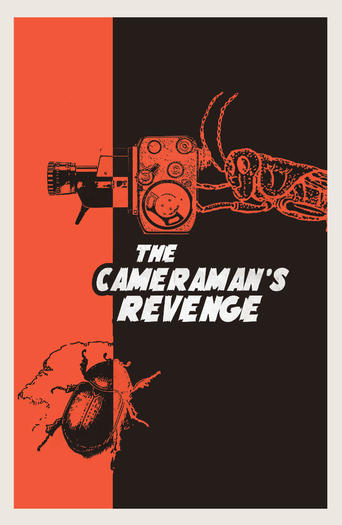
- Starewicz's later works like 'The Cameraman's Revenge' (1912)
- Willis O'Brien's 'The Lost World' (1925)
- Disney's early Silly Symphonies
- Jan Švankmajer's stop-motion works
- Aardman Animations' moral tales
- Modern stop-motion features like 'Coraline'
Film restoration
The film survives in archives and has been restored by various film preservation institutions. Prints are held at the British Film Institute, the Library of Congress, and Russian film archives. The restoration work has cleaned up damage from the nitrate film stock while preserving the original visual quality. Some versions available online may vary in quality depending on the source material used for digitization.
Where to watch
- YouTube (various uploads of different quality)
- Internet Archive
- British Film Institute's streaming service
- Specialized animation streaming platforms
- Film museum screenings and retrospectives
- DVD collections of early animation or Starewicz's works