

The Great Rights
"The Bill of Rights saves a nightmare world"
Keys: Space play/pause · ←/→ 10s · F fullscreen · M mute · </> speed
About this film
A cartoon explaining the American Bill of Rights and Constitution. A man imagines a "nightmare world" without these documents, where Orwellian thugs censor and arrest with impunity. When reminded of the Bill of Rights, the man fights back and eventually defeats the forces of face.
Cast & crew
More Animation films
View all →






More from William T. Hurtz
View all →
More about this film
About the production
Release date1963
ProductionUPA (United Productions of America), Encyclopaedia Britannica Films
Filmed inHollywood, California
Created as part of the educational film movement of the early 1960s, this short was produced during a period of heightened Cold War anxiety about totalitarianism. The animation style reflects UPA's signature modernist approach, using limited animation techniques and stylized backgrounds to create a distinctive visual atmosphere. The film was likely produced on a modest budget typical of educational shorts of the era, with the voice talent being the major expense given the high-profile cast.
Themes
Constitutional rightsTotalitarianism vs. democracyIndividual libertyCivic responsibilityFreedom of speech
Themes & topics
Historical background
The Great Rights appeared around 1963, as television reshaped how films found viewers.
Why this film matters
The Great Rights reflects the range of modern production beyond a single national mainstream.
Making of
The Great Rights was conceived as part of a broader educational initiative to teach American civic values during a period of social and political upheaval. Director William T. Hurtz brought his extensive experience from commercial animation to create a film that was both educational and engaging. The voice cast was assembled from the top tier of Hollywood voice talent, with June Foray and Daws Butler being two of the most recognizable voices in animation at the time. The animation team used UPA's signature limited animation style not just for budgetary reasons but to create a stark, modernist aesthetic that contrasted the nightmare sequences with the 'real world' segments. The script went through multiple revisions to ensure it was both historically accurate about constitutional principles while being accessible to student audiences. The film's production coincided with growing concerns about civil liberties in America, making its message particularly resonant.
What critics said
Press notices for The Great Rights (1963) are sparse in digitized sources; interest today rests on preserved prints and comparison with related titles.
Did you know?
- Director William T. Hurtz was a veteran animator who worked on classic cartoons including Tom and Jerry and The Flintstones
- The film was distributed primarily to schools and educational institutions rather than theaters
- Voice actor Daws Butler was famous for creating characters like Yogi Bear and Huckleberry Hound
- June Foray, one of the voice actors, was known as the 'queen of cartoon voice' and voiced Rocky the Flying Squirrel
- The film was produced during the height of the Cold War when fears of totalitarianism were particularly acute in American society
- UPA, the production company, was known for its innovative animation style and won multiple Oscars for animated shorts
- The nightmare sequences were deliberately designed to be unsettling for younger viewers while still being appropriate for educational use
- Herschel Bernardi was also known for his live-action work, including a Tony nomination for 'Fiddler on the Roof'
- The film's message was considered particularly relevant during the Civil Rights movement of the early 1960s
- Animation cels from this production are now considered collectible among vintage animation enthusiasts
Awards & recognition
- Educational Film Library Association Award of Merit (1964)
- Chris Award, Columbus International Film Festival (1964)
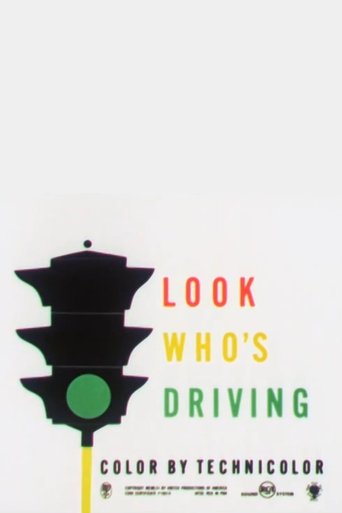
Visual style
The film employs UPA's signature modernist animation style, characterized by bold graphic design, limited animation techniques, and stylized backgrounds. The visual contrast between the nightmare world and constitutional America is achieved through color palette shifts—using muted, oppressive grays and blacks for the totalitarian sequences versus warmer, brighter colors for scenes depicting American freedoms. The animation uses geometric shapes and angular designs to create the oppressive atmosphere of the nightmare world, while employing softer, more organic forms for the constitutional America segments. The limited animation approach, while partly budgetary, creates a stark, theatrical quality that enhances the film's educational message. Character designs are deliberately simplified and iconic, making them easily recognizable and memorable for student audiences.
Innovations
The Great Rights demonstrated several technical innovations in educational animation. The film's effective use of limited animation techniques showed that complex ideas could be conveyed without full animation, making educational production more feasible on limited budgets. The visual transition techniques between the nightmare and real worlds were particularly innovative for the time, using morphing and color shifts rather than simple cuts. The film also pioneered the use of professional voice talent in educational shorts, elevating the production quality beyond typical educational films of the era. The integration of abstract visual elements to represent complex constitutional concepts was technically sophisticated for its time. The film's success in maintaining narrative coherence while switching between radically different visual styles represented an achievement in animated storytelling techniques.
Music
The musical score for The Great Rights was composed to enhance the emotional impact of the narrative, using contrasting themes for the nightmare and constitutional sequences. The nightmare world is accompanied by dissonant, atonal music using brass and percussion to create tension and oppression, while the constitutional segments feature more melodic, optimistic themes with strings and woodwinds. Sound effects are used strategically to emphasize the contrast between the two worlds—harsh, mechanical sounds for the totalitarian regime versus natural, human sounds for free society. The voice performances are clear and well-modulated for educational clarity, with the actors using their signature styles while maintaining appropriate dramatic tone. The overall audio design prioritizes clarity and emotional impact over complexity, making it suitable for classroom viewing conditions.
Famous quotes
Without the Bill of Rights, we have nothing to protect us from the very government we created.
These aren't just words on paper—they're the shield that protects every American.
In the nightmare world, your thoughts can be crimes. In America, your thoughts are your freedom.
The Constitution doesn't give us these rights—it recognizes that we already have them.
Memorable scenes
- The opening sequence where the protagonist suddenly finds himself in the nightmare world, with the visual transition from normal America to the totalitarian regime using dramatic color shifts and angular designs
- The scene where faceless thugs arrest a citizen for reading a book, demonstrating the loss of freedom of speech and thought
- The climactic sequence where the protagonist, armed with knowledge of the Bill of Rights, inspires others to resist the totalitarian forces
- The final scene showing the restoration of constitutional America, with warm colors and rounded designs replacing the harsh nightmare aesthetic
What audiences thought
The Great Rights was primarily shown in schools and educational settings, where it was generally well-received by both students and teachers. Students reportedly found the nightmare sequences memorable and effective in demonstrating the importance of constitutional protections. Teachers appreciated the film's ability to spark classroom discussions about civil liberties and democratic values. The film's runtime of approximately 10 minutes made it ideal for classroom use, fitting easily into standard class periods. Parent-teacher associations often recommended the film for home viewing to supplement civics education. While it never achieved the popular recognition of entertainment cartoons, it became a staple in American civics classrooms throughout the 1960s and early 1970s. Some students who viewed the film during this period later recalled it as one of their most memorable educational experiences.
Film connections
Influenced by
- George Orwell's '1984'
- UPA animation style
- Cold War educational films
- Modernist graphic design
- Political animation of the 1950s
This film influenced
- Schoolhouse Rock! series
- Various educational shorts of the late 1960s
- Civic education animations of the 1970s
Film restoration
The Great Rights has been preserved through the efforts of educational film archives and animation preservation societies. Original 35mm prints are maintained in several university film collections and the Library of Congress. Digital restorations have been undertaken by animation historians, though the film remains primarily available through educational distributors rather than commercial channels. Some deterioration of original elements has occurred, but the film is considered to be in good preservation condition for an educational short of its era.
Where to watch
- Educational film distributors
- University library collections
- Internet Archive
- Classic animation specialty websites
- Museum of Modern Art film collection
- Library of Congress online catalog