The Hearts of Age
"A colonial scene in the U.S."
Keys: Space play/pause · ←/→ 10s · F fullscreen · M mute · </> speed
About this film
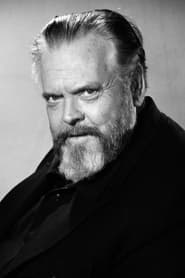
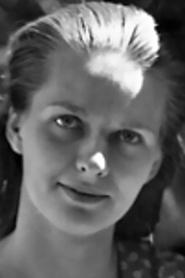
An old lady sits astride a bell while a man in blackface, wig, and livery pulls the bell rope. From an upper door emerges an old man, dressed as a dandy, who tips his hat to the woman as he walks down stairs grinning. Others leave the same door and wa The film stars Welles's first wife, Virginia Nicolson, and Welles himself.
Cast & crew
More films like this
More Fantasy films
View all →

More from Orson Welles
View all →

More about this film
About the production
Release date1934
BudgetMinimal student film budget, likely under $100
Box officeNo commercial release, no box office earnings
ProductionTodd School for Boys
Filmed inTodd School for Boys, Woodstock, Illinois
Filmed on 16mm stock with basic equipment available at the Todd School. The production was a school project that Welles completed during his senior year. The film's sets were makeshift, constructed by Welles and his classmates using available materials. The blackface character, while controversial today, was likely intended as a surrealist symbol rather than racial commentary, reflecting the artistic influences of the time.
Themes
Mortality and deathThe passage of timePower and social hierarchyTheatricality and performanceRepetition and cycles
Themes & topics
surrealexperimentalsilent filmshort filmavant-gardesymbolismdeathbellstairsblackfacestudent film1930sorson welles
Historical background
Made in 1934, in United States, under Orson Welles, The Hearts of Age belongs to silent filmmaking as studio systems and national cinemas competed for audiences. The Hearts of Age is an early film made by Orson Welles.
Why this film matters
Within silent history, Orson Welles's name attaches to the work; 1934 film by Orson Welles; The film is an eight-minute short that he co-directed with friend William Vance in 1934..
Making of
Was created as part of Welles' studies at the Todd School for Boys, where he was a student under the tutelage of Roger Hill, the school's headmaster who recognized and nurtured Welles' theatrical talents. The film was made with the school's basic 16mm camera equipment, with Welles and Vance handling all aspects of production from writing to directing to editing. The cast consisted primarily of fellow students and faculty members, with Welles himself taking on multiple roles. The film's surreal and experimental nature reflected Welles' early interest in avant-garde theater and European art cinema, particularly the works of Luis Buñuel and Salvador Dalí. Despite its amateur production values, the film demonstrates Welles' early mastery of visual composition and his willingness to challenge conventional narrative forms.
What critics said
Contemporary reviews of The Hearts of Age are sparse in open sources; later catalog entries chiefly summarize plot and credits.
Did you know?
- This was Orson Welles' very first film, made when he was just 19 years old
- The film was co-directed with William Vance, a fellow student at Todd School
- Virginia Nicholson, who plays the old woman, was Welles' first wife (married 1934, divorced 1940)
- The film was shot in just one day at the Todd School for Boys
- Welles plays multiple roles in the film, including the dandy character
- The film was considered lost for decades before being rediscovered and restored
- The blackface makeup was likely inspired by surrealist and Dadaist art movements rather than minstrelsy
- Welles later dismissed this early work as juvenilia, though it shows early signs of his visual style
- The bell featured in the film was an actual bell from the Todd School campus
- No dialogue, relying entirely on visual storytelling and symbolic imagery
Visual style
The cinematography of The Hearts of Age was rudimentary but effective, utilizing the basic 16mm camera equipment available at the Todd School. Despite these technical limitations, Welles demonstrated an early understanding of visual composition, using high and low angles to create dramatic tension. The film employs stark contrasts between light and shadow, prefiguring the dramatic lighting techniques that would characterize his later work. The camera work is static for the most part, reflecting both the technical constraints and the theatrical tableau style of the piece. The framing of the bell tower sequence shows Welles' early grasp of vertical composition, while the repeated descent of characters down the stairs creates a rhythmic visual motif that reinforces the film's themes of mortality and repetition.
Innovations
While The Hearts of Age lacks the technical polish of professional productions, it demonstrates several notable achievements for a student film made in 1934. The film's use of multiple costumes and makeup effects, including the controversial blackface, shows resourcefulness with limited materials. The construction of the bell tower set, though crude, effectively creates the desired visual impact. The film's editing, particularly the repetition of characters descending the stairs, shows an early understanding of rhythmic montage. Perhaps most significantly, the film's survival and preservation over nearly nine decades is itself a technical achievement, given the fragility of 16mm film stock from that era. The film's restoration has allowed modern audiences to study Welles' earliest directorial efforts.
Music
As a silent film, The Hearts of Age contains no synchronized dialogue or musical score. The original screenings would have been accompanied by live piano music, typical of silent film presentations of the era. The sound design relies entirely on diegetic sounds, most notably the tolling of the bell that serves as a recurring motif throughout the film. The absence of a conventional soundtrack enhances the film's surreal and dreamlike quality, forcing viewers to focus entirely on the visual symbolism. In modern restorations, some versions have been accompanied by period-appropriate piano music, but the original intent was likely for silent viewing with live musical accompaniment.
Memorable scenes
- The opening tableau with the elderly woman astride the bell while the blackface figure pulls the rope
- The repeated descent of the dandy character down the stairs with his unsettling grin
- The hanging of the blackface character while the dandy continues to smile
- The final scene of the dandy playing piano in darkness, suggesting his identity as Death
What audiences thought
Had virtually no audience upon its initial release, as it was a student project shown only within the Todd School community. In the decades following Welles' rise to fame, the film gained a cult following among cinephiles and Welles scholars who sought out this early work. Modern audiences who view the film often find it confusing or dated, particularly due to its surreal imagery and controversial elements. However, those familiar with Welles' oeuvre generally appreciate seeing the embryonic stages of his directorial style. The film is now primarily viewed in academic settings or as part of Welles retrospectives, where it serves as a historical curiosity rather than entertainment.
Film connections
Influenced by
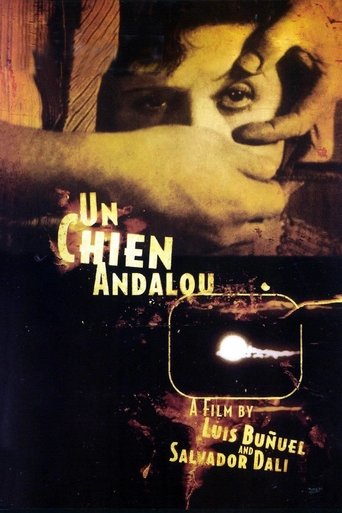
- Luis Buñuel's Un Chien Andalou
- Salvador Dalí's surrealist paintings
- German Expressionist cinema
- Dadaist art movement
- Theatrical stage productions
- Surrealist poetry
- Avant-garde European cinema
This film influenced
- Citizen Kane (as early work of Welles)
- The Magnificent Ambersons (showing continued visual development)
- Other experimental student films inspired by Welles' example
Film restoration
Considered lost for many years but has been rediscovered and preserved by film archives. It exists in restored 16mm and digital formats and is occasionally screened at film retrospectives and academic institutions. The preservation quality varies depending on the source material used for restoration.
Where to watch
- The film is available on some Welles retrospective DVD collections
- Can be found on various streaming platforms specializing in classic and experimental cinema
- Often screened at film archives and museums during Welles retrospectives
- Available through academic film libraries and cinema studies programs
- Some versions circulate among film collectors and on specialty film websites