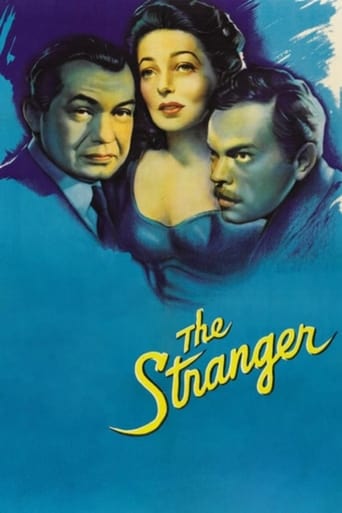
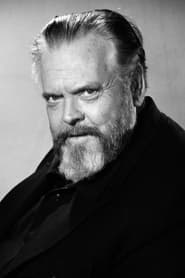
Orson Welles
Actor & Director
Born: May 6, 1915 in Kenosha, Wisconsin, USA Died: October 10, 1985 Active: 1934-1985 Birth Name: George Orson Welles
Films
4 films

About Orson Welles
George Orson Welles — revolutionary American filmmaker, actor, writer, and producer whose innovative techniques forever changed cinema. Born into a wealthy family in Kenosha, Wisconsin, Welles showed prodigious talent from an early age, performing magic tricks and staging theatrical productions as a child. After his mother's death when he was nine and his father's death when he was fifteen, Welles traveled extensively in Europe before returning to America to pursue a career in theater. His work with the Mercury Theatre on radio culminated in the infamous 1938 broadcast of 'The War of the Worlds,' which caused widespread panic when listeners believed the fictional alien invasion was real. This success led to Hollywood, where RKO Pictures gave the 25-year-old Welles unprecedented creative control, resulting in 'Citizen Kane' (1941), often cited as the greatest film ever made. Despite this triumph, Welles spent much of his career fighting studio interference and struggling to fund his ambitious projects, leading to a nomadic existence making films across Europe and South America. His later years were marked by voice work, television appearances, and unfinished projects, yet his influence on cinema remained profound until his death in 1985.
The Craft
On Screen
Welles possessed a commanding baritone voice and a theatrical, larger-than-life presence that dominated any scene. His acting style was rooted in classical theater training, characterized by dramatic flourishes, precise diction, and an ability to convey complex emotions through both vocal modulation and physical presence. He often played characters of power, authority, or moral ambiguity, bringing Shakespearean gravitas to contemporary roles. His performances were marked by intellectual depth and a certain self-aware theatricality that sometimes bordered on the operatic, yet always served the dramatic truth of his characters.
Behind the Camera
Welles revolutionized filmmaking with his innovative use of deep focus, low-angle shots, overlapping dialogue, and complex narrative structures. He pioneered techniques like the long take, dramatic lighting contrasts influenced by German Expressionism, and sound design that created immersive audio environments. His compositions often featured characters dwarfed by their surroundings, emphasizing themes of power, corruption, and alienation. Welles excelled in atmosphere, using shadows, camera movement, and editing rhythms to create psychological depth and emotional intensity that went beyond conventional storytelling.
Milestones
- Founded Mercury Theatre in 1937
- Directed and starred in 'Citizen Kane' (1941)
- Infamous 'War of the Worlds' radio broadcast (1938)
- Directed 'The Magnificent Ambersons' (1942)
- Directed 'Touch of Evil' (1958)
- Starred in 'The Third Man' (1949)
- Completed 'F for Fake' (1973)
- Received AFI Life Achievement Award (1975)
Best Known For
Iconic Roles
Must-See Films
Accolades
Won
- Academy Award for Best Original Screenplay for 'Citizen Kane' (shared with Herman J. Mankiewicz) (1942)
- Academy Honorary Award (1970)
- Palme d'Or at Cannes Film Festival for 'Othello' (1952)
- Golden Lion at Venice Film Festival for 'Othello' (1952)
- British Academy Film Award for Best Actor for 'The Third Man' (1950)
- New York Film Critics Circle Award for Best Director for 'Citizen Kane' (1941)
- Directors Guild of America Lifetime Achievement Award (1984)
- American Film Institute Life Achievement Award (1975)
Nominated
- Academy Award nominations for Best Picture, Best Director, and Best Actor for 'Citizen Kane' (1942)
- Academy Award nomination for Best Supporting Actor for 'The Magnificent Ambersons' (1943)
- Academy Award nomination for Best Original Screenplay for 'The Magnificent Ambersons' (1943)
- Academy Award nomination for Best Writing, Motion Picture Story for 'The Lady from Shanghai' (1949)
- BAFTA nomination for Best Foreign Actor for 'Touch of Evil' (1960)
- Golden Globe nomination for Best Director for 'Citizen Kane' (1942)
Special Recognition
- Hollywood Walk of Fame Star (1960)
- American Film Institute Life Achievement Award (1975)
- Directors Guild of America Lifetime Achievement Award (1984)
- Kennedy Center Honors (1984)
- National Film Registry induction for 'Citizen Kane' (1989)
- Ranked #16 on AFI's Greatest Male Screen Legends
- Ranked #1 on Sight & Sound's Greatest Films of All Time (five times for 'Citizen Kane')
Working Relationships
Worked Often With
Studios
Why They Matter
Impact on Culture
Orson Welles fundamentally transformed both cinema and popular culture through his innovative techniques and boundary-pushing artistry. His use of deep focus photography in 'Citizen Kane' revolutionized visual storytelling, allowing multiple planes of action to remain in sharp focus simultaneously. The film's non-linear narrative structure, told through flashbacks and multiple perspectives, broke from conventional Hollywood storytelling and influenced generations of filmmakers. Welles' radio work, particularly 'The War of the Worlds,' demonstrated the power of media to shape public perception and remains a case study in media effects. His adaptations of Shakespeare brought classic literature to modern audiences in accessible forms, while his documentary-style techniques in 'F for Fake' anticipated reality television and mockumentary formats. Beyond his technical innovations, Welles represented the artist as intellectual provocateur, constantly challenging audiences and institutions with his questioning of authority, power, and truth.
Lasting Legacy
Welles' legacy extends far beyond his filmography into the very language of cinema itself. 'Citizen Kane' continues to top 'greatest films' lists and is studied in film schools worldwide for its groundbreaking techniques. His struggle for creative independence against studio systems made him a symbol of artistic integrity and the price of vision in commercial art. The unfinished nature of many of his later projects has created a mythic quality around his career, with film historians and enthusiasts still piecing together lost footage and attempting to complete his visions. His distinctive voice and persona have become cultural touchstones, referenced and parodied across media. Welles influenced directors as diverse as Martin Scorsese, Steven Spielberg, Francis Ford Coppola, and Peter Jackson, while his techniques in sound design, cinematography, and narrative structure have become standard tools in filmmaking. His life story has inspired numerous books and documentaries, cementing his status as both a tragic genius and a revolutionary artist who changed cinema forever.
Who They Inspired
Welles' influence on cinema is immeasurable, with directors across generations citing him as a primary inspiration. His deep focus techniques influenced cinematographers from Gregg Toland to Emmanuel Lubezki, while his complex narrative structures inspired filmmakers like Christopher Nolan and Quentin Tarantino. The French New Wave directors, particularly François Truffuff and Jean-Luc Godard, revered Welles as an auteur who fought for artistic control. His use of shadows and low-angle lighting influenced film noir directors, while his documentary-style innovations prefigured the cinéma vérité movement. Beyond technique, Welles' career as an independent filmmaker fighting against studio constraints inspired the American New Wave directors of the 1970s. His radio innovations influenced everything from Orson Scott Card's 'Ender's Game' to modern podcasting. Even his failures became influential, as his struggles to complete projects inspired the 'director's cut' movement and greater recognition of artistic intent over studio versions.
Off Screen
Welles led a famously tumultuous personal life marked by multiple marriages, financial difficulties, and creative struggles. He was married three times: to actress Virginia Nicolson (1934-1940), to Hollywood star Rita Hayworth (1943-1948), and to Italian actress Paola Mori (1955-1985). His marriage to Hayworth was particularly stormy, with both parties engaging in extramarital affairs. Welles had three daughters: Christopher with Nicolson, Rebecca with Hayworth, and Beatrice with Mori. Despite his professional success, he faced constant financial troubles, often taking acting roles purely for money to fund his directing projects. His later years were spent in relative isolation, working on various unfinished projects while living primarily in Las Vegas with his third wife.
Education
Family
- Virginia Nicolson (1934-1940)
- Rita Hayworth (1943-1948)
- Paola Mori (1955-1985)
Did You Know?
- Welles was only 25 years old when he directed 'Citizen Kane', often considered the greatest film ever made
- His 'War of the Worlds' radio broadcast caused actual panic among listeners who believed the alien invasion was real
- He directed his first film at age 19: 'The Hearts of Age', an 8-minute experimental short
- Welles — gifted magician who performed professionally as a teenager
- He stood 6 feet 2 inches tall and weighed over 300 pounds in his later years
- Welles was offered but rejected the role of Darth Vader in 'Star Wars'
- He was fluent in multiple languages and made films in English, Spanish, French, and Italian
- Welles' distinctive voice earned him millions from commercial voice work, including frozen peas commercials
- He never won a competitive Academy Award for directing, only for writing 'Citizen Kane'
- Welles — gourmet chef who claimed he could have been a professional chef if not for film
- He directed the first Shakespeare film to win the top prize at Cannes ('Othello' in 1952)
- Welles — political activist who supported progressive causes and was investigated by the FBI
In Their Own Words
If there hadn't been a Welles, I wouldn't have been able to do what I did. He's the one who gave me permission to be a filmmaker.
The enemy of art is the absence of limitations.
I started at the top and worked my way down.
A film is never really good unless the camera is an eye in the head of a poet.
I hate television. I hate it as much as peanuts. But I can't stop eating peanuts.
The director is simply the audience. So the terrible burden of the director is to take the place of that yawning vacuum.
I have a great love and respect for religion, great love and respect for atheism. What I hate is agnosticism.
Everything about me is a contradiction, and so is everything about everybody else. That's what I think is the great secret of the universe.
Frequently Asked Questions
Who was Orson Welles?
Revolutionary American filmmaker, with credits in this catalog. Best known for 'Citizen Kane' (1941), often cited as the greatest film ever made, Welles was also a radio pioneer whose 'War of the Worlds' broadcast caused nationwide panic in 1938. His active years covered five decades and encompassed theater, radio, film, and television, making him.
What films is Orson Welles best known for?
Titles linked here include Citizen Kane (1941), The Magnificent Ambersons (1942).
When was Orson Welles born and when did he die?
Born May 6, 1915; died October 10, 1985.
What awards did Orson Welles win?
Welles won an Academy Award for Best Original Screenplay for 'Citizen Kane' (shared with Herman J. Mankiewicz) in 1942, and received an honorary Academy Award in 1970. He won the Palme d'Or at Cannes for 'Othello' in 1952, a BAFTA for 'The Third Man', and numerous lifetime achievement awards including the AFI Life Achievement Award (1975) and the Directors Guild of America Lifetime Achievement Award (1984). Despite these honors, he never won a competitive Oscar for directing.
What was Orson Welles' directing style?
Welles revolutionized filmmaking with innovative techniques including deep focus photography, dramatic low-angle shots, overlapping dialogue, and complex narrative structures. He pioneered long takes, expressionistic lighting, and immersive sound design. His visual style emphasized characters dwarfed by their surroundings, exploring themes of power and corruption. Welles excelled in atmosphere who blended theatrical grandeur with cinematic realism, creating psychologically intense films that broke conventional Hollywood storytelling rules.