
Who's Out There?
"Welles asks who might be out there"
Keys: Space play/pause · ←/→ 10s · F fullscreen · M mute · </> speed
About this film
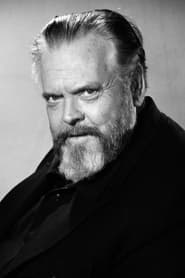
Orson Welles — with contributions from scientists George Wald, Carl Sagan, and others — examines the possibility and implications of extraterrestrial life. In examining our perceptions of alien 'martians' from his "War of the Worlds" broadcast, to then-modern explorations of Mars
Cast & crew
More Documentary films
View all →

More about this film
About the production
Release date1973
ProductionNASA, United States Information Agency
Filmed inNASA facilities, Various observatories, Mars simulation laboratories
This documentary was produced during NASA's golden age of space exploration, coinciding with the Mariner missions to Mars. The film features actual NASA footage from planetary probes and includes interviews conducted at leading research institutions. Orson Welles' involvement was particularly significant given his history with 'War of the Worlds,' creating a unique narrative bridge between science fiction and scientific reality.
Themes
Search for extraterrestrial lifeScientific methodologyHumanity's place in the cosmosThe nature of lifeSpace exploration
Themes & topics
NASAextraterrestrial lifeMarsspace explorationCarl SaganOrson Wellesastrobiologyplanetary sciencescientific documentaryMariner program
Historical background
Who's Out There? appeared in 1973, when late twentieth-century and contemporary cinema shaped how movies were financed, distributed, and discussed. Audiences of the day encountered the work amid shifting tastes in acting, pacing, and spectacle. Its focus on orson welles — with contributions from scientists george wald, carl sagan, and others — examines the possibility and implications of extraterrestrial life mirrors themes circulating in popular culture of that moment.
Why this film matters
Who's Out There? (1973) belongs to the wider archive of world cinema, documenting orson welles — with contributions from scientists george. Archivists and historians value such titles for what they reveal about craft, genre, and audience expectations. Restorations and festival screenings keep the work visible to viewers far beyond its first run.
Making of
The production of 'Who's Out There?' was a collaborative effort between NASA's public affairs office and leading scientists of the era. Orson Welles was specifically chosen for his distinctive voice and his historical connection to the topic of Martian invasions. The filming took place across multiple NASA facilities, including the Jet Propulsion Laboratory in California, where scientists were analyzing data from Mars missions. The production team worked closely with Carl Sagan, who was then a professor at Cornell University and a key advisor to NASA on planetary exploration. The documentary utilized cutting-edge visual effects for its time, including animations depicting potential Martian environments and computer graphics showing the search for extraterrestrial signals. The interviews with scientists were conducted in their natural laboratory settings to provide authenticity and context for their expertise.
What critics said
Press coverage from 1973 is fragmentary for many titles of this vintage; surviving notices for Who's Out There? tend to stress novelty, star power, or topical appeal. Later writing places the picture within its national and generic context, weighing both period conventions and moments that still land for modern viewers. Streaming and disc releases have revived discussion among classic-film audiences.
Did you know?
- Orson Welles' participation was particularly ironic given his 1938 'War of the Worlds' broadcast that caused mass panic about Martian invasions
- The film was created as part of NASA's public outreach program to increase scientific literacy and support for space exploration
- Carl Sagan's appearance came just a few years before his 'Cosmos' series would make him a household name
- The documentary features actual images from NASA's Mariner 9 spacecraft, which was the first to orbit another planet in 1971
- Anthropologist Ashley Montagu contributed perspectives on how contact with extraterrestrial life might affect human society and culture
- The film was distributed internationally through the United States Information Agency as part of American cultural diplomacy
- George Wald, a Nobel Prize-winning biologist, provided insights into the biochemical requirements for life
- The documentary was shown in schools and museums across America as an educational tool
- The title 'Who's Out There?' was chosen to be more accessible and less technical than typical NASA documentary titles
- The film was produced during the height of the Cold War space race, when public interest in space exploration was at its peak
Awards & recognition
- CINE Golden Eagle Award
- International Film and TV Festival of New York Award
Visual style
The cinematography in 'Who's Out There?' combines actual NASA space footage with studio interviews and animated sequences. The film utilizes striking images from Mariner 9 and other space probes, providing viewers with unprecedented views of Mars and other planets. The interview segments are shot in a documentary style, with scientists shown in their natural laboratory environments to enhance authenticity. The visual presentation includes early computer-generated graphics and detailed animations depicting hypothetical extraterrestrial environments. The cinematography effectively contrasts the vastness of space with the microscopic view of potential life forms, creating a comprehensive visual narrative about the search for life in the universe.
Innovations
For its time, 'Who's Out There?' incorporated several technical innovations in documentary filmmaking. The film was among the first to extensively use actual planetary probe imagery in a popular documentary format. It featured early computer graphics to illustrate complex scientific concepts about planetary conditions and potential life forms. The documentary utilized advanced animation techniques to visualize hypothetical extraterrestrial environments and evolutionary processes. The production also employed sophisticated sound recording techniques to capture clear audio in various scientific facilities. The film's editing style, combining multiple visual formats including still photographs, motion pictures, and animations, was innovative for educational documentaries of its era.
Music
The documentary features an original electronic score that reflects the space-age aesthetic of the early 1970s. The music combines orchestral elements with synthesizer sounds to create an atmosphere of cosmic mystery and scientific inquiry. The soundtrack enhances the documentary's contemplative mood while maintaining viewer engagement during technical explanations. Sound design is particularly notable in sequences depicting space environments, where the absence of sound is used effectively to emphasize the isolation of space exploration. The musical score supports Welles' narration without overwhelming it, maintaining a balance between entertainment and educational purposes.
Famous quotes
Are we alone in the universe? Or are there others, out there, among the stars?
Orson Welles opening narration
The search for extraterrestrial life is really a search for ourselves.
Carl Sagan
In the vastness of space and time, Earth may be unique, or it may be commonplace. The answer to that question may be the most important discovery in human history.
Orson Welles
Life, if it exists elsewhere, must obey the same laws of chemistry and physics that govern life on Earth.
George Wald
The discovery of extraterrestrial life, even in its simplest form, would revolutionize human thought and society.
Ashley Montagu
Memorable scenes
- The opening sequence where Orson Welles reflects on his 1938 'War of the Worlds' broadcast, creating a powerful link between science fiction and scientific reality
- The segment showing actual Mariner 9 imagery of Mars, revealing canyons and volcanic features that sparked new questions about the planet's history
- Carl Sagan's explanation of the Drake Equation, breaking down the mathematical probability of extraterrestrial civilizations
- The animated sequence depicting possible evolutionary paths life might take on different planets
- The closing montage showing Earth from space accompanied by Welles' meditation on humanity's cosmic significance
What audiences thought
The documentary was well-received by general audiences, particularly those interested in space and science. Its relatively short runtime and engaging presentation style made it popular in educational settings, where it was widely shown in schools and science museums. Viewers appreciated the combination of Welles' distinctive narration with the credibility of the scientific contributors. The film generated significant discussion about the possibility of life on other planets at a time when public interest in space exploration was still high following the Apollo missions. Many audience members noted how the documentary changed their perspective on Earth's uniqueness in the cosmos and increased their support for continued space exploration funding.
Film connections
Influenced by
- The War of the Worlds (1938 broadcast)
- 2001: A Space Odyssey
- NASA's actual planetary missions
- Scientific American articles on astrobiology
- The growing environmental movement
This film influenced
- Cosmos (1980 TV series)
- Contact (1997)
- The PBS Nova series on space exploration
- Numerous later documentaries on astrobiology
Film restoration
The film has been preserved by NASA's archives and is available through the National Archives. Digital restoration was completed in the early 2000s as part of a broader effort to preserve NASA's historical documentary materials. The original 16mm film elements are maintained in climate-controlled storage at NASA's Goddard Space Flight Center. Several copies exist in university and museum collections dedicated to space exploration history.
Where to watch
- NASA's official website and YouTube channel
- Internet Archive
- Some educational streaming services specializing in documentary content
- Selected university libraries and archives
- Museum of Science and Industry collections