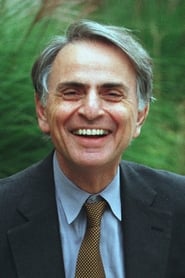
Carl Sagan
Actor
Born: November 9, 1934 in Brooklyn, New York, USA Died: December 20, 1996 Active: 1973-1996 (media appearances) Birth Name: Carl Edward Sagan
Films
1 film
About Carl Sagan
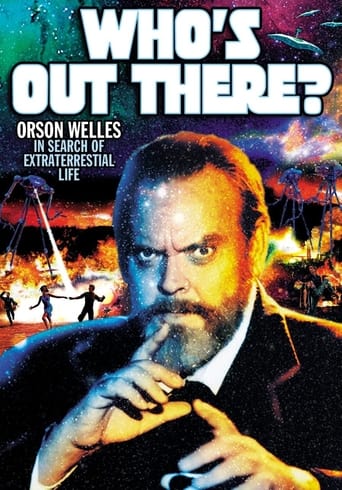
Carl Edward Sagan — American astronomer, astrophysicist, cosmologist, and science communicator who made significant contributions to popularizing science, though he was not primarily an actor in classic cinema. Born in Brooklyn, New York, Sagan developed an early passion for astronomy and went on to earn degrees from the University of Chicago. He became a professor at Cornell University and worked on NASA's robotic space missions, contributing to the Pioneer plaque and Voyager Golden Record. While his 1973 appearance in 'Who's Out There?' was as himself discussing the possibility of extraterrestrial life, this was part of his broader mission to make science accessible to the public. Sagan's most famous work came later with the 1980 television series 'Cosmos: A Personal Voyage,' which became the most-watched series in public television history. He authored numerous books, including the science fiction novel 'Contact,' which was later adapted into a film. Sagan's scientific research, teaching, writing, and media appearances, but he was never a professional actor in the traditional sense of classic cinema.
The Craft
Milestones
- Contributed to NASA's Pioneer and Voyager missions
- Hosted 'Cosmos: A Personal Voyage' (1980)
- Published 'Contact' (1985)
- Won Pulitzer Prize for 'The Dragons of Eden' (1978)
- Co-founded The Planetary Society
Best Known For
Iconic Roles
Must-See Films
Accolades
Won
- Pulitzer Prize for General Non-Fiction (1978)
- NASA Public Service Medal
- National Academy of Sciences Public Welfare Medal
- Emmy Award for Outstanding Individual Achievement (1981)
Nominated
- Multiple Emmy nominations for 'Cosmos'
Special Recognition
- Member of National Academy of Sciences
- Asteroid 2709 Sagan named in his honor
- Carl Sagan Memorial Station on Mars
Working Relationships
Worked Often With
Why They Matter
Impact on Culture
Carl Sagan revolutionized science communication by making complex astronomical concepts accessible to the general public. His series 'Cosmos' inspired a generation of scientists and science enthusiasts, demonstrating that scientific inquiry could be both educational and emotionally compelling. Sagan's ability to articulate the cosmic perspective helped bridge the gap between scientific academia and public understanding, influencing how science is presented in media today.
Lasting Legacy
Sagan's enduring legacy lies in his role as 'the people's astronomer' who brought the wonders of the universe into living rooms worldwide. His emphasis on scientific literacy, critical thinking, and the fragility of Earth continues to resonate. The reboot of 'Cosmos' with Neil deGrasse Tyson demonstrates the lasting impact of his approach to science communication. Sagan's work in the search for extraterrestrial intelligence (SETI) and his advocacy for space exploration remain influential in contemporary scientific discourse.
Who They Inspired
Sagan influenced countless scientists, educators, and science communicators to embrace public engagement. His approach to presenting scientific concepts with both accuracy and poetry set a new standard for educational media. Many contemporary science communicators, including Brian Cox and Neil deGrasse Tyson, have cited Sagan as a major influence on their careers and communication styles.
Off Screen
Carl Sagan was married three times and had five children. He was known for his passionate advocacy of scientific skepticism and critical thinking. Sagan — prominent figure in the nuclear disarmament movement and environmental causes. His personal philosophy emphasized the importance of scientific literacy and the wonder of the cosmos. He suffered from myelodysplasia, a rare blood disease, which led to his death at age 62.
Education
Family
- Lynn Margulis (1957-1965)
- Linda Salzman (1968-1981)
- Ann Druyan (1981-1996)
Did You Know?
- Was an avid smoker and often appeared on television with a cigarette
- Testified before Congress about nuclear winter in 1983
- Was arrested three times for civil disobedience during nuclear weapons protests
- His famous phrase 'billions and billions' was never actually said by him on Cosmos
- Helped design the messages on the Pioneer spacecraft and Voyager Golden Record
- Was a consultant on the film '2001: A Space Odyssey'
- Wrote the novel 'Contact' which was published just before his death
- Was a founding member of The Planetary Society in 1980
- His final book 'The Demon-Haunted World' was published posthumously
- The character of Professor Frink on The Simpsons was partially inspired by him
In Their Own Words
The cosmos is within us. We are made of star-stuff.
Extraordinary claims require extraordinary evidence.
Somewhere, something incredible is waiting to be known.
We are like butterflies who flutter for a day and think it's forever.
If you want to make an apple pie from scratch, you must first invent the universe.
Frequently Asked Questions
Who was Carl Sagan?
Renowned American astronomer, astrophysicist, and science communicator who became famous for making complex scientific concepts accessible to the general public through television, books, and public speaking.
What films is Carl Sagan best known for?
Titles linked here include Who's Out There? (1973), Cosmos: A Personal Voyage (1980).
When was Carl Sagan born and when did he die?
Born November 9, 1934; died December 20, 1996.
What awards did Carl Sagan win?
Sagan won the Pulitzer Prize for General Non-Fiction in 1978, multiple Emmy Awards for 'Cosmos,' the NASA Public Service Medal, and the National Academy of Sciences Public Welfare Medal.
What was Carl Sagan's contribution to space exploration?
Sagan contributed to NASA's robotic space missions, helping design messages on the Pioneer spacecraft and Voyager Golden Record. He was also a strong advocate for the search for extraterrestrial intelligence (SETI).