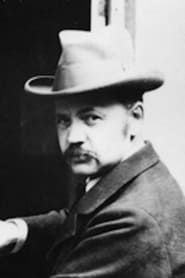

The Little Match Seller
"One match at a time against the winter cold."
Keys: Space play/pause · ←/→ 10s · F fullscreen · M mute · </> speed
About this film
A short melodrama based on Hans Christian Andersen's harrowing tale. A poor little girl tries to sell matchsticks in the freezing December cold. She lights matches for some light and warmth. There are visions: a fireplace, dinner, a Christmas tree. She sees her dead mother, welcoming her.
Cast & crew
More Drama films
View all →






More from James Williamson
View all →
More about this film
About the production
Release dateSeptember 1902 (exact day varies by source)
BudgetNot documented - typical for films of this era where production costs were minimal and not formally recorded
Box officeNot documented - box office tracking was not standardized in 1902 and early films were often sold outright to exhibitors rather than earning percentage-based revenue
ProductionWilliamson Kinematograph Company
Filmed inBrighton, England - likely filmed on the streets near Williamson's studio at Hove
James Williamson used his own children as actors in many of his films, though it's unclear if the young actress in this film was his daughter. The film was shot outdoors in natural light, requiring careful timing to achieve the winter atmosphere. Special effects for the match-light visions were created through in-camera techniques and multiple exposures, quite innovative for 1902. The snow effect was likely created using flour or cotton scattered on the ground.
Themes
Poverty and social inequalityDeath and the afterlifeThe power of imagination and hopeChildhood innocenceSocial indifference
Themes & topics
Historical background
By 1902, The Little Match Seller was shaped by the earliest projected-film era technology, distribution, and audience expectations.
Why this film matters
The Little Match Seller (1902) helps trace genre evolution, performer careers, and exhibition practices of its period.
Making of
James Williamson, who operated out of Brighton, England, was among the leading innovative filmmakers of the early cinema period. For this production, he likely cast a local child actress, possibly one of his own daughters who appeared in several of his films. The outdoor filming in winter conditions would have been challenging with the primitive equipment of 1902. The special effects showing the visions when the girl lights matches were achieved through sophisticated multiple exposure techniques - Williamson would expose the film multiple times with different elements superimposed. The film was shot in a single take with minimal editing, which was typical for the period. The production would have been completed in just a day or two, as was common for films of this length and era. Williamson's background as a chemist allowed him to experiment with developing processes to achieve the visual effects he wanted.
What critics said
Trade coverage around 1902 discussed The Little Match Seller in terms of craft and audience appeal rather than blockbuster scale.
Did you know?
- This is one of the earliest surviving film adaptations of a Hans Christian Andersen story, demonstrating how quickly filmmakers recognized the potential of classic literature for cinematic storytelling.
- Director James Williamson was a pioneer of British cinema and part of what became known as the 'Brighton School' of early filmmakers who developed many fundamental film techniques.
- The film was made during a period when filmmakers were transitioning from simple actualities (documenting real events) to narrative fiction films with emotional content.
- At 1-2 minutes, this was considered a substantial film in 1902, when most films were under a minute long.
- The match visions were created using innovative multiple exposure techniques that were quite advanced for the time.
- The film was part of a series of socially conscious films Williamson made that highlighted the plight of the poor in Edwardian society.
- The original film was shot on 35mm film at approximately 16 frames per second, the standard speed of the era.
- Williamson was a chemist by training before becoming a filmmaker, which gave him technical advantages in developing and processing his own film stock.
- The film was distributed internationally and was particularly popular in the United States, where it helped establish Williamson's reputation abroad.
- The Little Match Seller was one of the first films to use visual effects to represent psychological states and visions rather than just physical reality.
Visual style
The cinematography in The Little Match Seller, while primitive by modern standards, was quite innovative for 1902. Williamson used natural outdoor lighting to create the winter atmosphere, a challenging feat with the slow film stocks of the era. The camera work is static, as was typical for the period, but Williamson carefully composed his shots to maximize emotional impact. The multiple exposure techniques used for the match-light visions were technically sophisticated for the time, requiring precise timing and exposure control. The contrast between the cold, gray exterior shots and the warm, glowing vision sequences creates a powerful visual metaphor for the girl's imagination and hope. The film's visual style demonstrates Williamson's understanding of how to use the camera to convey emotion and meaning beyond simple documentation of events.
Innovations
The Little Match Seller featured several technical innovations that were quite advanced for 1902. The most notable was Williamson's sophisticated use of multiple exposure techniques to create the vision sequences when the girl lights her matches. This required precise timing and control in an era before reliable editing equipment. The film also demonstrated advanced understanding of visual storytelling through its use of contrast between the cold reality and warm visions. Williamson's ability to create emotional effects through visual techniques rather than just narrative action was groundbreaking. The outdoor filming in winter conditions with the bulky equipment of 1902 required considerable technical skill. The film's special effects, while simple by modern standards, pushed the boundaries of what was technically possible in early cinema and influenced other filmmakers to explore similar techniques.
Music
As a silent film, The Little Match Seller had no synchronized soundtrack, but would have been accompanied by live music during theatrical exhibitions. The typical accompaniment might have included a pianist or small orchestra playing appropriate mood music. Given the film's emotional content, the musical accompaniment would likely have been somber and melancholic, perhaps incorporating popular songs of the era or classical pieces that matched the film's tragic tone. Some exhibitors might have used special sound effects like wind sounds to enhance the winter atmosphere. The choice of music could significantly affect the audience's emotional response, and skilled accompanists would vary their performance based on the reactions of the audience. The lack of standardized musical accompaniment meant that each screening of the film could have a different auditory experience.
Famous quotes
As a silent film from 1902, there are no recorded quotes. The story was told entirely through visual narrative and intertitles (if any survived).
Memorable scenes
- The sequence where the little girl lights her first match and sees the warm fireplace appear through multiple exposure effects, creating a stark contrast between the freezing street and the comforting vision of warmth and home.
What audiences thought
Edwardian audiences reportedly found The Little Match Seller deeply moving and it was quite popular in its time. The film's emotional content and clear narrative made it accessible to viewers of all classes and literacy levels. Many audience members would have been familiar with Hans Christian Andersen's original story, which enhanced their appreciation of the adaptation. The film's depiction of urban poverty resonated with working-class audiences while its moral message appealed to middle-class sensibilities. Contemporary accounts suggest the film often elicited strong emotional reactions, with some reports of audiences weeping during screenings. The film's popularity extended beyond Britain to international markets, particularly the United States where it was distributed by the Edison Manufacturing Company. Its success helped establish Williamson as one of the leading filmmakers of his era and demonstrated the commercial viability of emotionally charged narrative films.
Film connections
Influenced by
- Hans Christian Andersen's original literary fairy tale 'The Little Match Girl' (1845)
- The tradition of Victorian sentimental literature and social reform novels
- Contemporary stage melodramas that dealt with similar themes
- The growing movement of social realism in art and literature
- Earlier trick films by Georges Méliès that demonstrated the possibilities of special effects
This film influenced
- Numerous later adaptations of Andersen's story in various media
- Other social realist films of the early 1900s that dealt with poverty
- The development of narrative cinema that used special effects for psychological states
- Later British social realist films that continued this tradition of social commentary
Film restoration
The film is preserved in the archives of the British Film Institute and has been restored. While some early films from this period are completely lost, The Little Match Seller survives in reasonably good condition, likely due to its importance and Williamson's reputation. The BFI has included it in their collection of historically significant British films. Digital restorations have made the film accessible to modern audiences while preserving its historical character. The survival of this film is particularly valuable as it represents one of the earliest examples of narrative cinema with emotional depth and social commentary.
Where to watch
- The British Film Institute's streaming platform BFI Player
- YouTube (through official archives like the BFI channel)
- Various DVD collections of early cinema and silent films
- Museum screenings and film archive exhibitions
- Educational film databases and university collections