The Morning Alarm
"Horses thunder from the firehouse"
Keys: Space play/pause · ←/→ 10s · F fullscreen · M mute · </> speed
About this film
“This shows the Fire Department leaving headquarters for an early morning fire. The scene is remarkable for its natural effect. The opening of the engine house doors, the prancing of the horses, and even the startled expression upon the faces of the spectators are all clearly dep.
Cast & crew
More films like this
More Documentary films
View all →
More from James H. White
View all →

More about this film
About the production
Release dateJanuary 1897
ProductionEdison Manufacturing Company
Filmed inHarrisburg, Pennsylvania
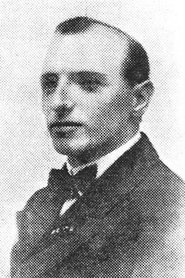
Filmed on Christmas Day, December 25, 1896, using the Edison Vitascope camera system. The 150-foot length was standard for Edison shorts of this period. James H. White, Edison's principal cameraman, positioned his camera to capture both the interior action of the fire station and the exterior street scene. The filming required careful coordination with the fire department to stage the emergency response authentically while ensuring the safety of the film crew and equipment.
Themes
Civic dutyEmergency responseUrban lifeTechnology and progressCommunity service
Themes & topics
Fire departmentEmergencyHorsesUrban lifeActionDocumentaryActualitiesPublic service19th centuryPennsylvania
Historical background
Fairground exhibitors screened The Morning Alarm around 1896, when projected images still traveled as curiosity entertainment.
Why this film matters
The Morning Alarm belongs to early staged screen fiction, when producers tested camera placement and trick cuts.
Making of
James H. White, working for Thomas Edison's company, was tasked with creating films that would showcase the new technology of motion pictures while also providing entertaining content for audiences. The filming of 'The Morning Alarm' required extensive coordination with the Harrisburg Fire Department, which would have been an unusual request in 1896. The camera used was likely an Edison Vitascope or similar early motion picture camera, which was bulky and required careful setup. White had to position the camera to capture both the interior action of the fire station and the exterior street reaction, demonstrating his understanding of cinematic composition even in these early days of filmmaking. The fact that the film was shot on Christmas Day suggests either remarkable dedication from the film crew or that the fire department's cooperation was a special arrangement. The production exemplifies Edison's strategy of filming actual events and scenes that would be novel and exciting to audiences who had never seen moving images before.
What critics said
Press notices for The Morning Alarm (1896) are sparse in digitized sources; interest today rests on preserved prints and comparison with related titles.
Did you know?
- This was one of the first films to capture an emergency services response in action, predating most other documentary-style films of urban life
- The film was shot on Christmas Day, suggesting either the fire department agreed to stage the scene for the camera or an actual emergency occurred during filming
- James H. White was Edison's most prolific director in the 1890s, making over 100 films for the company
- The film was part of Edison's 'Actualities' series, which aimed to capture real-life events and scenes for public entertainment
- At 150 feet, this was considered a substantial length for a film in 1896, when many shorts were under 100 feet
- The startled expressions of bystanders were genuine, as most people had never seen a movie camera before
- The horses' nervous behavior was captured authentically, showcasing the challenges of using animals in early film production
- was advertised in Edison catalogs as demonstrating 'natural effect' and realistic action
- The Harrisburg Fire Department was one of the first in the country to be captured on motion picture film
- The film was shown as part of vaudeville programs, often paired with other Edison shorts to create a varied entertainment experience
Visual style
The cinematography in The Morning Alarm demonstrates the technical capabilities and limitations of 1896 motion picture equipment. James H. White employed a static camera position, which was standard for early films due to the bulk and weight of the equipment. The camera was strategically placed to capture both the interior of the fire station and the street scene, maximizing the visual information within a single frame. The film exhibits good composition for its era, with the action flowing naturally from left to right as the fire engine exits the station. The lighting relied entirely on natural daylight, which was necessary given the slow film speeds and lack of artificial lighting equipment. The camera work captures remarkable detail considering the technology of the time, including the nervous movements of the horses and the expressions of onlookers. The film's 150-foot length allowed for a more complete depiction of the event than shorter Edison films, showing the progression from the alarm to the departure of the engine.
Innovations
The Morning Alarm represents several technical achievements for its time. The successful capture of moving animals (horses) demonstrated the camera's ability to record rapid motion without excessive blurring, a significant challenge given the slow film speeds of 1896. The film's length of 150 feet was relatively ambitious for the period, requiring careful planning to ensure the action would fill the entire duration. The clear capture of both interior and exterior scenes in a single take early understanding of depth and composition. The film also demonstrates the ability to record genuine, unstaged reactions from bystanders, proving that motion picture cameras could capture authentic human expressions and emotions. Additionally, the coordination required between the film crew and fire department to capture the sequence successfully represents an early example of location filming logistics that would become standard practice in the film industry.
Memorable scenes
- The dramatic moment when the fire station doors swing open revealing the horses and fire engine, capturing the immediate energy and urgency of the emergency response with the horses prancing nervously as firefighters quickly harness them while bystanders watch with genuine surprise and curiosity
What audiences thought
Audiences in 1897 were reportedly thrilled by The Morning Alarm, as it combined the novelty of moving pictures with the excitement of an emergency situation. Many viewers had never seen a fire department's response captured in such detail, and the film provided a unique perspective on this familiar urban event. The film was particularly popular in vaudeville theaters, where it was often featured as part of mixed programs that included live performances and other short films. Contemporary accounts suggest that audiences were impressed by the clarity of the images and the sense of immediacy the film conveyed. The film's relatively long running time (for the era) and continuous action made it a standout attraction in early motion picture exhibitions. Its success demonstrated to early exhibitors that audiences were interested in seeing real-life events and activities captured on film, not just staged performances or trick films.
Film connections
Influenced by
- Edison's Kinetoscope films
- Earlier Lumière actualities
- Magic lantern shows depicting urban scenes
This film influenced
- Fire Department series by various early filmmakers
- Other Edison actualities showing civic services
- Early documentary films about urban life
Film restoration
The film is preserved in the Library of Congress collection as part of the Paper Print Collection, with original 35mm paper prints submitted for copyright protection. Digital copies are available through various film archives and online collections.
Where to watch
- Library of Congress National Screening Room
- Edison National Historic Site archives
- Museum of Modern Art film collection
- Various online film archive platforms
- Academic film databases