

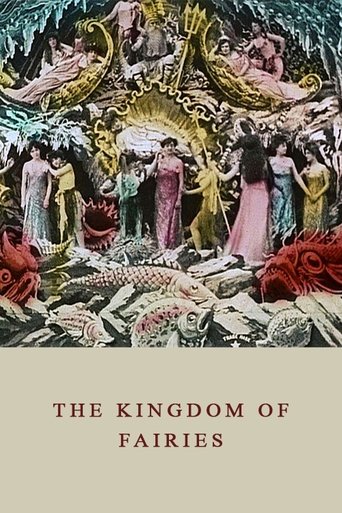
The New Lord of the Village
"There's a scene in a village, then there's a scene out in the wilderness with what appear."
Keys: Space play/pause · ←/→ 10s · F fullscreen · M mute · </> speed
About this film
Le Nouveau Seigneur du village, also known as On ne badine pas avec l'amour, and known in English as No Trifling With Love and as The New Lord of the Village, is a 1908 French silent trick film released by Georges Méliès, and supervised by an actor-director employee of Méliès's, known as Manuel. There's a scene in a village, then there's a scene out in the wilderness with what appear to be gods, and a giant crab, and a giant frog... then there's another scene in the village...
Cast & crew
More films like this
More Fantasy films
View all →

More from Georges Méliès
View all →

More about this film
About the production
Release date1907
Box officeUnknown - box office records from 1907 are not preserved
ProductionStar Film Company
Filmed inMéliès Studio, Montreuil, France
Like most Méliès films of this period, it was shot entirely on constructed sets in his glass studio. The giant crab and frog were created using Méliès' signature stage magic techniques, including mechanical props and forced perspective. The film was shot in a single day, which was typical for Méliès' short films of this era.
Themes
Transformation and redemptionThe corrupting nature of powerSupernatural intervention in human affairsThe journey of the heroMoral education through fantastical experience
Themes & topics
villagelordtransformationgiant crabgiant froggodswildernessmagicredemptionsupernaturalfantasymoral tale
Historical background
Made in 1907, in France, under Georges Méliès, The New Lord of the Village belongs to silent filmmaking during early cinema when shorts dominated nickelodeon programs. Le Nouveau Seigneur du village, also known as On ne badine pas avec l'amour, and known in English as No Trifling With Love and as The New Lord of the Village, is a 1908 French silent trick film released by Georges Méliès, and supervised by an actor-director employee of Méliès's, known as Manuel.
Why this film matters
Within silent history, Georges Méliès's name attaches to the work; surviving prints help researchers study silent-era craft; 1907 film by Georges Méliès.
Making of
Georges Méliès produced this film during his most prolific period at his studio in Montreuil-sous-Bois. The film showcases Méliès' theatrical background, with elaborate sets and costumes created in his glass-walled studio that allowed for natural lighting. The giant creatures were brought to life through a combination of mechanical props, actors in elaborate costumes, and Méliès' innovative editing techniques. The substitution splice, where the camera is stopped, objects or actors are changed, and filming resumes, was used extensively to create the magical transformations. Méliès, a former magician, applied his stage magic expertise to cinema, creating effects that amazed audiences of the time. The film was likely shot in one or two takes, as was common for Méliès' productions, with careful choreography to ensure the complex visual effects worked properly.
What critics said
Contemporary reviews of The New Lord of the Village are sparse in open sources; later catalog entries chiefly summarize plot and credits.
Did you know?
- This film was released as Star Film catalog number 938-939
- The American release title was 'The New Lord of the Village' while the original French title was 'Le Nouveau Seigneur du village'
- Fernande Albany, who appears in the film, was one of Méliès' favorite actresses and starred in many of his productions
- The giant crab and frog effects were achieved using a combination of miniatures, actors in costumes, and Méliès' substitution splice technique
- Was part of Méliès' series of féerie (fairy tale) films that dominated his output in the mid-1900s
- Like many Méliès films, it was hand-colored frame by frame for special releases
- The film's themes of transformation and redemption were common in Méliès' work, reflecting his interest in moral tales
- Méliès himself appears in the film, as he did in many of his productions, typically playing authority figures or magical characters
- The wilderness scenes were created using painted backdrops and theatrical foliage, demonstrating Méliès' background in stage magic
- Was released during the peak of Méliès' career before his decline following the 1908 economic crisis
Visual style
Characteristic static camera placement, typical of early cinema where the camera functioned as a theatrical audience member. The cinematography focuses on showcasing the elaborate sets and special effects rather than camera movement. Méliès used multiple exposure techniques to create the supernatural elements, layering images to achieve magical transformations. The lighting was natural, coming through the glass walls of his studio, creating a bright, theatrical appearance. The film's visual style is highly theatrical, with painted backdrops and stage-like compositions that reflect Méliès' background in theater magic. The cinematography serves the spectacle rather than creating realism, emphasizing the fantastical nature of the story.
Innovations
Several of Méliès' cinematic techniques that were for 1907. The substitution splice technique, used for the magical transformations and disappearances, was Méliès' signature innovation and remains influential in special effects today. The film demonstrates advanced use of miniatures and forced perspective to create the illusion of giant creatures, techniques that would become staples of fantasy and science fiction cinema. The multiple exposure effects used for the supernatural sequences were technically demanding for the era, requiring precise timing and careful planning. Méliès' mechanical props, including the giant crab and frog, represented some of the earliest examples of creature effects in cinema. The film's hand-colored versions, where available, demonstrated early color film techniques through the labor-intensive process of hand-tinting each frame.
Music
As a silent film, 'The New Lord of the Village' had no synchronized soundtrack. In typical exhibition practice of 1907, the film would have been accompanied by live music, usually a pianist or small orchestra in larger theaters. The musical accompaniment would have been improvised or drawn from popular classical pieces, with dramatic music for the giant creature scenes and lighter melodies for the village sequences. Some theaters might have used sound effects created by backstage crew to enhance the action, particularly during the appearance of the supernatural elements. The choice of music would have varied by venue and the resources available, as standardized film scoring would not develop until later in cinema history.
Memorable scenes
- The dramatic appearance of the giant crab in the wilderness, created through mechanical effects and forced perspective
- The sequence where the giant frog swallows the lord, showcasing Méliès' substitution splice technique
- The transformation scene where the humbled lord returns to the village, demonstrating the moral lesson of the story
- The initial village scenes establishing the social hierarchy and the lord's arrogant demeanor
- The supernatural encounter with the gods, featuring multiple exposure effects typical of Méliès' fantasy sequences
What audiences thought
Early 1900s audiences were reportedly delighted by Méliès' fantasy films, which offered escape and wonder in an era when cinema was still a novel entertainment form. The giant crab and frog scenes would have been particularly impressive to viewers who had never seen such cinematic illusions before. The film's moral story of redemption would have resonated with contemporary audiences who expected clear moral lessons in their entertainment. While specific audience reactions to this particular film are not recorded, Méliès' films from this period generally performed well in France and internationally, particularly in vaudeville theaters and fairgrounds where they were commonly shown.
Film connections
Influenced by
- Stage magic and theatrical traditions
- Fairy tales and folklore
- Georges Méliès' background as a magician
- Popular literature of the Belle Époque
- Theatrical féerie productions
- Jules Verne-style adventure narratives
This film influenced
- Later fantasy films featuring transformation sequences
- Monster movies with giant creatures
- Moral fantasy tales in cinema
- Films using supernatural elements for character development
- Visual effects techniques in later fantasy cinema
Film restoration
In at least one incomplete copy held in film archives. Like many Méliès films, it was considered lost for decades before being rediscovered in the 20th century. Some versions may be incomplete or in poor condition due to the deterioration of early nitrate film stock. The film has been preserved by various film archives including the Cinémathèque Française and may exist in both black-and-white and hand-colored versions. Restoration efforts have been ongoing as part of the broader project to preserve Méliès' filmography.
Where to watch
- Available on some Méliès compilation DVDs from specialty distributors
- May be found in film archive collections and special screenings
- Some versions appear on YouTube and other streaming platforms in public domain collections
- Available through academic film libraries and cinema studies programs
- Included in some streaming services' classic film collections, particularly those focusing on early cinema