
The Post
"1929 animated film by Mikhail Tsekhanovsky"
Keys: Space play/pause · ←/→ 10s · F fullscreen · M mute · </> speed
About this film
A boy is sitting at a table, writing a letter for Boris Prutkov. The cartoon follows the journey of this letter from Rostov to Leningrad, where its addressee Prutkov has just left for Berlin; when the letter arrives in Berlin, Prutkov has just departed for London; as the letter arrives in London, Prutkov is already on a steamboat to Brazil, and once the letters is delivered by postman Don Basilio, Prutkov is already on his way back to Leningrad– where the letter, having followed Prutkov around the world, finally reaches him. The film sings a song of praise to the global postal services and to…
Cast & crew
More Animation films
View all →


More from Mikhail Tsekhanovskiy
View all →



More about this film
About the production
Release date1929
BudgetNot documented (typical for early Soviet animation, minimal state funding)
Box officeNot tracked in 1929 Soviet system
ProductionSovkino
Filmed inLeningrad, Soviet Union
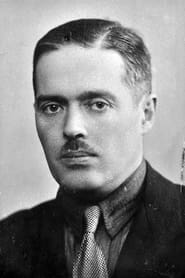
Created during the pioneering era of Soviet animation using cut-out techniques and hand-drawn animation. The film was produced at a time when the Soviet animation industry was just establishing itself, with limited resources and experimental techniques. Mikhail Tsekhanovskiy, who was also an illustrator and children's book author, brought his artistic sensibility to this early work, combining visual storytelling with musical elements.
Themes
Global connectivity and communicationReliability of postal servicesSoviet modernization and efficiencyInternational cooperationThe circular nature of journeys and return to origins
Themes & topics
letterpostal serviceglobal journeychasecommunicationSoviet Unioninternational travelcomedyanimationpropaganda
Historical background
The Post (1929) circulated in the silent era. A boy is sitting at a table, writing a letter for Boris Prutkov Contemporary trade papers and later preservation notes document its place among nickelodeon and cinema-club programs.
Why this film matters
The Post remains accessible to researchers and viewers as a animated short in museum, archive, and streaming collections. Programmers cite it when tracing regional production history and surviving early prints.
Making of
The Post was created during a transformative period in Soviet cinema when animation was transitioning from experimental novelties to legitimate artistic expression. Mikhail Tsekhanovskiy, working with limited resources at Sovkino studios, employed cut-out animation techniques combined with traditional hand-drawn elements. The production team faced significant technical challenges, including the synchronization of sound with animation, which was still a new technology in 1929. The film's visual style reflects Tsekhanovskiy's background as a children's book illustrator, with bold, simple designs that could be easily animated while remaining visually engaging. The international journey depicted in the film required extensive research into different cities and modes of transportation, as the animators aimed to create recognizable representations of locations like Berlin, London, and Brazil despite having never visited these places. The musical score was composed to enhance the film's celebratory tone about postal services, with each location having its own distinctive musical theme.
What critics said
Day-one reviews for The Post are sparse in digitized press archives; later criticism treats it as a reference point for 1929 cinema programming and preservation.
Did you know?
- This was one of the earliest Soviet animated films to gain international recognition
- Director Mikhail Tsekhanovskiy was originally a children's book illustrator before turning to animation
- The character Boris Prutkov was likely named after Kozma Prutkov, a fictional 19th-century Russian author known for satirical aphorisms
- The film was created using cut-out animation techniques, which were common in early Soviet animation due to resource constraints
- The Post was part of the Soviet Union's efforts to showcase modernization and international connectivity during the First Five-Year Plan
- The film's musical elements were innovative for its time, incorporating synchronized sound with animation
- Postman Don Basilio represents the reliability and dedication of postal workers worldwide
- The global journey in the film reflects the Soviet Union's desire to be seen as part of the international community
- The film's circular journey ending back in Leningrad symbolizes the centrality of the Soviet Union in the new world order
- This was among the first Soviet animations to feature a complete narrative arc rather than abstract or purely propaganda content
Awards & recognition
- Recognized at early Soviet film festivals for innovation in animation technique
Visual style
The film utilized cut-out animation techniques combined with hand-drawn elements, creating a distinctive visual style characterized by bold, simplified designs and vibrant colors. The animation employed limited motion techniques, with characters and objects moving against static backgrounds, which was both a stylistic choice and a practical necessity given the technical constraints of 1929 Soviet animation production. The visual design incorporated elements of constructivist art, which was popular in Soviet art and design during this period. Each location in the film was given its own color palette and visual motifs to distinguish the various international settings. The animation's simplicity was actually a strength, allowing the story's humor and narrative to remain clear and engaging despite technical limitations.
Innovations
The Post represented several technical achievements for early Soviet animation, including successful synchronization of sound with animated movement, which was still a new technology in 1929. The film demonstrated sophisticated use of cut-out animation techniques, combining static backgrounds with moving elements to create the illusion of motion. The international journey required the creation of multiple distinct visual environments, showcasing the animation team's ability to vary settings while maintaining consistent character design. The film's pacing and narrative structure were relatively advanced for the period, demonstrating how animation could tell complex stories with clear beginning, middle, and end points. The technical execution of the global journey, with its various modes of transportation and locations, showed the growing sophistication of Soviet animation capabilities.
Music
The film featured an original musical score that was innovative for its time, incorporating synchronized sound effects and musical themes for each location visited by the letter. The music reflected the international journey, with different musical motifs representing Berlin, London, and Brazil, while maintaining a distinctly Soviet musical foundation. The soundtrack included sound effects for transportation methods (trains, steamboats) and postal activities, enhancing the film's celebration of postal services. The musical elements were composed to work in harmony with the visual narrative, with the tempo and mood of the music changing to match the pace of the letter's journey. The film's use of sound represented an early successful attempt at audio-visual synchronization in Soviet animation.
Famous quotes
The letter travels the world to find its owner, just as our Soviet Union reaches out to the world in friendship and cooperation
No matter how far the journey, the post always delivers - proof of the efficiency of our modern world
Memorable scenes
- The sequence where the letter arrives in each city just moments after Prutkov has departed, creating a comedic pattern of near-misses
- The final scene where the letter, having circled the globe, finally catches up to Prutkov back in Leningrad, completing the circular journey
- The animated depictions of different international cities, each with distinctive architectural and cultural elements
What audiences thought
The Post was well-received by Soviet audiences in 1929, who appreciated its humor, engaging storyline, and impressive animation for the period. Children particularly enjoyed the film's playful chase narrative and colorful depictions of different countries. Adult viewers recognized the film's subtle celebration of Soviet efficiency and the reliability of state services. The film's universal theme of postal communication resonated with audiences who relied on mail services for maintaining connections across the vast Soviet territory. Despite its age, the film continues to be appreciated by animation enthusiasts and film historians for its historical significance and charming execution of early animation techniques.
Film connections
Influenced by
- Early Disney animation techniques
- European avant-garde art movements
- Constructivist design principles
- Soviet propaganda art
- Silent film visual storytelling techniques
This film influenced
- Later Soviet animated films featuring international themes
- Educational animations about communication systems
- Soviet propaganda animations of the 1930s
Film restoration
The film is preserved in the Russian State Film Archive (Gosfilmofond) and has been digitally restored. Copies are also held by international film archives specializing in animation history. The restoration has allowed modern audiences to appreciate the film's technical achievements and historical significance.
Where to watch
- Available through specialized film archives and animation collections
- Sometimes screened at film festivals focusing on classic or Soviet animation
- Accessible through academic film libraries and animation history collections
- Occasionally featured in museum exhibitions about early animation