The Puppet Looks for Lodgement
"No room, not even Hell"
Keys: Space play/pause · ←/→ 10s · F fullscreen · M mute · </> speed
About this film
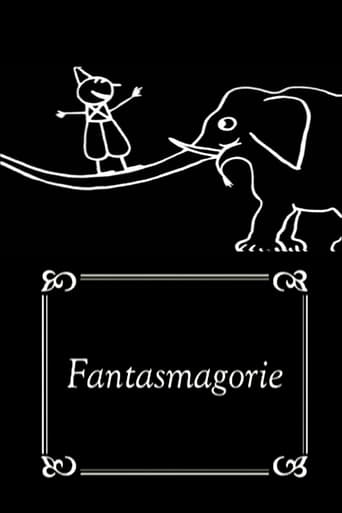
Swiss animator Fantoche seeks lodging everywhere, even Hell refusing him room in 1921. The stick man Fantoche is looking for a home, but there doesn't seem to be any room anywhere, not even in Hell.
Cast & crew
More films like this
More Animation films
View all →



More from Émile Cohl
View all →
More about this film
About the production
Release date1921
Box officeNot documented - box office tracking was not systematic for short animated films in this era
ProductionSociété des Etablissements L. Gaumont
Filmed inParis, France
Émile Cohl created this film using traditional paper animation techniques, drawing each frame individually. The film was produced during Cohl's later period of work when he was experimenting with more complex narratives and darker themes. The stick figure Fantoche was one of Cohl's recurring characters, representing the everyman struggling against societal barriers. The animation style was characteristic of Cohl's work, featuring fluid movement and surreal transformations that pushed the boundaries of early animation.
Themes
AlienationRejectionSearch for belongingSocial exclusionPost-war displacement
Themes & topics
Historical background
1921 placed The Puppet Looks for Lodgement within France cinema as Société des Etablissements L. Gaumont navigated wartime markets, immigration audiences, and the shift from intertitles to sound.
Why this film matters
Archivists revisit The Puppet Looks for Lodgement (1921) for Émile Cohl style, genre norms at Société des Etablissements L. Gaumont, and the exhibition context of 3-4 minutes programming.
Making of
Émile Cohl created this film using laborious frame-by-frame animation techniques, drawing each scene on paper sheets. The production process involved thousands of individual drawings, with Cohl personally animating much of the film himself. The Fantoche character was particularly challenging to animate due to its simple stick figure design, requiring precise movement to convey emotion and narrative. The Hell sequence reportedly took weeks to complete due to its complex visual effects and multiple character interactions. Cohl was known to work long hours in his Paris studio, often experimenting with new animation techniques and pushing the boundaries of what was possible in early cinema. The film's dark themes reflected Cohl's own experiences with rejection in the film industry and his observations of post-war French society.
What critics said
Retrospective writing on The Puppet Looks for Lodgement stresses craft by Émile Cohl, print survival, and repertory value rather than opening-week gross alone.
Did you know?
- Émile Cohl, often called 'the father of the animated cartoon,' was 64 years old when he made this film
- The character Fantoche was one of the first recurring animated characters in cinema history
- This film was part of a series featuring Fantoche that Cohl produced between 1908 and 1921
- The film's dark humor and themes of rejection were unusually sophisticated for animation of its time
- Cohl created approximately 700 animated films during his career, though many are now lost
- The stick figure design was chosen for its simplicity and ability to convey emotion through basic movements
- This film was produced during the post-WWI period when French cinema was struggling to recover from the war
- The Hell sequence was particularly daring for its time, showing that animation could tackle mature themes
- Cohl's work influenced later animators including Walt Disney, who acknowledged his debt to early French animators
- The film was originally silent, as were all films of this era, and would have been accompanied by live music during screenings
Visual style
The film employed traditional paper animation techniques with each frame drawn individually by Cohl. The cinematography was characterized by simple black and white line drawings against plain backgrounds, emphasizing the character's movements and expressions. Cohl used innovative techniques for the time, including metamorphosis effects where Fantoche would transform his shape to express emotions or overcome obstacles. The Hell sequence featured more complex visuals with multiple characters and background elements, demonstrating Cohl's growing technical prowess. The animation style was fluid and expressive, with Fantoche's stick figure form capable of conveying a wide range of emotions through subtle movements and gestures.
Innovations
The film demonstrated several technical innovations for its time, including fluid character movement and expressive animation using minimal visual elements. Cohl's ability to convey complex emotions and narrative through simple stick figures was groundbreaking. The metamorphosis sequences, where Fantoche would transform his shape, showcased early examples of morphing techniques in animation. The Hell sequence's multiple character interactions and background elements pushed the boundaries of what was possible in early paper animation. Cohl's use of visual storytelling without intertitles demonstrated the potential of pure animation to convey narrative, influencing subsequent developments in the medium.
Music
As a silent film, The Puppet Looks for Lodgement would have been accompanied by live musical performance during its original theatrical run. The typical accompaniment would have been a pianist or small ensemble playing appropriate mood music that matched the on-screen action. For the rejection scenes, melancholic tunes would likely have been played, while the Hell sequence might have featured more dramatic or comically sinister music. Modern screenings of the film often feature newly composed scores or period-appropriate classical music to recreate the silent film experience. No original score or specific musical cues for this film survive from its 1921 release.
Memorable scenes
- The climactic sequence where Fantoche approaches the gates of Hell, only to be rejected by demons who declare there's no room even there, perfectly encapsulating the film's themes of universal rejection and existential despair
What audiences thought
Audience reception in 1921 is not well-documented, but the Fantoche character was reportedly popular with French cinema audiences of the time. The film's blend of humor and pathos likely appealed to post-war audiences who could relate to themes of struggle and rejection. The surreal Hell sequence would have been particularly memorable for contemporary viewers, as such imagery was rare in animation of the era. Modern audiences who have seen the film through archives and film festivals often express surprise at its sophisticated themes and emotional depth, challenging assumptions about early animation being merely simplistic entertainment.
Film connections
Influenced by
- Émile Cohl's earlier Fantoche films
- Georges Méliès's fantasy films
- French literary tradition of the wandering outcast
- Post-war French social realism
This film influenced
- Later Fantoche films by Cohl
- Early Disney character animations
- European art animation of the 1920s-30s
- Modern minimalist animation
Film restoration
The film is partially preserved - some prints exist in film archives including the Cinémathèque Française, but complete versions are rare. The surviving prints show varying degrees of deterioration typical of nitrate film from this era. Restoration efforts have been undertaken by film preservationists, though the film remains difficult to access for general audiences. Some sequences may be lost or severely damaged, particularly those with complex visual effects.
Where to watch
- The film is occasionally screened at animation festivals and classic film retrospectives
- Some archives may provide access to researchers and scholars
- Limited availability through specialized film collections and museums
- Rare screenings at institutions like the Cinémathèque Française in Paris
- Not currently available on mainstream streaming platforms due to its age and preservation status