
The Sinking of the Lusitania
"the originator and inventor of Animated Cartoons"
Keys: Space play/pause · ←/→ 10s · F fullscreen · M mute · </> speed
About this film
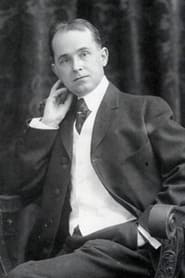
McCay busies himself studying a picture of the Lusitania as a model for his film-in-progress. Intertitles boast of McCay as "the originator and inventor of Animated Cartoons", and of the 25,000 drawings needed to complete the film. McCay is shown working with a group of anonymous assistants on "the first record of The Sinking of the Lusitania ".
Cast & crew
More films like this
More War films
View all →


More from Winsor McCay
View all →
More about this film
About the production
Release dateJuly 20, 1918
Box officeUnknown (commercial success limited by its specialized nature and wartime distribution)
ProductionWinsor McCay Productions, International Film Service
Filmed inNew York City (McCay's studio)
McCay worked on this film for nearly two years (1916-1918), creating approximately 25,000 individual drawings. The animation was done entirely by hand on rice paper, with McCay personally drawing every frame. The film required an unprecedented level of detail and realism for animation, including accurate depictions of the ship, explosions, smoke, and water effects. McCay used a new registration system he developed to maintain consistency between frames, allowing for more fluid motion than previous animations.
Themes
War and its consequencesPropaganda and patriotismHuman tragedy and lossGerman barbarism vs. Allied righteousnessThe power of media to shape public opinion
Themes & topics
World War IU-boat attackMaritime disasterPropagandaAnimationDocumentaryHistorical recreationTorpedoPassenger linerGerman aggressionAmerican casualtiesNaval warfare
Historical background
The Sinking of the Lusitania (1918) emerged during the silent-film era. McCay busies himself studying a picture of the Lusitania as a model for his film-in-progress. Archival records and catalog entries help place the work within film-history surveys of the period.
Why this film matters
Preserved under Wikidata ID Q7764491, The Sinking of the Lusitania is valued as a nonfiction record within catalog and archive collections. Wikipedia's "The Sinking of the Lusitania" entry connect it to broader histories of cinema exhibition and restoration.
Making of
Winsor McCay was already renowned for his pioneering animated works like 'Gertie the Dinosaur' when he undertook this ambitious project. He was deeply affected by the Lusitania tragedy and felt compelled to use his artistic skills to document it. McCay worked obsessively on the film, often spending 16 hours a day at his drawing board. He developed new animation techniques specifically for this project, including more sophisticated methods for depicting water movement and explosions. The production was extremely labor-intensive - McCay had to draw each individual frame, with complex scenes requiring multiple layers of animation. The smoke effects alone required hundreds of drawings to create realistic billowing and dispersal. McCay's attention to detail extended to researching the ship's architecture, the torpedo's trajectory, and even the types of lifeboats used. The film's patriotic intertitles were carefully crafted to maximize emotional impact and anti-German sentiment.
What critics said
Trade and archival sources offer limited day-one review coverage for The Sinking of the Lusitania. Modern reception rests on its availability in collections, repertory screenings, and reference works that document 1918 cinema.
Did you know?
- This was the first animated documentary and one of the earliest uses of animation for serious, non-comedic purposes
- McCay claimed he drew every frame himself, though some historians believe his assistant John Fitzsimmons may have helped with some of the detailed work
- The film took 22 months to complete, an extraordinarily long time for a 12-minute animated film in 1918
- McCay's employer William Randolph Hearst initially discouraged the project, wanting McCay to focus on his popular comic strip work
- The film's detailed accuracy was remarkable - McCay studied photographs and diagrams of the Lusitania to recreate the ship precisely
- It was among the costliest animated films of its time, costing an estimated $50,000 (equivalent to over $800,000 today)
- The film's release was delayed for months as McCay perfected the animation, particularly the complex water and smoke effects
- Despite being created as propaganda, the film was praised for its artistic merit and technical innovation
- McCay used a new technique of drawing on transparent paper to better layer the animation elements
- The film included a dedication to the 128 Americans who died in the sinking, directly appealing to patriotic sentiment
Visual style
McCay employed innovative animation techniques that were groundbreaking for 1918. He used a layered approach with separate cels for different elements, allowing for more complex compositions. The animation featured unprecedented detail in depicting the ship's architecture, the torpedo's approach, and the chaos of the sinking. McCay developed new methods for creating realistic water effects, using multiple overlapping drawings to simulate waves and splashes. The smoke and explosion effects were particularly sophisticated, using carefully graduated drawings to create convincing billowing and dispersal patterns. The camera work included subtle pans and zooms that added dynamism to the scenes. McCay's attention to lighting and shadow created a dramatic, almost theatrical atmosphere that enhanced the emotional impact.
Innovations
The film represented numerous technical breakthroughs in animation. McCay's use of registration pegs to maintain consistency between frames was more sophisticated than previous systems. His technique for animating water involved creating multiple transparent layers that could be moved independently, creating realistic depth and movement. The explosion effects used carefully timed exposures and multiple drawings to create convincing blasts and debris. McCay also pioneered the use of detailed, realistic backgrounds in animation, moving away from the simplified settings common in earlier cartoons. The film's scale - with thousands of individual drawings for a 12-minute piece - set new standards for animation production. McCay's documentation of his process, including photographs of his work, provided valuable insights into early animation techniques.
Music
The film was originally silent, as was standard for 1918, but would have been accompanied by live musical performance in theaters. Typical screenings featured patriotic music, classical pieces, and original compositions arranged to match the on-screen action. The dramatic moments would have been underscored with somber classical pieces, while the introduction of the Lusitania might have featured triumphant music. Modern restorations have added period-appropriate scores that attempt to recreate the original theatrical experience. The intertitles themselves were designed to be read aloud by live narrators in some theaters, adding another layer to the presentation.
Famous quotes
The man who fired the shot was decorated for it by the Kaiser! Yet, according to international law, it was murder!
And so we picture here this latest and most terrible crime of the war... the sinking of the Lusitania.
The Lusitania was sent to the bottom without warning - 1,150 men, women, and children lost their lives.
This picture is dedicated to the 125 Americans who lost their lives on the Lusitania.
The German people - these are the people who murdered 1,150 non-combatants!
Memorable scenes
- The majestic opening sequence showing the Lusitania departing New York Harbor, rendered in stunning detail with smoke billowing from its funnels
- The tense underwater sequence following the German U-boat as it stalks the civilian vessel, creating suspense through careful pacing and dramatic lighting
- The torpedo strike sequence, with multiple explosions depicted through rapidly changing drawings and brilliant flashes of white
- The chaotic sinking scene showing passengers scrambling for lifeboats as the ship lists dramatically, combining horror with technical virtuosity
- The final descent of the Lusitania beneath the waves, with bubbles and debris creating a haunting visual elegy for the victims
What audiences thought
The film was shown in theaters across the United States as part of war bond drives and patriotic rallies. Audiences were reportedly deeply moved by the realistic depiction of the tragedy, with many viewers expressing shock at the graphic nature of the animation. The film's effectiveness as propaganda was noted in contemporary reports, with some theaters reporting increased war bond sales following screenings. However, its serious tone and disturbing content made it less commercially successful than McCay's earlier, more lighthearted works. The 12-minute runtime and lack of traditional entertainment elements limited its appeal to general audiences seeking escapism during wartime. Despite this, it found appreciative audiences among those seeking to understand and process the realities of war.
Film connections
Influenced by
- McCay's earlier work 'Gertie the Dinosaur' (1914) for character animation techniques
- Contemporary newsreels and documentary footage for visual reference
- Political cartoons and propaganda posters for messaging approach
- Classical artistic depictions of naval disasters for compositional inspiration
This film influenced
- Disney's 'Victory Through Air Power' (1943) as animated propaganda
- Norman McLaren's wartime animations
- Modern animated documentaries like 'Waltz with Bashir'
- Propaganda animation techniques used in WWII
- Historical recreation methods in documentary filmmaking
Film restoration
The film has been preserved by the Library of Congress and is part of the National Film Registry. A restored version was created in the 1990s using original materials, and digital restorations have further improved the image quality. The film is considered to be in excellent preservation condition for its age, with complete reels surviving. The preservation efforts have maintained the original tinting and toning that McCay used to enhance the dramatic effect. The Library of Congress selected it for preservation in 2017, recognizing its cultural, historical, and aesthetic significance.
Where to watch
- Available on the Library of Congress website
- Included in the DVD collection 'Winsor McCay: The Master Edition'
- Streaming on various classic film archives and educational platforms
- Available through the National Film Registry's online collection
- Included in animation history collections on YouTube and Vimeo
- Accessible through university film studies programs and archives