
The Terror of Tiny Town
"Overall devious criminal Haines."
Keys: Space play/pause · ←/→ 10s · F fullscreen · M mute · </> speed
About this film
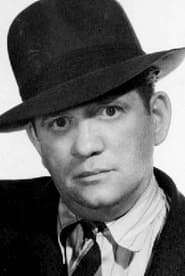
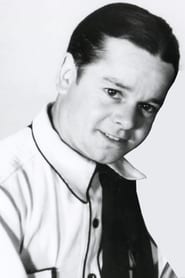
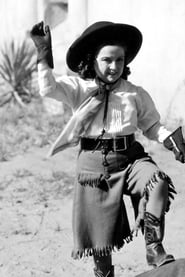
The inspiration came when Buell overheard an employee jokingly say "If this economic dive keeps going, we'll be using midgets as actors". In a wild west community populated entirely by residents with dwarfism, the Larson and Preston familes have been in a generations-long feud, recently strained by the actions of cattle rustler and overall devious criminal Bat Haines. Buck Larson, the hero of our tale, takes on Haines, and tries to win the heart of Nancy Preston while resolving the tensions between his and her families.
Cast & crew
More films like this
More Western films
View all →

More from Sam Newfield
View all →
More about this film
About the production
Release dateDecember 1, 1938
BudgetApproximately $50,000 (typical low-budget PRC production)
Box officeModest box office returns, considered a financial failure upon initial release
ProductionProducers Releasing Corporation (PRC), Jed Buell Productions
Filmed inCalifornia, USA, PRC Studios, Hollywood
The film was conceived by producer Jed Buell as a novelty exploitation picture. Special accommodations had to be made for the all-dwarf cast, including scaled-down sets, props, and horses. The production faced unique challenges in finding appropriately sized Western gear and ensuring safety during stunt sequences. Many cast members were recruited from circus sideshows and vaudeville acts. The film was shot in just six days on a very tight schedule.
Themes
Family FeudsLove Across DividesGood vs. EvilJustice and RedemptionCommunity Unity
Themes & topics
Historical background
The 1938 premiere of The Terror of Tiny Town belongs to the broader shift toward narrative features and recognizable genres.
Why this film matters
Surviving prints of The Terror of Tiny Town help researchers study how 1938-era filmmakers solved storytelling with limited means.
Making of
The production of 'The Terror of Tiny Town' was as unusual as its premise. Producer Jed Buell, known for his exploitation films, conceived the project as a novelty that would attract curious audiences. The casting process involved recruiting from circus acts, vaudeville shows, and specialized talent agencies that represented little people performers. Many cast members had never appeared in films before or had only been used as background players or comic relief. The production team had to completely rethink traditional Western filmmaking techniques - sets had to be built to scale, props were custom-made, and even the horses were carefully selected for their smaller stature. Director Sam Newfield, who was PRC's most prolific director, had to adapt his filming style to work with the unique physical requirements of his cast. Despite the film's exploitation nature, the cast was reportedly treated with respect on set, and many performers appreciated the opportunity to play leading roles rather than being relegated to stereotypical parts.
What critics said
Trade papers near 1938 listed The Terror of Tiny Town among weekly program offerings rather than as a headline critical event.
Did you know?
- This is widely considered the first Western film with an entirely dwarf cast, earning it the nickname 'the little people Western'
- Producer Jed Buell got the idea after seeing a group of little people perform at a circus and realizing they had never been given leading roles in films
- The horses used in the film were specially selected for their smaller size to be proportionate to the cast
- Billy Curtis, who played the villain Bat Haines, would later appear as the Munchkin City Father in 'The Wizard of Oz' (1939)
- The film was re-released in the 1950s under the title 'The Tiny Town Terror' to capitalize on the drive-in movie craze
- Despite its exploitation nature, the film was praised by some contemporary reviewers for not mocking its cast and treating them as serious actors
- Many of the cast members were part of the 'Singing Midgets' troupe that performed in vaudeville
- The film features several musical numbers, including songs performed by the cast members themselves
- It was included in the book 'The Fifty Worst Films of All Time' (1978) but has since gained cult status
- The miniature town set was built with forced perspective techniques to make the actors appear larger than they were
Visual style
The cinematography, handled by Marcel Le Picard, employed standard techniques for low-budget Westerns of the era but with unique adaptations for the all-dwarf cast. The camera work utilized low angles to emphasize the performers' stature while avoiding condescension. The film made effective use of forced perspective in its town set, creating the illusion of a full-sized Western town while accommodating the cast. Le Picard, who shot numerous PRC productions, kept the visuals straightforward and functional, focusing on clear storytelling rather than artistic flourishes. The action sequences were filmed with particular attention to safety, given the unique physical requirements of the performers. While not technically innovative, the cinematography successfully maintained the film's Western aesthetic while working within its unusual constraints.
Innovations
While not groundbreaking in technical terms, 'The Terror of Tiny Town' achieved notable solutions to unique production challenges. The creation of appropriately scaled sets and props required innovative design and construction techniques. The film's production team developed specialized methods for mounting cameras at the correct height for the cast. The horse riding sequences required careful selection of appropriately sized animals and specialized training for both riders and animals. The action sequences were choreographed to work within the physical limitations and strengths of the performers. These practical adaptations, while not revolutionary, demonstrated creative problem-solving in service of an unconventional concept. The film's technical success lies in its ability to execute a conventional Western format with an entirely non-traditional cast.
Music
The film features a typical Western musical score of the era, composed by Lee Zahler, PRC's house composer. What makes the soundtrack notable are the several musical numbers performed by the cast members themselves, including songs like 'The Cowboy's Sweetheart' and 'I'm a Happy Cowboy.' These performances demonstrate that many cast members had musical talents beyond their acting abilities. The score incorporates traditional Western motifs and helps maintain the conventional Western atmosphere despite the unusual casting. The sound recording quality is typical of low-budget productions of the period, with some technical limitations but generally clear dialogue and music. The musical elements add to the film's charm and help establish it as a legitimate Western rather than merely a novelty act.
Famous quotes
This town ain't big enough for both our families!
I may be small, but my courage is mighty!
Love knows no size, only heart.
In Tiny Town, justice comes in all sizes!
You can rustle our cattle, but you can't rustle our spirit!
Memorable scenes
- The opening sequence introducing Tiny Town with its miniature buildings and all-dwarf population riding small horses
- The musical number where the cast performs Western songs while riding horses
- The climactic gunfight sequence featuring little people in traditional Western showdown
- The romantic scenes between Buck Larson and Nancy Preston parodying conventional Western romance tropes
- Bat Haines' villainous monologue while plotting to exploit the family feud
What audiences thought
Initial audience reception was modest, with the film attracting curious viewers due to its novelty premise but failing to achieve significant commercial success. However, over the decades, 'The Terror of Tiny Town' has developed a substantial cult following. Midnight movie screenings in the 1970s and 1980s helped introduce the film to new audiences who appreciated its bizarre premise and earnest execution. Home video releases in the VHS and DVD eras further expanded its cult status. Modern audiences often discover the film through its reputation as one of cinema's oddities, with many viewers expressing surprise at the competent performances and conventional Western storytelling despite the unusual casting. The film has become a favorite among fans of cult cinema and is frequently discussed in online forums dedicated to unusual films.
Film connections
Influenced by
- Traditional Western Films
- Shakespeare's Romeo and Juliet
- Vaudeville Entertainment
- Circus Sideshows
- B-Western Formula
This film influenced
- The Terror of Tiny Town has influenced numerous cult films and parodies that use unusual casting as their central gimmick
Film restoration
The film survives in complete form and has been preserved by various film archives. It has entered the public domain, which has contributed to its availability through numerous home video releases and online platforms. The quality of existing prints varies, with some showing the wear typical of low-budget films from this era. Several restoration efforts have been undertaken by specialty labels specializing in cult films. The film's public domain status has actually helped ensure its survival and accessibility, though it means there's no single authoritative restored version.
Where to watch
- Public domain archives online
- YouTube (multiple uploads)
- Internet Archive
- Various DVD releases from specialty labels
- Streaming services specializing in cult and public domain films
- Tubi (as of recent availability)
- Pluto TV (occasionally featured in cult film programming)