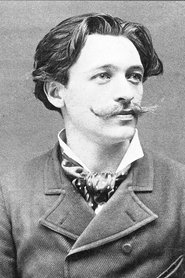

The Twelve Labors of Hercules
"Where animation breaks"
Keys: Space play/pause · ←/→ 10s · F fullscreen · M mute · </> speed
About this film
A cut-out animation depicting the Twelve Labours of Hercules.
Cast & crew
More films like this
More Adventure films
View all →

More from Émile Cohl
View all →
More about this film
About the production
Release date1910
Box officeNot documented - box office tracking was not standard practice for short films in 1910
ProductionGaumont
Filmed inParis, France
Created using Émile Cohl's pioneering cut-out animation technique, which involved cutting paper figures and moving them frame by frame. The production required meticulous hand-crafting of each character and background element, with Hercules and mythological creatures being carefully designed to allow for movement. The animation process was extremely labor-intensive, requiring each frame to be photographed individually. Cohl experimented with different paper types and joint mechanisms to achieve more fluid motion than in his earlier works.
Themes
HeroismDivine interventionHuman strength vs. supernatural forcesRedemption through sufferingThe triumph of good over evil
Themes & topics
mythologyancient Greeceheroesmonstersdivine powerimpossible tasksstrengthadventurelegendgodstrialsredemption
Historical background
Made in its country of production around 1910, The Twelve Labors of Hercules belongs to the silent era's formative years. Its story of a cut-out animation depicting the twelve labours of hercules spoke to audiences of the day through familiar genres and topical settings.
Why this film matters
Archivists and historians still cite The Twelve Labors of Hercules when tracing how the silent era's formative years filmmakers staged animation and depicting on screen.
Making of
Émile Cohl created while working as the head of Gaumont's animation department, one of the first such departments in cinema history. The production took place in a small Paris studio where Cohl and his assistants would spend weeks crafting the paper figures and backgrounds. Each character joint was carefully engineered with tiny pins or paper tabs to allow for movement while maintaining structural integrity. The animation was shot on a custom-built rostrum with the camera positioned directly above the work surface. Cohl would often work late into the night, personally manipulating the figures while his assistant cranked the camera handle. The mythological subject matter was chosen to appeal to educated audiences of the time who were familiar with classical stories, while also showcasing the technical possibilities of the new medium of animation.
What critics said
Reviews from 1910 weighed The Twelve Labors of Hercules on pacing, performance, and novelty. Later criticism reads its emphasis on animation, depicting, twelve through modern standards of craft and representation.
Did you know?
- Émile Cohl, often called 'the father of the animated cartoon,' was already 53 years old when he made
- The film was created using cut-out animation, one of the earliest animation techniques, predating cel animation
- This was one of the first animated films to tackle a complete narrative arc with multiple distinct episodes
- The Twelve Labors of Hercules was part of Cohl's series of mythological and historical animated shorts for Gaumont
- Each labor had to be condensed into mere seconds of screen time due to the brevity of early films
- The original film was likely hand-colored frame by frame, a common practice for important French films of this era
- Cohl's animation studio was one of the first dedicated animation production facilities in the world
- The film was released during the peak of the French film industry's global dominance before World War I
- Cut-out animation was chosen over other techniques because it allowed for more detailed character designs than simple line drawings
- The film's survival is remarkable, as approximately 90% of films from this era are considered lost
Visual style
The film was shot using a stationary camera positioned directly above the animation surface, a technique that became standard for 2D animation. The lighting was carefully controlled to eliminate shadows from the animators' hands and create even illumination across the paper figures. Each frame was exposed manually, requiring precise timing and consistency. The cinematography emphasized clarity over dramatic angles, as the focus was on showcasing the animated movement. The original film stock was likely black and white 35mm, with some versions possibly hand-colored using stencils. The camera work was functional rather than artistic, serving primarily to capture the animation clearly.
Innovations
represents a significant advancement in cut-out animation technique, with more sophisticated joint mechanisms allowing for greater expressiveness in character movement. The successful condensation of twelve distinct episodes into a cohesive narrative demonstrated new possibilities for animated storytelling. The film's production workflow established patterns for animation production that would influence future studios. Cohl's experimentation with different paper weights and textures to achieve various visual effects was innovative for the time. The film also demonstrated early approaches to character consistency across multiple scenes, a crucial technical challenge in animation that would continue to evolve throughout the century.
Music
The original film was silent, as all films were in 1910. During theatrical exhibition, it would have been accompanied by live music, typically a pianist or small orchestra playing classical or popular pieces appropriate to the mythological subject matter. The music would have been chosen to match the mood of each labor - dramatic music for battles, lighter themes for moments of triumph. Some theaters may have used specific musical cues synchronized with the action, though this was not standardized. Modern screenings often feature newly composed scores or carefully selected classical music that reflects the film's early 20th century origins.
Famous quotes
No recorded dialogue - silent film with intertitles
Memorable scenes
- The sequence depicting Hercules battling the Nemean Lion, where the cut-out animation creates a surprisingly dynamic struggle between hero and beast
- The climactic scene of Hercules capturing Cerberus, which used layered paper cut-outs to create depth and drama
- The montage sequence rapidly showing all twelve labors, demonstrating the ambitious scope of the project
What audiences thought
Audiences in 1910 reportedly marveled at the magical quality of the moving paper figures, with the mythological subject matter providing familiar entertainment for educated viewers. The film was popular enough to be exported to other countries, where it was often shown with translated intertitles. Children particularly responded to the fantastic elements and heroic story, helping establish animation as family entertainment. The brevity of each labor segment kept audiences engaged throughout the short runtime. Modern audiences viewing restored versions are often struck by the creativity and charm of the primitive animation technique, finding historical value in witnessing the early development of animated storytelling.
Film connections
Influenced by
- Greek mythology
- J.J. Grandville's illustrated works
- Gaston Leroux's theatrical adaptations
- Georges Méliès's trick films
- Winsor McCay's early animation experiments
This film influenced
- Later Hercules adaptations in animation
- Émile Cohl's subsequent mythological shorts
- Early Disney mythological cartoons
- Paul Terry's mythological animations
- Fleischer Studios' mythological shorts
Film restoration
Partially preserved - some reels exist in film archives including the Cinémathèque Française and the Library of Congress. The film is considered incomplete, with some segments possibly lost. Restoration efforts have stabilized existing footage and digitally enhanced visibility. The surviving portions provide valuable documentation of early animation techniques. Some versions may be incomplete or show significant deterioration due to the age and fragility of early film stock.
Where to watch
- Available on some specialized streaming platforms dedicated to classic cinema
- Screened occasionally at film museums and animation festivals
- Accessible through academic film archives and libraries
- Included in some DVD collections of early animation
- Available for viewing at the Cinémathèque Française in Paris
- Some segments may be found on YouTube and other video platforms through archival uploads