The Vain Parlor Maid
"Maid and statue in a studio mirror"
Keys: Space play/pause · ←/→ 10s · F fullscreen · M mute · </> speed
About this film
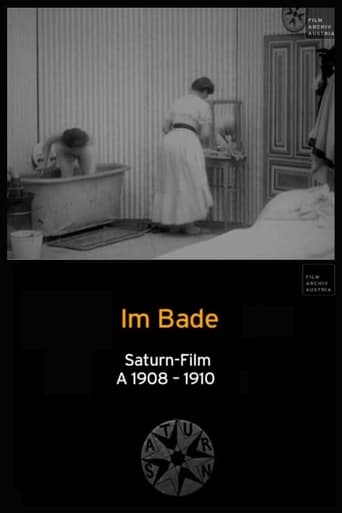
A housemaid is cleaning a studio. When she sees a sculpture of a nude woman in life-size, lying on a couch, she starts to compare this idealized body with her own. She takes off her clothes one by one, thus revealing her own naked body, and she compares the various parts of her b.
Cast & crew
More films like this
More Comedy films
View all →







More from Johann Schwarzer
View all →
More about this film
About the production
Release date1908
Box officeUnknown - box office tracking was not standardized for Austrian erotic shorts of this era
ProductionSaturn-Film
Filmed inVienna, Austria
This film was part of Saturn-Film's lucrative series of 'erotic productions' (erotische Produktionen) that circumvented Austrian censorship by being marketed as 'artistic' or 'educational' films. The production utilized a simple indoor set designed to resemble an artist's studio, with minimal props to focus attention on the central figure. The nude sculpture was likely a prop created specifically for the production, as real marble would have been prohibitively expensive and difficult to work with on a short film budget. The actress, whose identity remains uncredited as was typical for erotic films of this period, would have been paid significantly more than performers in mainstream films due to the controversial nature of the work.
Themes
Sexuality and desireClass dynamicsArt versus realityFemale self-examinationThe male gaze
Themes & topics
nudityhousemaidsculpturecomparisonmaster-servant relationshiperoticismexhibitionismart studioundressingsexual suggestion
Historical background
By 1908, The Vain Parlor Maid had entered distribution via Saturn-Film, reflecting standard practice for its budget tier.
Why this film matters
Specialists compare The Vain Parlor Maid with contemporaries to trace how 1908 cinema handled a housemaid is cleaning a studio.
Making of
The production of The Vain Parlor Maid was characteristic of Saturn-Film's efficient approach to erotic filmmaking. Director Johann Schwarzer, leveraging his background as a portrait photographer, prioritized visual aesthetics over narrative depth. The film was likely shot in a single day in a makeshift studio space in Vienna, using natural light supplemented by basic reflectors to achieve the soft lighting effect on the actress's body. The uncredited performer would have been required to hold various poses for extended periods while the hand-cranked camera captured the action. The master of the house was likely played by Schwarzer himself or a regular associate, as was common in these small-scale productions. The film's provocative content necessitated discreet distribution methods, with prints often smuggled across borders in false-bottomed cases or disguised as other types of films to avoid seizure by authorities.
What critics said
Modern notes on The Vain Parlor Maid focus on its a housemaid is cleaning a studio rather than any original 1908 sensation.
Did you know?
- The Vain Parlor Maid (German title: 'Die eitle Kammerzofe') was one of approximately 52 erotic films produced by Saturn-Film between 1906-1911, making it part of Austria's earliest significant film production output.
- Director Johann Schwarzer was a photographer before founding Saturn-Film, which explains the film's focus on visual composition and the female form rather than narrative complexity.
- Despite being produced in Austria, these films were often exported internationally with different titles to maximize profits and circumvent various national censorship laws.
- The film was likely shot on 35mm film with a hand-cranked camera, resulting in the variable frame rates typical of early cinema.
- Saturn-Film's erotic productions were technically illegal under Austrian law but were tolerated as long as they were only shown in private venues or 'men's clubs' rather than public cinemas.
- The film's survival is remarkable - many of Saturn-Film's productions were deliberately destroyed by the company itself to avoid legal complications.
- The statue prop appears in multiple Saturn-Film productions, suggesting the company reused set pieces across different films to save costs.
- Unlike many erotic films of the era that featured anonymous prostitutes or sex workers as performers, Saturn-Film sometimes hired theatrical actresses who were between legitimate stage engagements.
- The film was screened at the Museum of Modern Art in New York in 2007 as part of a retrospective on early erotic cinema.
- Johann Schwarzer was eventually arrested in 1911 for his productions, effectively ending Saturn-Film's operations and making films like The Vain Parlor Maid among the last of their kind in Austria.
Visual style
The cinematography of The Vain Parlor Maid reflects Johann Schwarzer's background as a portrait photographer, with careful attention to lighting and composition. The film employs static camera positions typical of the period, with the camera remaining fixed to capture the action as if viewing a stage performance. The lighting appears to be primarily from natural sources supplemented by reflectors, creating soft shadows that accentuate the curves of the actress's body. The composition carefully frames the maid against the statue, allowing for visual comparison between living flesh and marble form. The film makes effective use of depth of field, with both the maid and the statue remaining in focus throughout the comparison scenes. The black and white cinematography creates a stark contrast between skin tones and the surrounding environment, emphasizing the nudity at the center of the narrative. The camera work, while technically simple by modern standards, demonstrates a clear understanding of how to use visual elements to create erotic tension without explicit content.
Innovations
While The Vain Parlor Maid does not represent major technical innovation in the broader history of cinema, it demonstrates several technical competencies that were noteworthy for its specific genre and production scale. The film shows effective use of lighting techniques to create an artistic rather than purely pornographic presentation, with careful attention to how light falls on the human form. The production likely employed makeup techniques to enhance the actress's appearance for the camera, an important consideration in early film where performers needed stronger features to register properly on celluloid. The film's editing, while simple by modern standards, effectively paces the revelation of the maid's body to build anticipation. The use of a prop statue to create a visual dialogue between art and life represents a creative solution to the technical limitations of the period, allowing for thematic depth without complex special effects. The survival of the film itself represents a technical achievement in preservation, as many nitrate films from this period have deteriorated completely.
Music
The Vain Parlor Maid was produced during the silent era and would have been accompanied by live music during exhibition. The specific musical accompaniment would have varied depending on the venue and could have ranged from a single pianist in a smaller establishment to a small ensemble in a more upscale setting. The music likely consisted of popular light classical pieces or salon music of the period, possibly including works by composers like Johann Strauss II or other Viennese favorites that would have been familiar to contemporary audiences. The tempo and mood of the music would have been chosen to complement the on-screen action, with perhaps more playful or suggestive music during the comparison scenes and a sudden shift to more dramatic music upon the master's entrance. No original score or specific musical cues were composed for the film, as was typical for productions of this scale and period. Modern screenings of the film are often accompanied by period-appropriate music selected by curators or musicians specializing in silent film accompaniment.
Famous quotes
Go into the next room." - The master of the house upon discovering the maid
Die eitle Kammerzofe" - Original German title meaning "The Vain Chambermaid
Memorable scenes
- The extended sequence where the maid systematically removes her clothing and compares her body parts to those of the marble statue, creating a visual dialogue between living flesh and artistic representation that forms the core of the film's erotic tension.
What audiences thought
The original audience reception for The Vain Parlor Maid can only be inferred from the commercial success of Saturn-Film's productions, which reportedly sold well across Europe and even found markets in America. The film's primary audience consisted of men who viewed it in private settings such as smoking clubs, gentlemen's gatherings, or brothels where such films were shown as entertainment. Given the prolific output of Saturn-Film during this period, it's reasonable to conclude that films like The Vain Parlor Maid found a ready market among viewers seeking erotic content that was presented with a veneer of artistic respectability. The film's theme of a domestic servant revealing herself would have appealed to class-based fantasies common among the primarily bourgeois male audience. Modern audiences encounter the film primarily in academic settings or film retrospectives focused on early cinema, where it is typically viewed as a historical artifact rather than entertainment. Contemporary viewers often express surprise at the film's relatively sophisticated approach to its subject matter compared to later, more explicit erotic cinema.
Film connections
Influenced by
- Eadweard Muybridge's motion studies of the human form
- Academic nude painting traditions
- Viennese erotic literature of the period
- Tableau vivant performances
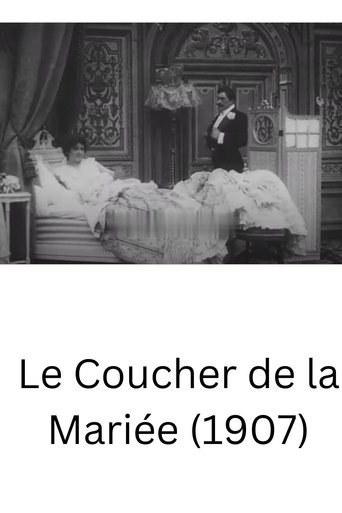
- Early French erotic films like 'Le Coucher de la Mariée'
This film influenced
- Later Saturn-Film productions with similar themes
- European erotic films of the 1910s-1920s
- Stag films that employed artistic pretense
- Modern art-house cinema that explores similar themes of comparison between art and life
Film restoration
The Vain Parlor Maid survives as a partial print in the film archives of the Austrian Film Museum. While not complete, the surviving elements include the central comparison sequence and the conclusion with the master's entrance. The film has been digitally restored and is available for scholarly viewing through specialized archives. Like many early erotic films, it was at risk of destruction due to both the volatile nature of early nitrate film and deliberate destruction to avoid legal complications. Its preservation is largely due to collectors who recognized its historical significance and stored prints away from authorities.
Where to watch
- The film is available through specialized academic streaming services that focus on early cinema
- Screenings at film archives and museums specializing in early cinema
- Included in some DVD collections of early erotic cinema released by specialist distributors
- Available for viewing by appointment at the Austrian Film Museum in Vienna
- Occasionally screened at film festivals focusing on cinema history