The Waif and the Wizard
"Blood on the appeared"
Keys: Space play/pause · ←/→ 10s · F fullscreen · M mute · </> speed
About this film
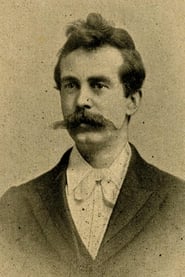
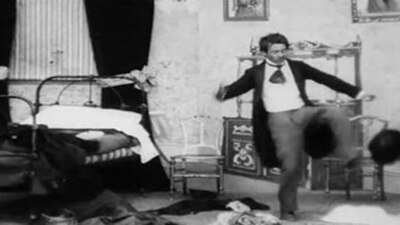
The Waif and the Wizard features the same young man who appeared in Undressing Extraordinary (and who might be early filmmaker Walter Booth). It's another early example of a two-shot film along the lines of Paul's earlier film Come Along Do!. The young man plays a magician who, after completing his act, agrees to go home with the young boy from the audience who helped him perform his tricks.
Cast & crew
More films like this
More Drama films
View all →







More from Walter R. Booth
View all →
More about this film
About the production
Release date1901
Box officeNo records available - box office tracking was not standard practice in 1901
ProductionRobert W. Paul's Animatograph Works
Filmed inLondon, England - likely filmed at Paul's studio in Muswell Hill
represents an early example of narrative cinema transitioning from simple trick films to more complex storytelling. As with many of Walter R. Booth's films from this period, it was likely shot quickly with minimal resources. The film demonstrates Booth's growing interest in combining magical effects with social commentary, a theme that would recur throughout his career. The production would have used the basic equipment available in 1901, including hand-cranked cameras and natural lighting.
Themes
Poverty and social inequalityThe power of compassion and kindnessMagic as a metaphor for hopeFamily bonds and responsibilitySocial justice and helping those in need
Themes & topics
magicianevictionsicknesspovertymagic tricksfamily crisissocial commentaryEdwardian Londonearly cinemanarrative film
Historical background
Made in its country of production around 1901, The Waif and the Wizard belongs to the first decade of projected film. Its story of the waif and the wizard features the same young man who appeared in undressing extraordinary (and who might be early filmmaker walter booth) spoke to audiences of the day through familiar genres and topical settings.
Why this film matters
Archivists and historians still cite The Waif and the Wizard when tracing how the first decade of projected film filmmakers staged waif and wizard on screen.
Making of
The Waif and the Wizard was created during a pivotal moment in cinema history when filmmakers were experimenting with narrative techniques beyond simple trick films or actualities. Walter R. Booth, working under Robert W. Paul's production company, was one of the early pioneers of narrative cinema in Britain. The film was likely shot on a single day with minimal preparation, as was common for productions of this era. Booth's background as an illustrator influenced his visual approach to storytelling, with careful attention to composition and visual gags. The young actor who appears in multiple Booth films may have been a regular collaborator or possibly Booth himself in front of the camera. The film's social themes regarding poverty and eviction were somewhat unusual for the period, when most films focused on entertainment rather than social commentary. The magical effects would have been achieved through in-camera techniques and simple editing tricks available at the time.
What critics said
Reviews from 1901 weighed The Waif and the Wizard on pacing, performance, and novelty. Later criticism reads its emphasis on waif, wizard, features through modern standards of craft and representation.
Did you know?
- features the same young actor who appeared in Walter Booth's earlier film 'Undressing Extraordinary' (1901), with speculation that the actor might be Booth himself
- The film represents an early example of a two-shot narrative structure, following in the footsteps of Robert W. Paul's 'Come Along Do!' (1898)
- Walter R. Booth was originally an illustrator and cartoonist before entering filmmaking, which influenced his visual storytelling style
- The film was produced during the early days of British cinema when most films were under one minute long, making its multi-scene structure innovative
- Robert W. Paul's studio was one of the first film production companies in Britain, competing with early pioneers like the Lumière brothers and Georges Méliès
- The film's combination of magic tricks with social themes was unusual for the period, when most films focused either on spectacle or simple narratives
- Like many early films, it would have been accompanied by live music during exhibition, with the pianist or organist improvising to match the on-screen action
- The film survives today as an important example of early British narrative cinema
- The eviction subplot reflects the social concerns of the Edwardian period, including poverty and housing issues in London
- The film demonstrates the rapid evolution of cinema from simple actualities to complex narrative storytelling within just a few years
Visual style
The cinematography in The Waif and the Wizard reflects the technical limitations and aesthetic approaches of 1901. The film would have been shot on 35mm film using hand-cranked cameras, resulting in variable frame rates by modern standards. The camera would have remained stationary for most shots, as mobile cameras were not yet in use. Lighting would have relied primarily on natural light from studio windows or basic artificial lighting. The composition follows the theatrical traditions of the period, with actors positioned to face the camera directly. The film uses basic editing techniques to transition between scenes, likely employing simple cuts or dissolves. The visual style is characteristic of early British cinema, with clear, straightforward compositions designed to be easily understood by audiences new to film language. Any magical effects would have been achieved through in-camera techniques or simple editing tricks rather than complex special effects.
Innovations
While The Waif and the Wizard may not appear technically sophisticated by modern standards, it represented several achievements for its time. The film's multi-scene structure was innovative for 1901, demonstrating an early understanding of narrative continuity across different locations. The combination of magical trick effects with dramatic storytelling showed technical versatility beyond simple spectacle. The film's editing, while basic by today's standards, represented early experiments in maintaining narrative coherence across scene changes. The production likely used some form of substitution splice or other in-camera effects for the magical sequences, techniques that were still being developed and refined in this period. The film's survival itself is notable, as many films from this era have been lost due to the unstable nature of early film stock and lack of preservation efforts.
Music
The Waif and the Wizard was a silent film, as all films were in 1901. During exhibition, it would have been accompanied by live music, typically a piano or organ in music halls. The musical accompaniment would have been improvised by the house musician or pianist, who would watch the film and create appropriate music to match the mood and action on screen. For magical scenes, the music might have been playful and whimsical, while the scenes showing the sick sister and worried mother would have been accompanied by more somber, emotional music. The quality and style of musical accompaniment would have varied significantly between different venues, from sophisticated arrangements in larger theaters to simple playing in smaller establishments. No original score or specific musical cues were composed for the film, as this practice would not become common until later in cinema history.
Famous quotes
No dialogue survives from this silent film
Memorable scenes
- The magician's performance with the young assistant, showcasing early special effects and the chemistry between performer and helper
- The emotional reveal of the sick sister and worried mother, transitioning from entertainment to social drama
- The magician's decision to help the family, demonstrating the film's moral message about using one's abilities for good
What audiences thought
Audience reception in 1901 would have been positive, as films combining magic tricks with relatable human stories were popular with early cinema audiences. The film's themes of helping those in need would have resonated with working-class audiences who were the primary patrons of music hall programs where such films were shown. The magical elements would have provided entertainment value, while the emotional story of the struggling family would have engaged viewers on a deeper level. Early cinema audiences were still amazed by the very ability of moving images to tell stories, so even simple narratives like this would have been impressive. The film's length was appropriate for the short attention spans expected of audiences accustomed to variety programs. Modern audiences viewing the film today often express surprise at the sophistication of storytelling for such an early period.
Film connections
Influenced by
- Georges Méliès' trick films
- Robert W. Paul's earlier narrative experiments
- Music hall traditions and theatrical conventions
- Victorian and Edwardian social reform literature
- Early French narrative films
This film influenced
- Later Walter R. Booth films with social themes
- Early British narrative films combining spectacle with story
- Films that used fantasy elements to address social issues
Film restoration
The film survives and has been preserved by film archives, making it accessible for study and viewing. It represents one of the fortunate examples of early British cinema that has not been lost to time.
Where to watch
- The film is available through various film archive websites and early cinema collections
- Some specialized streaming services focusing on classic and silent films may include it
- Film studies departments and libraries with early cinema collections
- Occasionally screened at film festivals or special events focusing on early cinema history