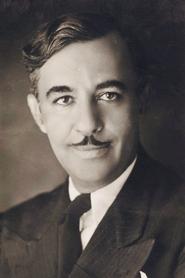


The Young Great-Great-Grandfather
"Ancestor returns unruly"
Keys: Space play/pause · ←/→ 10s · F fullscreen · M mute · </> speed
About this film
Brazilian séance revives libertine great-great-grandfather Menezes to plague his respectable descendants in this 1936 comedy.
Cast & crew
More Comedy films
View all →






More about this film
About the production
Release dateSeptember 3, 1936
Box officeBox office figures from 1936 Brazilian films are not preserved in available records
ProductionCinédia
Filmed inRio de Janeiro, Brazil
This was one of Cinédia's early sound productions, filmed during a transitional period in Brazilian cinema when studios were adapting to talkie technology. The production faced challenges with sound recording equipment, which was still primitive in Brazil at the time. Director Luiz de Barros, a pioneer of Brazilian cinema, incorporated elements of stage comedy that were popular in Rio's theater scene. The film was shot on location in Rio de Janeiro, capturing the city's urban landscape during the early years of Getúlio Vargas's presidency.
Themes
Generational conflictTradition vs. modernityTime travel and temporal displacementSocial class and aristocracyRomantic comedy
Themes & topics
Historical background
The Young Great-Great-Grandfather reflects Brazilian studio comedy's taste for supernatural farce.
Why this film matters
represents an important milestone in the development of Brazilian comedy cinema, establishing tropes and narrative structures that would influence later Brazilian filmmakers. It was among the first Brazilian films to successfully blend supernatural elements with social comedy, creating a formula that would be revisited in subsequent Brazilian cinema. The film's exploration of generational conflict and the clash between traditional and modern values resonated with Brazilian audiences during a period of rapid social change. Its success helped prove that Brazilian films could compete with imported Hollywood productions for domestic audiences. The film also contributed to the development of a uniquely Brazilian cinematic language, incorporating local humor, social references, and cultural nuances that distinguished it from foreign films. It remains an important example of early Brazilian sound cinema and is studied by film historians for its insights into 1930s Brazilian society.
Making of
The production of 'The Young Great-Great-Grandfather' took place during a crucial period in Brazilian cinema history, as the industry was transitioning from silent films to sound. Director Luiz de Barros, who had been making films since the 1910s, had to adapt his directing style to accommodate the new sound technology. The cast, many of whom came from theater backgrounds, had to learn to modulate their voices for the microphone, which was a new challenge for Brazilian actors. The film's comedy relied heavily on the contrast between 19th-century and 20th-century Brazilian customs, requiring extensive research into historical mannerisms and speech patterns. The production team faced difficulties with the primitive sound recording equipment available in Brazil at the time, often having to reshoot scenes multiple times due to technical issues. The séance sequence was particularly challenging to film, as it required special effects that were innovative for Brazilian cinema of the period.
What critics said
Known domestically; scarce subtitled prints abroad.
Did you know?
- This was one of the first Brazilian films to explore the concept of time travel or temporal displacement through supernatural means.
- Director Luiz de Barros was one of Brazil's most prolific early filmmakers, having started his career in the silent era.
- The film's title in Portuguese, 'O Jovem Tataravô,' became a popular phrase in Brazilian culture for describing someone with old-fashioned values in modern times.
- Marcel Klass, who played the great-great-grandfather, was actually of German descent and had to perfect his Brazilian Portuguese accent for the role.
- The séance scene was considered controversial by conservative Brazilian society due to its depiction of spiritualist practices.
- Cinédia, the production company, was founded in 1930 and became one of Brazil's most important film studios during the golden age of Brazilian cinema.
- The film's costumes required extensive research to accurately represent 19th-century Brazilian aristocratic fashion.
- This was one of the first Brazilian comedies to use the 'fish out of water' trope, which would become popular in later Brazilian cinema.
- The film's success helped establish the comedy genre as commercially viable in the Brazilian film industry.
- Original prints of the film were destroyed in a fire at Cinédia's facilities in the 1940s, though copies survived in private collections.
Visual style
The cinematography was handled by Edgar Brasil, one of Brazil's cinematographers who had studied in Germany. The film utilized the relatively new technology of sound-on-film, which presented both opportunities and limitations for visual composition. The camera work was relatively static compared to modern standards, as early sound equipment restricted camera movement. The film made effective use of lighting to create contrast between the 19th-century flashback sequences and the 1936 present-day scenes. The Rio de Janeiro locations were photographed to showcase the city's modern architecture and urban development, emphasizing the temporal displacement of the protagonist. The cinematography employed the soft focus techniques popular in the 1930s, particularly in scenes featuring the female leads. While technically limited by the equipment available in Brazil at the time, the photography successfully captured the glamorous atmosphere of Rio's high society.
Innovations
As one of Cinédia's early sound productions, the film represented a significant technical achievement for the Brazilian film industry. The production team successfully adapted American sound recording technology for Brazilian conditions, often having to improvise solutions due to equipment limitations. The film's special effects, particularly the séance sequence and the temporal transition scenes, were innovative for Brazilian cinema of the period. The synchronization of sound and image was remarkably precise given the technical challenges faced by the production. The film demonstrated that Brazilian studios could produce sound films that met the technical standards of the era, despite limited resources and budgets. The makeup effects used to age and transform the protagonist were particularly noteworthy for their time. The film's success in overcoming these technical obstacles helped pave the way for more ambitious Brazilian film productions in subsequent years.
Music
The film's music was composed by Radamés Gnattali, one of Brazil's most important classical and popular composers of the 20th century. The score blended traditional Brazilian musical elements with the popular film music styles of the 1930s. Gnattali incorporated choro and samba rhythms into the orchestral score, giving the film a distinctly Brazilian musical character. The soundtrack included several popular songs of the period, which helped enhance the film's commercial appeal. The sound design was innovative for Brazilian cinema, using music to emphasize the comedic timing and to highlight the contrast between the 19th and 20th centuries. The film's theme song became popular on Brazilian radio stations following the movie's release. The recording quality was limited by the primitive sound equipment available in Brazil, but the music's charm and energy came through despite technical limitations.
Famous quotes
Em meu tempo, as mulheres eram mais fáceis de conquistar!" (In my time, women were easier to conquer!)
Você não pode simplesmente aparecer do século passado e esperar que todos sigam suas regras!" (You can't just appear from the last century and expect everyone to follow your rules!)
Esta família precisa de um pouco de paixão do velho tempo!" (This family needs some passion from the old times!)
O amor não muda, mesmo que o mundo mude ao seu redor." (Love doesn't change, even when the world changes around you.)
Memorable scenes
- The séance sequence where the great-great-grandfather is summoned back to life, featuring dramatic lighting and supernatural effects that were innovative for 1936 Brazilian cinema.
- The protagonist's first encounter with modern technology, where he marvels at automobiles, telephones, and electric lights.
- The ballroom scene where the 19th-century gentleman attempts to court modern women using outdated romantic techniques, resulting in comedic misunderstandings.
- The family dinner where the ancestor's 19th-century manners and stories clash with the modern family's sensibilities.
What audiences thought
The film was a commercial success upon its release in 1936, drawing large audiences in Rio de Janeiro and other major Brazilian cities. Brazilian audiences particularly enjoyed the film's local humor and references to Rio de Janeiro life, which made it more relatable than imported American films. The character of the great-great-grandfather became popular with audiences, who found his old-fashioned approaches to romance and modern life amusing. The film's success at the box office helped convince Brazilian producers and distributors that there was a strong market for domestically produced comedies. Audience word-of-mouth was particularly positive regarding the film's comedic situations and the chemistry between the cast members. The movie developed a cult following in subsequent decades, especially among film enthusiasts interested in the history of Brazilian cinema.
Film connections
Influenced by
- American screwball comedies of the 1930s
- Brazilian theatrical comedy traditions
- European supernatural comedy films
- Hollywood ghost comedies
- Brazilian literature of the early 20th century
This film influenced
- Subsequent Brazilian comedy films of the 1940s and 1950s
- Later Brazilian films dealing with time travel and supernatural themes
- Brazilian television comedies with similar generational conflict themes
Film restoration
The film is partially preserved with some degradation. While the original negatives were lost in a 1940s fire at Cinédia's facilities, copies survived in private collections and the Cinemateca Brasileira. A restored version was created in the 1980s using available prints, though some scenes remain incomplete. The film is considered at-risk due to the age and condition of remaining prints, though efforts continue to preserve this important piece of Brazilian cinema history.
Where to watch
- The film is occasionally screened at Brazilian film festivals and retrospectives
- Available through the Cinemateca Brasileira's archive for research purposes
- Rare VHS copies exist in private collections
- Some segments may be available on Brazilian cinema educational websites
- Not currently available on mainstream streaming platforms due to rights and preservation issues