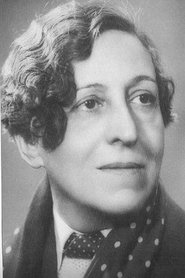

Those Who Worry
"A drunk woman dreams of escaping poverty through the streets."
Keys: Space play/pause · ←/→ 10s · F fullscreen · M mute · </> speed
About this film
A destitute, drunk woman appears to yearn for the life of a streetwalker.
Cast & crew
More films like this
More Music films
View all →

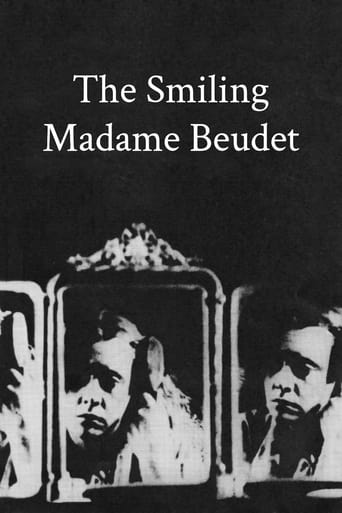
More from Germaine Dulac
View all →
More about this film
About the production
Release date1928
Box officeUnknown
ProductionSociété des Films Abel Gance
Filmed inParis, France
This was one of Dulac's later silent works, created during the transitional period when sound cinema was emerging. The film was shot on location in Paris, utilizing natural urban environments to enhance the realism of the protagonist's marginal existence. Dulac employed innovative camera techniques including subjective POV shots and superimposition to represent the character's psychological state. The production faced challenges due to the rapidly changing film industry landscape of 1928, as studios were shifting focus to sound production.
Themes
Female marginalizationAlcoholism and addictionSocial inequalityPsychological distressUrban alienation
Themes & topics
alcoholic womanstreetwalkerParispovertypsychological dramasilent filmavant-gardefeminist filmsocial commentaryurban life
Historical background
By 1928, Those Who Worry was shaped by late silent cinema technology, distribution, and audience expectations.
Why this film matters
Those Who Worry (1928) helps trace genre evolution, performer careers, and exhibition practices of its period.
Making of
Germaine Dulac approached this film with her characteristic blend of social consciousness and formal experimentation. Working with cinematographer Maurice Forster, she developed techniques to visualize the protagonist's internal psychological state through visual metaphors and innovative editing. The casting of Lilian Constantini was significant, as she brought a naturalistic quality that aligned with Dulac's interest in authentic performances. The film was shot quickly during a period of intense creative output for Dulac, who was simultaneously working on other projects and advocating for avant-garde cinema. The production team faced the challenge of creating a serious psychological drama while the film industry was shifting toward commercial sound productions.
What critics said
Later retrospectives treat Those Who Worry (1928) as representative late silent cinema fare valued by archivists and genre historians.
Did you know?
- This film is one of Germaine Dulac's lesser-known works from her avant-garde period
- The film was created just before Dulac's career was significantly impacted by the transition to sound cinema
- Lilian Constantini, who plays the protagonist, was a frequent collaborator with Dulac in her later films
- The film's themes of female marginalization were highly progressive for its time period
- Dulac was part of the French Impressionist cinema movement and this film reflects those stylistic influences
- The original French title may have been 'Celles qui s'inquiètent' or similar
- The film was produced during the height of Dulac's feminist filmmaking period
- It represents Dulac's interest in psychological realism combined with formal experimentation
- The film's focus on a working-class woman was unusual for the art cinema of its era
- Dulac was one of the few prominent female directors working in France during the 1920s
Visual style
The cinematography employs innovative techniques characteristic of French Impressionist cinema, including soft focus, superimposition, and subjective camera angles to represent the protagonist's psychological state. The visual style uses contrast between the gritty reality of Parisian streets and dreamlike sequences that blur the boundaries between fantasy and reality. Camera movement and unconventional framing create a sense of disorientation that mirrors the character's mental state. The black and white photography emphasizes the stark contrasts between light and shadow, symbolizing the character's moral and social conflicts. The cinematographic approach reflects Dulac's interest in using visual language to convey emotional and psychological depth beyond conventional narrative techniques.
Innovations
The film demonstrates advanced use of cinematic techniques for its time, including innovative editing patterns that convey psychological states through rhythmic cuts and juxtapositions. Dulac employed superimposition and double exposure techniques to represent the character's internal conflicts and fantasies. The use of location shooting in Parisian streets added authenticity to the portrayal of urban marginalization. The film's pacing and rhythm reflect Dulac's understanding of cinema as a temporal art form capable of expressing complex psychological realities. These technical innovations contributed to the development of cinematic language for expressing subjective experience and social commentary.
Music
As a silent film, it would have been accompanied by live musical performance during its original theatrical run. The score likely consisted of classical pieces or original compositions that emphasized the dramatic and psychological elements of the narrative. Modern screenings of restored versions typically feature newly composed scores that respect the film's avant-garde nature and emotional tone. The absence of synchronized dialogue allows the visual storytelling and musical accompaniment to create the film's emotional impact. The musical choices would have been crucial in establishing the mood and enhancing the film's exploration of psychological distress.
Famous quotes
No documented quotes are available from this silent film
Memorable scenes
- The protagonist's drunken wanderings through Parisian streets, where reality blurs with fantasy
- The sequence where she observes streetwalkers with a mixture of envy and despair
- The climactic scene where her psychological state reaches its breaking point
What audiences thought
Original audience reception is not well documented, but the film likely reached limited audiences due to its avant-garde nature and the timing of its release during the sound transition. Modern audiences who have discovered the film through film festivals and retrospectives have responded positively to its artistic merits and historical significance. The film's themes continue to resonate with contemporary viewers interested in feminist cinema and early film history. Its preservation and presentation in film archives have allowed new generations to appreciate Dulac's visionary work. The film serves as an important educational resource for those studying women's contributions to early cinema.
Film connections
Influenced by
- French Impressionist cinema
- Surrealist movement
- German Expressionist cinema
- Psychological realism in literature
- Feminist theory of the 1920s
This film influenced
- Later French poetic realist films
- Feminist avant-garde cinema of the 1970s
- Psychological drama films
- Social realist cinema
Film restoration
The preservation status of this specific film is uncertain, as many of Dulac's works from this period are considered lost or exist only in fragmentary form. Some sources suggest that portions of the film may be held in European film archives, but a complete restored version may not be available. The film's survival status reflects the broader challenge of preserving avant-garde and independent films from the silent era. Film preservation organizations continue to search for missing works by Germaine Dulac and other pioneering directors of the period.
Where to watch
- Currently, this film is not widely available on commercial streaming platforms
- May be accessible through specialized film archives or museum collections
- Potential viewing at film festivals or retrospective screenings of Germaine Dulac's work
- Academic institutions with film studies programs may have access to copies
- European film archives such as the Cinémathèque Française may hold prints or fragments