Tonpei and Sarukichi
"Tompei sleeps through noon while Sarukichi schemes."
Keys: Space play/pause · ←/→ 10s · F fullscreen · M mute · </> speed
About this film
In 1932, the lazy Tompei is still asleep past 10 o'clock and even at 11 o'clock. He finally wakes up at 12 o'clock at the deafening sound of the angry clock. Hungry, Tompei walks to Sarukichi's house and grabs food Sarukichi has harvested. The next day, while Sarukichi is working in the hills, Tompei beats Sarukichi's two children who are staying at home and tries to steal things from Sarukichi's house. Sarukichi, who is alerted of the situation via telephone from his children races home, is infuriated at the cruel Tompei and punches him so hard he falls down.
Cast & crew
More films like this
More Animation films
View all →



More from Yasuji Murata
View all →
More about this film
About the production
Release dateJune 1, 1932
ProductionYokohama Cinema Shokai
Filmed inYokohama, Japan
The film was part of the 'Athena Library' series, a collection of educational and narrative shorts produced by Yokohama Cinema Shokai. It was created using a highly refined paper cutout animation technique that was so smooth it was frequently mistaken for cel animation by contemporary audiences. The production involved a small, dedicated team including scriptwriter Chuzo Aochi and cinematographer Yukikiyo Ueno, who collaborated with Murata on approximately 50 titles.
Themes
Industry vs. IndolenceJustice for the OutnumberedWar PreparednessDeception and ConsequencesTechnological Modernization
Themes & topics
Historical background
Released in 1932, Tonpei and Sarukichi reached audiences during the early sound era, when exhibition and production norms differed sharply from today's.
Why this film matters
Tonpei and Sarukichi remains viewable through digital archives, preserving 1932 screen culture for modern audiences.
Making of
Yasuji Murata developed his unique cutout animation style through self-study and trial and error after joining Yokohama Cinema Shokai. Unlike his contemporary Sanae Yamamoto, who favored slapstick, Murata focused on fluid, realistic movement within the limitations of paper cutouts. The production of 'Tonpei and Sarukichi' occurred during a transitional period for the studio as they moved toward more narrative-driven and socially reflective content. The use of military hardware like tanks and machine guns in the film reflected the studio's increasing engagement with contemporary themes of national defense and technological modernization.
What critics said
Modern notes on Tonpei and Sarukichi emphasize preservation, stylistic choices, and its place within director or studio filmographies.
Did you know?
- The film was released in a 16mm version titled 'Sarukichi Has Won' (Sarukichi no Shori) by Konishiroku Honten.
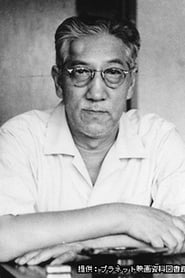
- Director Yasuji Murata was a former movie theater signboard artist before becoming a pioneer of Japanese animation.
- The film features surprisingly modern technology for a fable, including telephones and tanks.
- It was reviewed in the July 1, 1932 edition of Cinema Junpo (No. 440), a prestigious Japanese film magazine.
- The character of the Lion is portrayed as 'credulous' or easily fooled, which was a common trope in Murata's didactic works.
- The animation style is noted for its 'droll' and 'dry' manner, favoring anatomical logic over the slapstick squash-and-stretch common in American cartoons of the era.
Visual style
The film utilizes a flat, two-dimensional plane characteristic of cutout animation but achieves depth through clever layering and the use of geometric framing (circles and squares). Cinematographer Yukikiyo Ueno employed precise lighting to ensure the paper edges were not visible, maintaining the illusion of a continuous drawing. The 'camera' movements are mostly static, with the action occurring through the meticulously moved paper joints of the characters.
Innovations
The film is celebrated for its 'invisible' cutout technique, where the joints and edges of the paper characters are so well-concealed that the movement appears fluid and organic. It also features early examples of 'transformation' sequences in anime, specifically the scene where Sarukichi's traditional house transforms into a functional military tank.
Music
Originally released as a silent film, it was intended to be accompanied by live 'benshi' narration and traditional musical accompaniment (likely shamisen or small ensemble) in theaters. Some preserved versions have had modern scores or synchronized music added for archival screenings.
Famous quotes
Tonpei the Pig's arrogant behavior finally causes Sarukichi the Monkey to take action.
The pig lied to the King Lion to get him on his side.
Justice wins even in an outnumbered battle.
Memorable scenes
- The opening sequence where Tonpei's alarm clock physically expresses anger at his laziness.
- The transformation of Sarukichi's humble house into a heavy tank to defend against the Lion's army.
- The climax where the mole army detonates an underground bomb, causing a massive explosion that defeats the invaders.
What audiences thought
Contemporary audiences, particularly children, were the primary target for the Athena Library series; they received the film as both an educational moral story and a thrilling action short. The 16mm 'Sakura Graph' home versions were popular for school and community screenings, helping to establish Sarukichi the Monkey as a recognizable hero figure in early Japanese pop culture.
Film connections
Influenced by
- Traditional Japanese folklore (specifically 'The Monkey and the Crab')
- Winsor McCay (animation style)
- Contemporary Japanese military newsreels
This film influenced
- Momotaro's Sea Eagles (1943)
- Private Norakuro series
Film restoration
The film is preserved and has been digitally restored. It is currently part of the 'Japanese Animated Film Classics' collection curated by the National Film Archive of Japan.
Where to watch
- Japanese Animated Film Classics (Official Website)
- National Film Archive of Japan
- Internet Archive (Public Domain)