


Tormented
"A jazzman's drowned lover returns as a crawling hand."
Keys: Space play/pause · ←/→ 10s · F fullscreen · M mute · </> speed
About this film
Tom Stewart, a successful jazz pianist, is preparing to marry his fiancée Meg Hubbard on a New England island when his former lover Vi Mason unexpectedly arrives to blackmail him. During a confrontation on a lighthouse, Vi falls to her death when the railing breaks, and Tom decides to conceal the incident rather than report it. As his wedding day approaches, Tom begins experiencing terrifying supernatural phenomena - Vi's severed hand crawls around the island seeking revenge, and her disembodied head appears to haunt him at every turn. The manifestations grow increasingly violent and personal,…
Cast & crew
More films like this
More Thriller films
View all →


More about this film
About the production
Release dateSeptember 1960
Budget$135,000
Box officeUnknown - modest B-movie returns
ProductionBert I. Gordon Productions, Marlowe Productions
Filmed inSanta Catalina Island, California, Hollywood Studios
Filmed in just 12 days on a tight schedule, the production utilized creative practical effects including a mechanical hand operated by wires and a floating head effect using a combination of matte photography and suspended props. The lighthouse scenes were shot using miniatures and forced perspective techniques to create the illusion of height.
Themes
Guilt and conscienceThe consequences of immoral actionsSupernatural revengePsychological deteriorationThe past haunting the present
Themes & topics
ghostrevengepianistlighthousesupernaturalhorrorthrillercrawling handfloating headguilthauntingislandweddingblackmailmurder
Historical background
Tormented (1960) reached screens through Bert I. Gordon Productions. Exhibitors of the time built postwar exhibition that mixed shorts, features, and live acts, so a clear premise helped Tormented travel between cities and exchange markets.
Why this film matters
Archivists and revival programmers still cite Tormented (1960) when tracing studio habits, casting pools, and the visual rhetoric audiences once took for granted. Even modest surviving prints help map how Tormented fit beside competing releases of its day.
Making of
The production faced numerous challenges due to its limited budget and tight shooting schedule. Director Bert I. Gordon, known for his ability to create impressive effects on minimal resources, employed innovative techniques to bring the supernatural elements to life. The crawling hand effect required multiple attempts to perfect, with the crew spending hours adjusting the wire mechanism to achieve smooth movement across various surfaces. The floating head sequences proved particularly challenging, requiring precise timing between the live-action footage and the projected image. Weather conditions on Catalina Island sometimes delayed exterior shots, forcing the crew to rearrange the shooting schedule frequently. Despite these obstacles, Gordon maintained his reputation for delivering visually interesting films within budget constraints, often working long hours to ensure the special effects met his standards.
What critics said
Trade coverage around 1960 discussed Tormented for pacing, clarity, and program fit rather than blockbuster grosses. Later writers value it as evidence of period style and as a reference point beside other films from the same era.
Did you know?
- Director Bert I. Gordon cast his own daughter Susan Gordon in the role of Meg Hubbard's sister, continuing his tradition of featuring family members in his films.
- The infamous crawling hand was created using a rubber glove filled with plaster and operated by wires hidden in the sand, requiring multiple takes to achieve the desired effect.
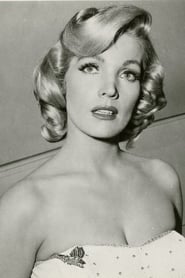
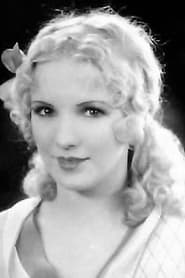
- The floating head effect was accomplished by projecting actress Juli Reding's image onto a specially prepared screen while she was filmed separately.
- The film was shot in Cinemascope, which was unusual for a low-budget horror production of its time.
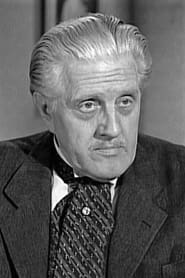
- Richard Carlson, who plays Tom Stewart, was a veteran of 1950s science fiction and horror films, having appeared in 'The Creature from the Black Lagoon' and 'It Came from Outer Space'.
- The lighthouse featured in the film was a combination of location shooting and miniature models, with the interior scenes filmed on studio sets.
- The jazz piano music performed in the film was actually played by Richard Carlson himself, who was a skilled pianist in real life.
- The film's original title was 'The Haunting of Tom Stewart' but was changed to 'Tormented' for marketing purposes.
- The movie was filmed entirely on Santa Catalina Island, which provided the isolated coastal setting crucial to the story's atmosphere.
- The special effects budget was only $15,000, forcing the production team to be extremely creative with their practical effects.
Visual style
The cinematography by Ernest Laszlo utilized the Cinemascope format to create expansive shots of the island setting, contrasting the open landscapes with the claustrophobic horror of the supernatural manifestations. Laszlo employed low-angle shots to emphasize the vulnerability of the characters and high-angle perspectives during the supernatural sequences to create a sense of disorientation. The lighthouse scenes used dramatic lighting and shadow play to enhance the Gothic atmosphere, while the beach sequences utilized natural lighting to create a sense of normalcy that would be disrupted by the supernatural events. The floating head effects required careful matte work and composite photography, which Laszlo handled with considerable skill given the budget constraints.
Innovations
Despite its limited budget, 'Tormented' achieved several notable technical accomplishments in special effects. The crawling hand effect, created using a combination of stop-motion animation and wire work, remains impressive for its ingenuity. The floating head sequences required sophisticated matte photography and composite techniques that were advanced for a B-movie production. The film's use of Cinemascope on a minimal budget demonstrated the industry's move toward wider aspect ratios even in lower-budget productions. The lighthouse miniature work and forced perspective shots effectively created the illusion of height and danger without the expense of full-scale construction. These technical innovations within budget constraints influenced subsequent low-budget horror productions.
Music
The musical score was composed by Albert Glasser, who was known for his work on low-budget science fiction and horror films. Glasser's approach emphasized jazz elements for the piano sequences, reflecting the protagonist's profession, while using dissonant strings and brass for the supernatural moments. The soundtrack effectively contrasts the smooth jazz music Tom plays with the eerie, atonal cues that accompany the ghostly manifestations. Richard Carlson's actual piano performances add authenticity to the musical sequences, creating a believable portrayal of a professional musician. The sound design particularly excels in creating the unsettling sounds of the crawling hand dragging across various surfaces and the ethereal quality of the floating head's voice.
Famous quotes
Tom Stewart: 'I didn't kill her! The railing broke! It was an accident!'
Vi Mason's ghost: 'You pushed me, Tom! You'll never be free of me!'
Meg Hubbard: 'Tom, you're not yourself anymore. What's happening to you?'
Vi Mason: 'You can't marry her, Tom. You belong to me now. forever.'
Tom Stewart: 'It's not real! It can't be real!'
Memorable scenes
- The iconic opening sequence where Vi Mason falls from the lighthouse, captured with dramatic camera angles and effective use of height to establish the film's central tragedy.
- The first appearance of the crawling hand emerging from the sand on the beach, creating immediate shock and establishing the film's signature supernatural element.
- The scene where the floating head appears in Tom's bedroom, utilizing effective lighting and projection techniques to create a genuinely eerie moment.
- The wedding sequence interrupted by supernatural manifestations, contrasting the joyous occasion with terrifying paranormal activity.
- The final confrontation on the lighthouse where all supernatural elements converge, bringing the story full circle to its tragic beginning.
What audiences thought
Initial audience response was modest, with the film performing adequately in drive-in theaters and second-run cinemas typical of B-movie releases. Horror fans of the era generally responded positively to the film's supernatural elements and suspenseful sequences, particularly the scenes featuring the crawling hand. Over the decades, the film has developed a dedicated cult following among classic horror enthusiasts, who appreciate its earnest approach to supernatural horror and the charm of its practical effects. The movie's public domain status has helped it find new audiences through various home video releases and television broadcasts, including its memorable appearance on Mystery Science Theater 3000, which introduced it to a new generation of viewers.
Film connections
Influenced by
- The Uninvited (1944)
- Psycho (1960)
- The Bad Seed (1956)
- Diabolique (1955)
- The Innocents (1961)
This film influenced
- The Crawling Hand (1963)
- Evil Dead (1981)
- Idle Hands (1999)
- The Hand (1981)
- Ghost Story (1981)
Film restoration
The film has entered the public domain, which has both helped and hurt its preservation. While this has allowed for widespread distribution, the lack of a single rights holder has meant varying quality in different releases. Several DVD and Blu-ray editions have been restored from surviving prints, with varying degrees of success. The original camera negative status is unknown, but the film remains accessible through multiple public domain distributors. The Cinemascope versions are rarer than pan-and-scan releases, with some special editions attempting to restore the original aspect ratio.
Where to watch
- Available on YouTube (public domain)
- Amazon Prime Video (multiple versions)
- DVD releases from various public domain distributors
- Blu-ray from Scream Factory (special edition)
- Tubi (free streaming)
- Pluto TV (occasional programming)
- Archive.org (free download)
- Classic horror streaming services specializing in public domain films