Traffic Crossing Leeds Bridge
"Horse carriages and foot traffic cross Leeds Bridge."
Keys: Space play/pause · ←/→ 10s · F fullscreen · M mute · </> speed
About this film
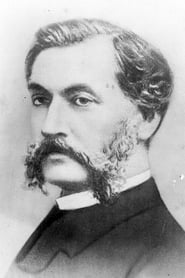
Louis Le Prince aimed his camera at Leeds Bridge in late October 1888, recording horse-drawn carriages and pedestrians crossing the span in one of the earliest surviving motion-picture actualities.
Cast & crew
More films like this
More Documentary films
View all →
More from Louis Aimé Augustin Le Prince
View all →
More about this film
About the production
Release dateOctober 1888
BudgetMinimal - primarily equipment costs for Le Prince's experimental camera
ProductionLouis Le Prince (independent production)
Filmed inLeeds Bridge, Leeds, West Yorkshire, England
Shot using Le Prince's single-lens camera, which he invented and patented. The filming required careful positioning of the heavy camera equipment on or near the bridge. The exposure was made on paper film base, a precursor to celluloid. The filming took place in late October 1888, likely requiring specific lighting conditions. The entire sequence was captured in a single continuous take, demonstrating the capabilities of Le Prince's innovative motion picture apparatus.
Themes
Urban LifeTransportationEveryday RealityTechnological InnovationTime and Memory
Themes & topics
bridgetrafficpedestrianshorse-drawn carriageVictorian eradocumentaryexperimental filmurban lifetransportationstreet scene
Historical background
Released in 1888 during cinema's first decade, Traffic Crossing Leeds Bridge reached audiences when exhibitors were still defining programming conventions. The narrative hook—Louis Le Prince aimed his camera at Leeds Bridge in late October 1888…—reflects what contemporary producers thought would draw viewers.
Why this film matters
Traffic Crossing Leeds Bridge remains discussed by archivists tracing how screen stories of its period represented work, desire, conflict, and social order. Its central situation—Louis Le Prince aimed his camera at Leeds Bridge in late October 1888…—still prompts questions about genre conventions and audience expectations.
Making of
Louis Aimé Augustin Le Prince, a French inventor working in Leeds, used his own invention - a single-lens motion picture camera - to capture this historic footage. The camera was a remarkable piece of engineering for its time, using a mechanism to advance the film strip between exposures. Le Prince had been experimenting with motion pictures since the mid-1880s, and this film represented one of his most successful demonstrations of the technology. The filming location at Leeds Bridge was likely chosen for its high traffic volume and elevated position, which provided an ideal vantage point for the camera. The entire apparatus was cumbersome and required careful setup, making this brief sequence a significant technical achievement. Le Prince was assisted by his son Adolphe during many of his experiments, and family members may have helped with this particular filming session.
What critics said
Trade and newspaper notices for Traffic Crossing Leeds Bridge generally emphasized casting, spectacle, and program fit rather than extended aesthetic argument. Retrospective screenings and archival notes continue to shape how viewers evaluate Traffic Crossing Leeds Bridge today.
Did you know?
- This is one of the earliest surviving motion pictures in existence, predating the Lumière brothers' first public screening by seven years
- Louis Le Prince mysteriously disappeared in 1890 while traveling from Dijon to Paris, never to be seen again, before he could commercially showcase his inventions
- The film was shot on paper film using Le Prince's 16-lens camera, though this particular sequence used the single-lens version
- The original footage was only 2 seconds long but contained 20 frames, running at approximately 10 frames per second
- Le Prince patented his motion picture camera in 1888, the same year this film was made
- The film was not shown publicly until decades after it was made, as Le Prince was still perfecting his technology
- The bridge shown in the film is still standing today in Leeds, though it has been modified and rebuilt over the years
- This film, along with Le Prince's other works, establishes him as a true pioneer of cinema, though he's often overlooked in favor of Edison and the Lumière brothers
- The film was rediscovered and preserved decades after it was made, surviving through Le Prince's family archives
- The footage provides one of the earliest visual records of everyday Victorian life in an industrial English city
Visual style
The cinematography consists of a single static wide shot taken from an elevated position looking down on Leeds Bridge. The composition carefully frames the bridge and its traffic, maximizing the visibility of movement within the frame. The camera angle provides a clear documentary perspective, allowing viewers to observe the natural flow of pedestrian and vehicular traffic. The exposure and focus are remarkably good for such an early experiment, with sufficient detail to distinguish individual people and vehicles. The fixed camera position was a necessity of the technology, but Le Prince chose his location wisely to create the most dynamic possible image within these constraints.
Innovations
This film represents several major technical breakthroughs for its time. Le Prince's single-lens camera successfully captured sequential images at a rate fast enough to create the illusion of motion when viewed. The use of paper film as a recording medium was innovative, though it would soon be replaced by celluloid. The camera's mechanical advancement system for the film strip was a crucial development in motion picture technology. The ability to capture clear images of moving subjects outdoors demonstrated the practical potential of motion photography beyond studio settings. The film's survival and preservation over 135 years also speaks to the relative stability of the medium Le Prince chose for his experiments.
Music
Silent film - no original soundtrack or musical accompaniment was created for this experimental footage.
Memorable scenes
- The entire 2-second sequence showing horse-drawn carriages and pedestrians crossing Leeds Bridge in late Victorian England, representing one of the first times in human history that real-life motion was captured and preserved for posterity.
What audiences thought
The film was not shown to general audiences in 1888, as it was part of Le Prince's private experiments and technical demonstrations. Modern audiences who have seen the film typically express fascination with its historical significance and the glimpse it provides into Victorian life. Viewers are often struck by how clearly the motion is captured despite the primitive technology, and many find it poignant that this everyday scene from over 135 years ago has been preserved for future generations. The film's brevity and simplicity are generally understood as necessary limitations of early motion picture technology rather than shortcomings.
Film connections
Influenced by
- Eadweard Muybridge's motion studies
- Étienne-Jules Marey's chronophotography
- Early photographic experiments
- Victorian interest in technology and progress
This film influenced
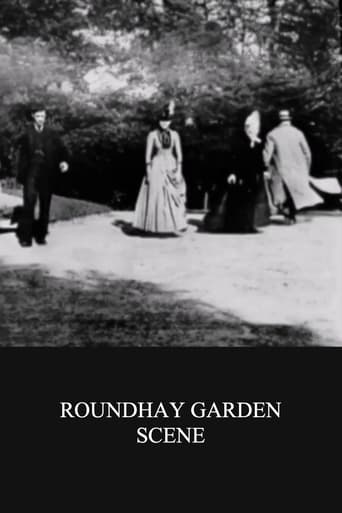
- Roundhay Garden Scene (1888)
- Accordion Player (1888)
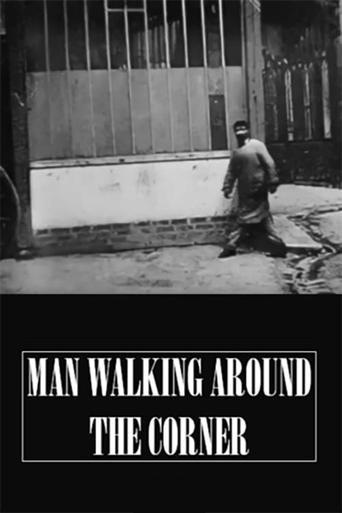
- Man Walking Around a Corner (1887)
- All subsequent motion pictures and documentary films
Film restoration
The film survives and has been preserved by various film archives and institutions. It is considered one of the oldest surviving motion pictures and has been digitized for conservation and accessibility. The original footage is held in archives and has been restored to the extent possible given its age and the limitations of the original medium.
Where to watch
- The film is available on various online platforms including YouTube, British Film Institute collections, and academic film archives. It is frequently featured in documentaries about early cinema and can be found in museum exhibitions about the history of motion pictures.