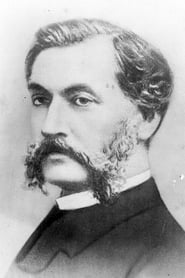
Louis Aimé Augustin Le Prince
Director
Born: August 28, 1841 in Metz, Moselle, France Died: September 16, 1890 (disappeared, presumed dead) Active: 1887-1890
Films
4 films
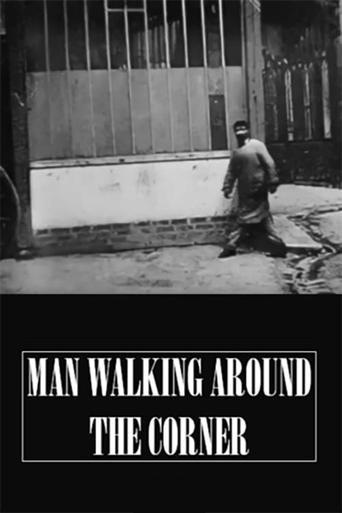
About Louis Aimé Augustin Le Prince
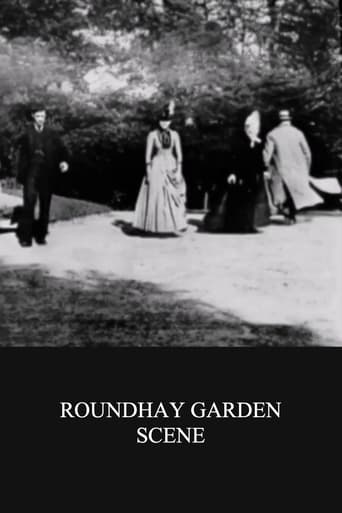
French inventor and filmmaker who created some of the earliest motion pictures in history, predating the Lumière brothers and Thomas Edison's commercial ventures. After studying chemistry and physics in Paris and Leipzig, he moved to Leeds, England, where he developed his revolutionary motion picture camera and projection system. In 1888, he created what is now considered the oldest surviving motion picture, 'Roundhay Garden Scene,' along with several other short films that captured everyday life with remarkable clarity. Le Prince designed and built his own single-lens camera using paper film, later experimenting with celluloid, and was preparing for a commercial exhibition in London when tragedy struck. His mysterious disappearance in 1890, just before he could demonstrate his invention publicly, has become one of cinema's greatest unsolved mysteries, leaving his work largely uncredited during the early development of motion pictures. Despite his brief but innovative career spanning only 1887-1890, Le Prince's technical innovations and artistic vision laid crucial groundwork for the birth of cinema as we know it today.
The Craft
Behind the Camera
Le Prince's directing approach was observational and documentary-style, capturing real people and scenes without staging or artificiality. His films were brief but technically accomplished, focusing on movement and the novelty of capturing life on film. His compositions showed an innate understanding of framing and the visual dynamics of motion, often choosing subjects that demonstrated the capabilities of his technology while maintaining artistic merit.
Milestones
- Invented the single-lens motion picture camera (1888)
- Created 'Roundhay Garden Scene' (1888) - oldest surviving film
- Developed early film projection technology
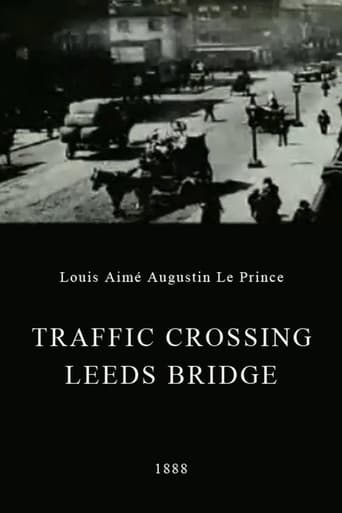
- Filmed 'Traffic Crossing Leeds Bridge' (1888) - early street scene
- Designed 16-lens camera for motion capture (1886)
- Prepared for first public film exhibition in London (1890)
Best Known For
Must-See Films
Accolades
Special Recognition
- Pioneer of Motion Pictures (posthumous recognition)
- Leeds Blue Plaque commemorating his work (1930)
- International recognition as 'Father of Cinematography'
Working Relationships
Worked Often With
Studios
Why They Matter
Impact on Culture
Le Prince's impact on cinema is profound yet largely unrecognized during the early 20th century due to his mysterious disappearance. His films represent the birth of motion picture art, with 'Roundhay Garden Scene' serving as cinema's oldest surviving artifact. His technical innovations, including the single-lens camera and early projection systems, directly influenced subsequent developments by the Lumière brothers and Edison. The mystery surrounding his disappearance has made him a legendary figure in film history, symbolizing the tragic loss of unrecognized genius. His work demonstrated that motion pictures could capture reality with artistic and technical sophistication, establishing fundamental principles that would define cinema for over a century.
Lasting Legacy
Le Prince's legacy as the 'Father of Cinematography' has grown steadily as film historians have uncovered evidence of his work. His surviving films are now treasured artifacts in cinema history, with 'Roundhay Garden Scene' holding the distinction of being the world's oldest surviving motion picture. The Louis Le Prince Institute in Leeds continues to honor his contributions to film technology and art. His mysterious disappearance has become part of cinema folklore, inspiring books, documentaries, and investigations. Modern recognition of his work has helped correct the historical narrative, acknowledging that motion pictures existed before the Lumière brothers' famous 1895 screening. His technical innovations laid groundwork for film technology development, while his artistic vision established cinema's potential as both documentary and art form.
Who They Inspired
Le Prince influenced subsequent pioneers including the Lumière brothers, who incorporated aspects of his camera design into their cinématographe. Thomas Edison's Kinetoscope development benefited from Le Prince's early experiments with single-lens cameras and film transport mechanisms. His documentary-style approach to filming real scenes influenced the development of actuality films and newsreels. The technical solutions he developed for film transport and projection became foundational principles in motion picture technology. His work demonstrated that motion pictures could capture everyday life with artistic merit, influencing the development of both documentary and narrative cinema. Modern filmmakers and historians continue to study his surviving works as examples of cinema's earliest artistic expressions.
Off Screen
Le Prince married Elizabeth 'Lizzie' Whitley, an English artist and daughter of a prominent Leeds family, in 1869. The couple had two children, Adolphe and Marie, and settled in Leeds where Le Prince worked with his father-in-law at the Whitley Partners firm. His family life was marked by his dedication to invention and his mysterious disappearance, which left his wife and children to defend his legacy and patent claims. His son Adolphe became a key witness in later patent disputes but tragically died in a fire in 1902, further complicating the family's efforts to secure recognition for Le Prince's contributions.
Education
Studied chemistry and physics in Paris and Leipzig, attended university in both cities with focus on applied sciences and engineering
Family
- Elizabeth 'Lizzie' Whitley (1869-1890)
Did You Know?
- Created the world's oldest surviving motion picture in 1888
- Disappeared mysteriously from a train between Dijon and Paris in 1890
- His body was never found, making it one of cinema's greatest unsolved mysteries
- His films were made using paper film before celluloid became standard
- He patented his motion picture camera in multiple countries
- His son Adolphe was called as a key witness in the famous Edison v. Lumière patent disputes
- The train from which he disappeared was never found despite extensive searches
- He was a talented painter who exhibited at the Paris Salon before focusing on invention
- His 16-lens camera was an early attempt at 3D imaging
- The Le Prince family fought for decades to secure recognition for his inventions
- His workshop in Leeds is now marked with a commemorative blue plaque
- Some theorists believe he was murdered to prevent his technology from competing with other inventors
In Their Own Words
I have succeeded in producing living photographs which move and have all the appearance of nature
The object of my invention is to produce a view of a moving scene which shall be the exact counterpart of the original
My apparatus will reproduce the scenes of life with perfect fidelity and natural movement
Frequently Asked Questions
Who was Louis Le Prince?
Louis Le Prince — French inventor and filmmaker who created some of the earliest motion pictures in history, including the oldest surviving film 'Roundhay Garden Scene' (1888). He developed revolutionary camera technology and was preparing for the world's first public film exhibition when he mysteriously disappeared in 1890.
What films is Louis Le Prince best known for?
Titles linked here include Roundhay Garden Scene (1888), Traffic Crossing Leeds Bridge (1888).
When was Louis Le Prince born and when did he die?
Born August 28, 1841; died September 16, 1890 (disappeared, presumed dead).
What was Louis Le Prince's contribution to cinema?
Le Prince invented one of the first practical motion picture cameras and created the earliest surviving films. His technical innovations with single-lens cameras and film transport systems laid groundwork for later developments by the Lumière brothers and Edison. His films demonstrated cinema's potential to capture reality with artistic merit.
What happened to Louis Le Prince?
Le Prince mysteriously vanished from a train traveling between Dijon and Paris on September 16, 1890. Despite extensive searches, neither he nor his luggage were ever found. Theories about his disappearance include murder, suicide, accidental death, and voluntary disappearance, making it one of cinema's greatest unsolved mysteries.
Why isn't Louis Le Prince as famous as other early cinema pioneers?
Le Prince's mysterious disappearance in 1890, before he could publicly demonstrate his inventions, prevented him from gaining recognition during his lifetime. Without a living inventor to defend his patents and promote his work, subsequent pioneers like the Lumière brothers and Edison received most of the credit for cinema's development.
What technology did Louis Le Prince invent?
Le Prince invented a single-lens motion picture camera that used paper film and later experimented with celluloid. He also developed early projection systems and created a 16-lens camera as an early attempt at 3D imaging. His innovations in film transport and camera mechanics were crucial to early motion picture technology.