Roundhay Garden Scene
"Two seconds in a Leeds garden that changed the world."
Keys: Space play/pause · ←/→ 10s · F fullscreen · M mute · </> speed
About this film
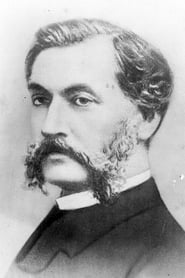
Louis Aimé Augustin Le Prince recorded Adolphe Le Prince, Joseph and Sarah Whitley, and Harriet Hartley walking in the garden of Oakwood Grange in Roundhay, Leeds, in October 1888. Lasting about two seconds, the clip is the oldest surviving celluloid motion picture, shot on Le Prince's single-lens camera years before Edison or the Lumière brothers publicly exhibited moving images.
Cast & crew
More films like this
More Documentary films
View all →
More from Louis Aimé Augustin Le Prince
View all →
More about this film
About the production
Release dateOctober 1888 (filming date)
Box officeNone (not commercially released)
ProductionLe Prince's personal production
Filmed inOakwood Grange, Roundhay, Leeds, West Riding of Yorkshire, England
Shot using Le Prince's LPCCP Type-1 MkII single-lens camera, which he invented himself. The camera used paper film base rather than celluloid. The film was shot at approximately 12 frames per second. The location was the garden of Joseph and Sarah Whitley's home, where Le Prince was staying at the time. The entire production was a family affair, with Le Prince's son Adolphe and in-laws serving as subjects. The filming likely took place on October 14, 1888, though some sources suggest it might have been shot earlier in the year.
Themes
Family lifeVictorian leisureTechnological innovationDocumentation of everyday momentsThe passage of time
Themes & topics
Historical background
Roundhay Garden Scene (1888) reached screens through Le Prince's personal production. Exhibitors of the time built nickelodeon-era programs that mixed shorts, features, and live acts, so a clear premise helped Roundhay Garden Scene travel between cities and exchange markets.
Why this film matters
Archivists and revival programmers still cite Roundhay Garden Scene (1888) when tracing studio habits, casting pools, and the visual rhetoric audiences once took for granted. Even modest surviving prints help map how Roundhay Garden Scene fit beside competing releases of its day.
Making of
The creation of Roundhay Garden Scene — family endeavor that took place in the backyard of Joseph and Sarah Whitley's home in Roundhay, Leeds. Louis Le Prince, who was married to the Whitleys' daughter Elizabeth, used his family members as subjects for his experimental film. The camera setup was rudimentary by modern standards, requiring careful positioning and manual operation. Le Prince had been working on motion picture technology for years, and the production represented the culmination of his experiments. The subjects were instructed to walk in a circular pattern to maximize the use of the available frame and demonstrate continuous motion. The filming process would have been a novelty for all involved, as no one had ever seen moving images captured on film before. The entire production was intimate and personal, far from the commercial film shoots that would follow in later years.
What critics said
Trade coverage around 1888 discussed Roundhay Garden Scene for pacing, clarity, and program fit rather than blockbuster grosses. Later writers value it as evidence of period style and as a reference point beside other films from the same era.
Did you know?
- This is the oldest surviving motion picture in existence, making it important artifacts in film history
- The film was shot on paper film rather than celluloid, as celluloid was not yet commercially available
- Sarah Whitley, who appears in the film, died just 10 days after it was shot, making this one of the earliest recordings of a person who would soon die
- Louis Le Prince mysteriously disappeared in 1890 while traveling from Dijon to Paris, never to be seen again, before he could publicly demonstrate his invention
- The film runs at 12 frames per second, much slower than modern films which typically run at 24 fps
- The original film was only 2.11 seconds long but contained approximately 24 frames
- The camera used was called the LPCCP Type-1 MkII, which Le Prince patented in 1888
- The film was rediscovered in the National Science Museum in London in the 1930s
- Unlike Edison's later films, Le Prince's work was never commercially exploited during his lifetime
- The garden where it was filmed (Oakwood Grange) was demolished in 1972, but the location is now marked with a plaque
Visual style
The cinematography of Roundhay Garden Scene is rudimentary but revolutionary for its time. The film was shot using a single fixed camera position, capturing the action from a static viewpoint. The framing is simple, showing the full bodies of the subjects as they walk in a circular pattern. The lighting is natural daylight, as artificial lighting for film had not yet been developed. The camera operated at approximately 12 frames per second, resulting in somewhat jerky motion compared to modern standards. The composition shows Le Prince's understanding of framing, ensuring his subjects remained within the camera's field of view throughout their circular walk. The black and white images have the characteristic appearance of early film, with high contrast and limited detail. Despite these technical limitations, the cinematography successfully achieved its primary goal: demonstrating that motion could be captured and preserved on film.
Innovations
Roundhay Garden Scene represents several groundbreaking technical achievements in the history of cinema. The film was shot using Le Prince's LPCCP Type-1 MkII camera, which he designed and built himself. This camera used a single lens, unlike some contemporary multi-lens systems that attempted to create motion through multiple images. The camera employed paper film rather than celluloid, as celluloid was not yet commercially available. The mechanism successfully captured approximately 24 frames at about 12 frames per second, creating the illusion of continuous motion. The film demonstrated the practical application of the persistence of vision principle. Le Prince's camera design included an intermittent mechanism that could advance the film frame by frame while maintaining proper exposure. The entire system was portable enough to be used outdoors, unlike some earlier experimental setups that required laboratory conditions. These technical innovations laid the foundation for all subsequent motion picture cameras and film technology.
Music
Roundhay Garden Scene is a silent film, created during the era before synchronized sound technology existed. There was no original soundtrack or musical accompaniment. The film was purely a visual experiment, focusing on the capture of motion without consideration for audio. Like other films of this period, it would have been shown silently if ever exhibited publicly. In modern presentations, the film is sometimes accompanied by period-appropriate music or explanatory narration, but this is a contemporary addition rather than part of the original work. The absence of sound was typical of early cinema, and the focus was entirely on the revolutionary aspect of capturing moving images.
Memorable scenes
- The entire 2.11-second sequence showing the four figures walking in a circular pattern through the garden, representing the birth of motion picture cinema
What audiences thought
The original audience for Roundhay Garden Scene was limited to Louis Le Prince himself and possibly his immediate family, as the film was never publicly screened during his lifetime. There was no commercial release or public exhibition, so contemporary audience reception is essentially nonexistent. The film was created as a technical demonstration rather than entertainment. Modern audiences who view the film today typically experience it through documentaries about film history or online archives. Contemporary viewers are struck by its historical significance rather than its content, understanding that they are witnessing the birth of cinema. The film's brevity and simple content mean it doesn't engage modern audiences in the way narrative films do, but its historical context makes it fascinating to those interested in film history and technological innovation.
Film connections
This film influenced
- All subsequent motion pictures
- Louis Le Prince's other films
- Edison's Kinetoscope films
- Lumière brothers' films
- Early documentary cinema
Film restoration
The film is preserved at the National Media Museum in Bradford, UK, where it is part of their permanent collection. The original paper film has been carefully conserved and digitized for preservation purposes. Multiple digital copies exist to ensure the film's survival. The preservation status is considered excellent, given the film's age and the fragile nature of early film materials. The museum has undertaken extensive conservation work to protect this historically significant artifact. Digital restoration has enhanced the visibility of the images while maintaining their historical authenticity.
Where to watch
- National Media Museum, Bradford, UK
- British Film Institute archives
- Online video platforms including YouTube and Vimeo
- Film history documentaries
- Educational film archives
- Museum exhibitions about cinema history
- Digital film collections
- Academic film studies resources