Accordion Player
"Louis Le Prince films his son playing the accordion."
Keys: Space play/pause · ←/→ 10s · F fullscreen · M mute · </> speed
About this film
In 1888, the last remaining film of Le Prince's LPCCP Type-1 MkII single-lens camera is a sequence of frames of his son, Adolphe Le Prince, playing a diatonic button accordion. It was recorded on the steps of the house of Joseph Whitley, Adolphe's grandfather.
Cast & crew
More films like this
More Documentary films
View all →

More from Louis Aimé Augustin Le Prince
View all →
More about this film
About the production
Release dateOctober 1888
ProductionLe Prince's Personal Workshop
Filmed inJoseph Whitley's House, Roundhay, Leeds, England
Filmed using Le Prince's revolutionary LPCCP Type-1 MkII single-lens camera, which employed paper film base and could capture approximately 12-16 frames per second. The camera was a significant improvement over multi-lens systems, allowing for smoother motion capture. The filming took place in October 1888 at the home of Joseph Whitley, Adolphe's grandfather, who had been a key supporter of Le Prince's experiments. The accordion performance was likely chosen because it provided visible movement and action that could be captured by the early camera technology. The entire sequence was filmed in a single take with no editing or post-production techniques available at the time.
Themes
Family and domesticityMusic and performanceTechnological innovationPreservation of memoryVictorian daily life
Themes & topics
Historical background
Released in 1888, Accordion Player reached audiences during the earliest projected-film era, when exhibition and production norms differed sharply from today's.
Why this film matters
Accordion Player remains viewable through digital archives, preserving 1888 screen culture for modern audiences.
Making of
The creation of 'Accordion Player' was the culmination of years of experimentation by Louis Le Prince, who had been working on motion picture technology since the early 1880s. The filming was a family affair, with Le Prince's son Adolphe serving as the performer, his father-in-law Joseph Whitley providing the location, and other family members likely assisting with the setup. Le Prince had to manually crank his camera while maintaining focus and exposure, a challenging task given the primitive nature of the equipment. The paper film base was extremely sensitive to light and had to be handled in near-darkness before and after exposure. The accordion was chosen specifically because it provided clear, visible movement that would demonstrate the camera's ability to capture motion. The entire filming process would have taken considerable preparation, as each film strip could only record a few seconds of footage and was expensive to produce. This brief sequence represents one of the final successful experiments before Le Prince's mysterious disappearance from a train in 1890.
What critics said
Trade coverage around 1888 discussed Accordion Player in terms of craft and audience appeal rather than blockbuster scale.
Did you know?
- This is one of only two surviving films made by Louis Le Prince, who mysteriously disappeared in 1890 before he could publicly demonstrate his inventions
- The film predates the Lumière brothers' first public screening by seven years and Thomas Edison's Kinetoscope demonstrations by five years
- Adolphe Le Prince was 16 years old when this film was made, and he would later become a key witness in investigations into his father's disappearance
- The accordion shown in the film was a diatonic button accordion, a popular instrument in the late 19th century
- The original paper film strips were approximately 2 inches wide and contained about 20 frames total
- Louis Le Prince's wife Lizzie and daughter Marie can be seen in the background of some frames, though they are not clearly visible
- The film was rediscovered in the National Science Museum in London in the 1930s among Le Prince's remaining equipment
- The steps where Adolphe sits are still visible at the former Whitley residence, which is now a historic landmark
- This film was part of a series of experiments Le Prince conducted to perfect his motion picture camera system
- The accordion music would have been audible during filming, but the film itself is silent as no sound recording technology existed in 1888
Visual style
The cinematography of 'Accordion Player' represents some of the earliest motion picture photography ever created. The film was shot using Le Prince's LPCCP Type-1 MkII camera, which featured a single lens and could capture approximately 12 frames per second on paper film. The composition is straightforward but effective, with Adolphe positioned in profile against the brick steps of his grandfather's house, providing good contrast and visibility. The lighting is natural daylight, likely captured in the morning or afternoon when the sun illuminated the steps adequately. The camera angle is static and slightly elevated, looking down at the subject, which was necessary given the bulk and weight of early cameras. The focus is relatively sharp for the period, with Adolphe's upper body and the accordion clearly visible. The frame shows the limitations of early film technology, with visible flicker and uneven exposure, but it successfully captures the movement of Adolphe's hands on the accordion buttons and the motion of the bellows.
Innovations
'Accordion Player' represents several major technical achievements in the history of cinema. The film was created using Le Prince's LPCCP Type-1 MkII camera, which was one of the first practical single-lens motion picture cameras. Unlike earlier multi-lens systems that attempted to create motion through sequential images, Le Prince's camera could capture true continuous motion on a single strip of film. The camera used paper film as its recording medium, which was coated with a light-sensitive emulsion and could capture approximately 12-16 frames per second. This frame rate was sufficient to create the illusion of smooth motion when the frames were viewed in sequence. The camera's mechanical design included a claw mechanism to advance the film and a rotating shutter to control exposure, innovations that would become standard in later motion picture cameras. The successful capture of moving human figures demonstrated that motion picture technology had reached a practical stage of development. The film's preservation and survival for over 130 years also testifies to the relative stability of the paper film base used, despite its fragility compared to later celluloid film.
Music
The film is silent, as no sound recording technology existed in 1888. However, during filming, Adolphe would have been playing actual music on his accordion, which would have been audible to everyone present during the shoot. The type of accordion shown was a diatonic button accordion, which would have produced typical folk or popular music of the Victorian era. Modern presentations of the film sometimes include period-appropriate music as accompaniment, typically featuring accordion music from the late 19th century. The absence of recorded sound was standard for all films of this period, and audiences of the time would have understood that they were watching a visual record only. The choice of an accordion as the subject was partly motivated by the instrument's visual interest and the clear movement it provided, even though the sound itself could not be preserved.
Memorable scenes
- The entire film consists of a single memorable scene: Adolphe Le Prince sitting on the brick steps of his grandfather's house, playing his diatonic button accordion with visible concentration as his fingers move across the buttons and the bellows expand and contract, creating one of the first moving images of a human being ever recorded
What audiences thought
During its creation, 'Accordion Player' had no audience reception as it was part of Le Prince's private experiments and was never shown publicly. The film was unknown to audiences until decades after its creation. Modern audiences who have seen the film typically express fascination with its historical significance and the window it provides into Victorian life. Many viewers report feeling a connection to the past when seeing Adolphe Le Prince's moving image, noting the surreal experience of watching someone from 1888 come to life on screen. The film's brevity and simple content often surprise contemporary viewers accustomed to complex narratives, though most appreciate its importance as a historical artifact. The film has been featured in numerous museum exhibitions and film retrospectives, where it consistently generates interest and discussion about the origins of cinema.
Film connections
Influenced by
- Eadweard Muybridge's motion studies
- Étienne-Jules Marey's chronophotography
- Early photography experiments
This film influenced
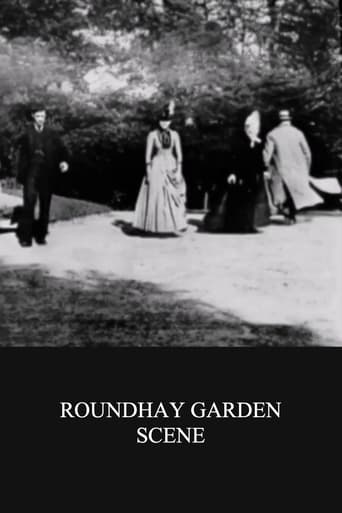
- Roundhay Garden Scene (1888)
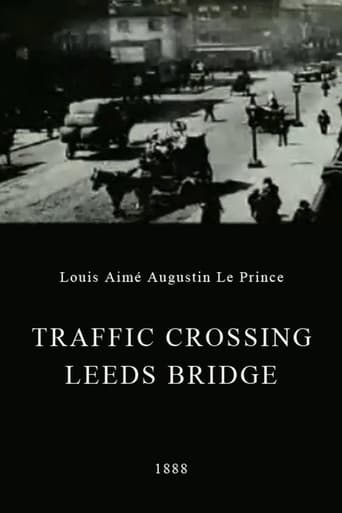
- Traffic Crossing Leeds Bridge (1888)
- Early Lumière films
- Edison's Kinetoscope films
Film restoration
The film survives in its original paper film format and is preserved at the National Science Museum in London. It has been digitized and restored for modern viewing, though the original paper strips remain extremely fragile and are carefully conserved under archival conditions. The film is considered one of the oldest surviving motion pictures in the world and is of incalculable historical value. Multiple digital copies exist to ensure its preservation, and the film has been included in various film history archives and collections worldwide.
Where to watch
- British Film Institute collections
- National Science Museum (London) archives
- Various film history documentaries
- Online film archives and educational platforms
- Museum exhibitions on early cinema