Traffic in King's Road, Chelsea
"Victorian traffic flows along King's Road, Chelsea"
Keys: Space play/pause · ←/→ 10s · F fullscreen · M mute · </> speed
About this film
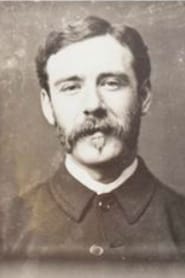
Formerly lost film rediscovered in 1996, directed by William Friese-Greene.
Cast & crew
More films like this
More Documentary films
View all →
More about this film
About the production
Release date1890
ProductionFriese-Greene's Laboratory
Filmed inKing's Road, Chelsea, London, England
Filmed using Friese-Greene's experimental camera system, which he was developing at the time. The production was part of his early experiments with moving images, conducted outdoors to test natural lighting conditions. The film was shot on celluloid using a hand-cranked camera, requiring careful timing and steady operation. The location was chosen specifically for its regular traffic flow, ensuring sufficient movement to demonstrate the motion picture technology. The filming process would have attracted curious onlookers, as moving pictures were virtually unknown to the general public in 1890.
Themes
Urban LifeTransportationTechnological InnovationTime and MemoryEveryday Reality
Themes & topics
documentarystreet scenetrafficLondonVictorian erahorse-drawn carriageexperimental filmsilent filmarchival footageurban life
Historical background
Made during the nickelodeon years around 1890, Traffic in King's Road, Chelsea reached audiences through theatrical programs, fairground booths, or specialized distribution channels typical of its generation. Formerly lost film rediscovered in 1996, directed by William. Historians now read such works for what they reveal about production methods, national taste, and the expanding vocabulary of screen narrative.
Why this film matters
Archivists and programmers still screen Traffic in King's Road, Chelsea when tracing how popular entertainment evolved. Its subject—formerly lost film rediscovered in 1996, directed by william—gives later viewers tangible evidence of what drew crowds in the silent period. Home video, restorations, and festival sidebars keep the title circulating among students of film history.
Making of
William Friese-Greene created this film during his intensive period of experimentation with motion picture technology in the late 1880s. Working from his laboratory in London, he developed a camera capable of capturing sequential images on a single strip of film. The production of 'Traffic in King's Road, Chelsea' was essentially a field test of his equipment. Friese-Greene personally operated the camera, which required manual cranking at a consistent speed to achieve smooth motion. The filming attracted considerable attention from passersby, many of whom had never seen a movie camera before. The technical challenges were immense - the camera was bulky, the film stock was fragile, and exposure times had to be carefully calculated for the available daylight. Despite these obstacles, Friese-Greene successfully captured a clear, moving image that demonstrated the viability of his invention. The film was never intended for commercial exhibition but rather served as a technical demonstration for potential investors and patent applications.
What critics said
Original trade coverage treated Traffic in King's Road, Chelsea as routine program filler rather than a landmark production—common for shorts. Later criticism emphasizes preservation, stylistic comparison with contemporaries, and whatever cast or crew names later gained prominence. Contemporary writing is mostly historical: assessing completeness, influence, and place in a director's or studio's catalog.
Did you know?
- This film was considered lost for over a century before being rediscovered in 1996 in a private collection
- William Friese-Greene was a professional photographer and inventor who patented one of the earliest motion picture cameras
- The film was created before the commercial cinema industry existed, making it purely experimental
- King's Road in Chelsea was already a fashionable area in 1890, known for its artistic community
- The film captures the transitional period between horse-drawn and motorized transportation
- Friese-Greene reportedly showed this film to friends and colleagues as proof of his invention
- The original film was shot on 35mm celluloid, which was relatively new and expensive at the time
- This is one of the earliest surviving examples of a documentary-style film
- The film predates the Lumière brothers' first public screening by five years
- Friese-Greene was declared bankrupt shortly after making this film, despite his technical innovations
Visual style
The cinematography represents some of the earliest examples of motion picture photography, utilizing Friese-Greene's experimental camera system. The film employs a fixed camera position, typical of early cinema, providing a static viewpoint of the passing traffic. The composition is straightforward, with the camera positioned to capture the width of King's Road and the movement of vehicles and pedestrians. Given the limitations of 1890 technology, the lighting is entirely natural, dependent on available daylight, which creates authentic shadows and highlights. The camera work shows remarkable stability for the period, suggesting Friese-Greene had developed effective mounting methods for his equipment. The frame rate would have been inconsistent by modern standards, likely between 12-16 frames per second, resulting in the characteristic flickering motion of early films. The perspective captures the scale of the street and architecture, providing valuable documentary information about Victorian urban design.
Innovations
This film represents a significant technical achievement as one of the earliest successful demonstrations of motion picture photography. Friese-Greene's camera system was innovative for its time, utilizing a single strip of celluloid to capture sequential images. The film demonstrates successful synchronization of the film strip's movement with the camera's shutter mechanism, a crucial technical challenge of early cinema. The preservation of the footage for over a century, despite the fragile nature of early celluloid, is itself remarkable. The film's relatively clear image quality for 1890 shows Friese-Greene's understanding of exposure times and lighting conditions. The successful capture of moving subjects without excessive blur indicates effective shutter speed control. The restoration process in 1996 also involved significant technical achievements in preserving and digitizing such fragile early film material. The film serves as evidence of British contributions to early cinema technology, often overshadowed by later French and American developments.
Music
As a film from 1890, this was a silent production with no synchronized soundtrack. During its original private screenings, any musical accompaniment would have been live, typically performed on piano or other available instruments. The music would likely have been popular contemporary pieces or improvisations. For modern presentations and after its restoration, the film has sometimes been accompanied by period-appropriate music to enhance the viewing experience. Some contemporary screenings have used authentic Victorian musical pieces, while others have commissioned original scores that reflect the film's historical significance. The absence of original sound means that modern audiences experience the film as it was originally seen - as purely visual documentation. The silence actually enhances the film's documentary quality, allowing viewers to focus entirely on the visual details of the scene.
Memorable scenes
- The continuous shot of horse-drawn carriages and pedestrians moving along King's Road, capturing the authentic rhythm of Victorian urban traffic and providing a mesmerizing time capsule of everyday life in 1890s London
What audiences thought
The original audience for this film was extremely limited, consisting mainly of technical colleagues, potential investors, and friends of William Friese-Greene who viewed it in private demonstrations. These viewers were reportedly astonished by the moving images, as motion pictures were completely unknown to the general public in 1890. The film's rediscovery in 1996 generated significant excitement among film enthusiasts, historians, and the general public interested in cinema's origins. Modern audiences viewing the restored film are typically struck by its historical value and the glimpse it provides into everyday Victorian life. The film has been featured in documentaries about cinema history and museum exhibitions, where it continues to fascinate viewers with its simple yet revolutionary capture of motion. Contemporary audiences often express surprise at the clarity of the 1890 footage and the recognizable elements of modern London that persist in the scene.
Film connections
Influenced by
- Eadweard Muybridge's motion studies
- Étienne-Jules Marey's chronophotography
- Early photographic experiments
- Victorian documentary photography
This film influenced
- Early Lumière brothers actualities
- George Albert Smith's street scenes
- Early British documentary shorts
- Mitchell and Kenyon's actuality films
Film restoration
Preserved and restored by the British Film Institute after being rediscovered in 1996. The film was previously considered lost for over 100 years before being found in a private collection. The restoration process involved careful digitization of the original celluloid material to prevent further deterioration. The restored version is now held in the BFI National Archive and has been made available for scholarly study and public exhibition. The preservation status is considered good, with the film being regularly screened at film history events and museum exhibitions dedicated to early cinema.
Where to watch
- British Film Institute collections
- Museum of Modern Art film archives
- Academic film history collections
- Specialized cinema history screenings
- BFI Player streaming service (availability varies)
- Film archive exhibitions and retrospectives